Travel guide
Ireland holidays: a travel guide for UK visitors
Wild Atlantic cliffs, green hills and a warm welcome in every harbour — Ireland is a soulful, easy-to-reach stop on round-Britain and Celtic cruises.
Why visit Ireland
Ireland is a place that travels at its own pace, and that is the whole point. The Wild Atlantic Way unfurls along the west coast, from the sheer Cliffs of Moher to the lunar limestone of the Burren and the ring of Kerry. Cobh, the last port of call of the Titanic, and the Georgian streets of Dublin welcome cruise ships into deep natural harbours. Inland lie ancient monastic ruins, patchwork fields and snug pubs where a session of live music can start without warning. Add some of the friendliest people in Europe and Ireland becomes a country you leave reluctantly.
Best time to visit
May to September brings the mildest, brightest weather and the long evenings that suit the west coast and the islands. Spring and early autumn are quieter and green, while the famously changeable weather means a waterproof is wise in any season. Winter is atmospheric but cool and wet for coastal touring.
Top things to do in Ireland
- 1
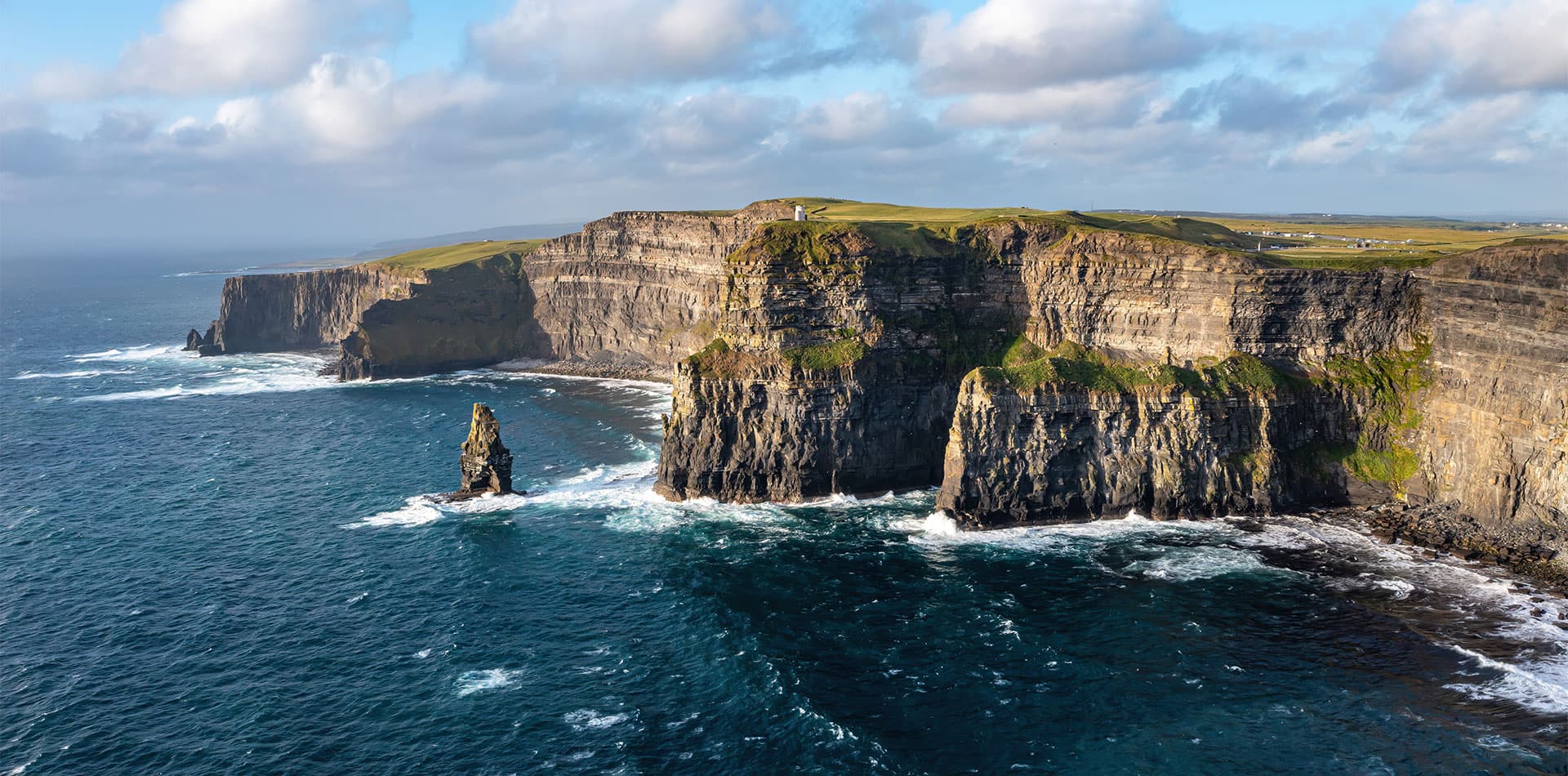
See the Cliffs of Moher and the Wild Atlantic Way
The dramatic Cliffs of Moher, the limestone Burren and the coast road of County Clare and Kerry showcase Ireland’s wild western edge, an easy excursion from western cruise ports.
- 2
Explore Dublin’s history and pubs
Trinity College and the Book of Kells, Dublin Castle and the lively Temple Bar district make the capital a rewarding day ashore, with traditional music never far away.
- 3
Visit Cobh and Cork’s harbour
The colourful waterfront town of Cobh, the Titanic’s final port, and nearby Cork city and Blarney Castle welcome cruise ships into one of the world’s great natural harbours.
The cheapest Ireland holidays right now
Lowest lead-in prices first, from live availability. Open one for its dates, and book directly with its operator.

Ireland travel questions
- Do British citizens need a passport for Ireland?
- Under the Common Travel Area, British citizens do not strictly need a passport to enter the Republic of Ireland, but most airlines and ferry operators require valid photo ID, and a passport is the simplest option. Carry one to be safe.
- What currency is used in Ireland?
- The Republic of Ireland uses the Euro (EUR). Northern Ireland, part of the UK, uses Pound Sterling (GBP). Cards are widely accepted across the island, though a little cash is handy in rural areas.
- When is the best time to visit Ireland?
- May to September offers the mildest weather and the longest days, ideal for the west coast and the islands. Spring and autumn are quieter and green, but pack a waterproof — Ireland’s weather is famously changeable year-round.
- Do UK citizens need a visa for Ireland?
- No. British citizens can travel and stay freely in Ireland under the Common Travel Area, with no visa or time limit. It is one of the easiest destinations of all for UK travellers.
- Is Ireland expensive to visit?
- Ireland is moderately priced; Dublin and popular tourist spots cost more, particularly for eating out and drinks. A cruise that includes meals and travel can be good value, with day-to-day spending kept in check.
- Do I need a travel adaptor for Ireland?
- No. Ireland uses the same Type G three-pin sockets at 230V as the UK, so British travellers need no adaptor at all.
- Which Irish ports do cruises visit?
- Dublin and Cobh (for Cork) are the main calls, with Belfast, Galway and Killybegs also featuring on round-Britain and Celtic itineraries, often combined with Scottish and Welsh ports.
- Which side of the road does Ireland drive on?
- Ireland drives on the left, the same as the UK. If you are touring by car, allow extra time on the narrow rural lanes of the west, where the scenery is the reason to slow down anyway.
- Is Ireland safe for tourists?
- Ireland is a safe and notably friendly destination, with low crime. Ordinary care with valuables in busy Dublin areas is all that is needed, and visitors are made to feel genuinely welcome.
- What is the Wild Atlantic Way?
- The Wild Atlantic Way is a scenic coastal route running the length of Ireland’s west coast, taking in the Cliffs of Moher, the Ring of Kerry and countless harbours and beaches. Several stretches are easily reached from cruise ports.