Travel guide
Sri Lanka holidays: a travel guide for UK visitors
The rock fortress at Sigiriya, the Temple of the Tooth in Kandy, tea country and leopards at Yala: a practical guide to Sri Lanka holidays and tours, with the best time to visit Sri Lanka month by month.
Why visit Sri Lanka
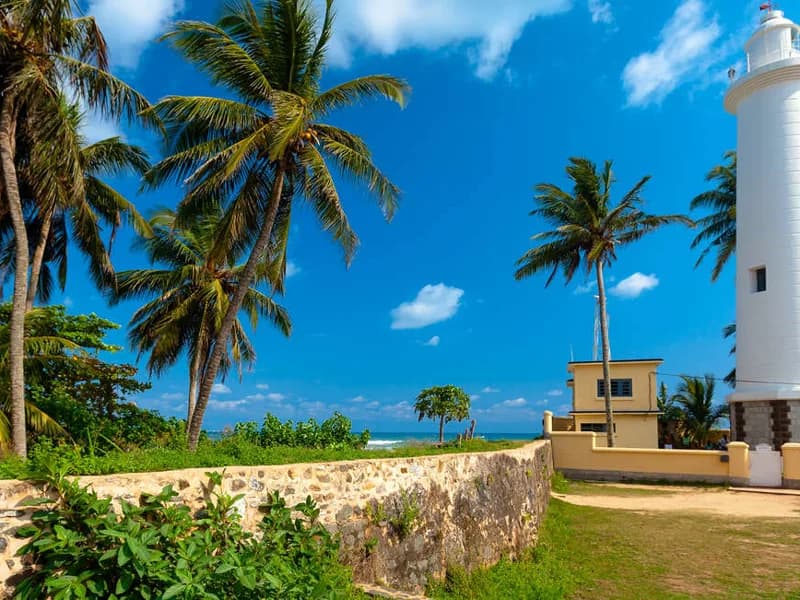
Sri Lanka packs a remarkable amount into an island smaller than Ireland, which is why so many people go for a fortnight and come back having seen most of it. In the dry plains of the north-centre, the cultural triangle holds the ruined royal cities of Anuradhapura and Polonnaruwa, the painted cave temples of Dambulla and the rock of Sigiriya, with a palace on its summit. Kandy, the last royal capital, keeps the Temple of the Tooth beside its lake. Above it, the hill country is cool and green, its slopes combed with tea bushes, and the railway climbs through it towards Ella. Then come the national parks, where elephants are an ordinary sight and Yala is known for its leopards, and the south coast, with the old Dutch fort at Galle and beaches beyond. People often ask whether it is a gentler introduction to South Asia than India: it is smaller, slower and generally less crowded, and the food, rice and curry in a dozen small dishes, is reason enough to go. A tour takes the strain out of the roads, which are slow, and gives you a guide for a long and layered history.
Best time to visit Sri Lanka
The best time to visit Sri Lanka for a classic tour is December to March, when the west and south coasts, the hill country and the cultural triangle are mostly dry, and January and February are the most settled months of all. Sri Lanka has two monsoons, so there is usually a dry side of the island. The southwest monsoon, from about May to September, brings rain to the west, the south and the hill country, while the east coast around Trincomalee is at its driest; the northeast monsoon, from about December to February, brings rain to the north and east. The months in between, April and October to November, are inter-monsoon periods, with heat, humidity and afternoon thunderstorms, and October and November are often wet across much of the island. In July or August, a route that keeps to the cultural triangle and the east coast works well, and Kandy holds its Esala Perahera procession then, on dates set by the full moon.
Sri Lanka month by month
- JanuaryBest
- The dry season is established on the west and south coasts and in the hill country; the most reliable month to travel.
- FebruaryBest
- Dry, warm and popular across the west, south and cultural triangle.
- MarchGood
- Still largely dry in the south and west, warming towards the inter-monsoon change.
- AprilQuiet
- The inter-monsoon brings afternoon thunderstorms and building heat; the Sinhala and Tamil New Year falls mid-month.
- MayAvoid
- The southwest monsoon usually breaks, bringing heavy rain to the west, south and hill country.
- JuneAvoid
- Monsoon rain continues across the west and south; the east coast, in its rain shadow, is turning drier.
- JulyAvoid
- Still wet in the west and south, though this is a good month on the drier east coast around Trincomalee.
- AugustQuiet
- The southwest monsoon begins to ease; Kandy traditionally holds its Esala Perahera festival around this time.
- SeptemberGood
- The rain is tapering off in the west and south, with clearer spells becoming more frequent.
- OctoberQuiet
- An unsettled inter-monsoon month islandwide, as the northeast monsoon begins to build over the north and east.
- NovemberQuiet
- The northeast monsoon brings rain to the north and east; the west and south are drying out ahead of the main season.
- DecemberBest
- The dry season returns to the west, south and hill country, and stays through the new year.
Top things to do in Sri Lanka
- 1
Climb Sigiriya, the rock fortress
A sheer rock rising about 200 metres from the plain, Sigiriya was made a royal citadel in the fifth century, with a palace on its summit, painted ladies in a sheltered gallery halfway up and water gardens at its foot. Most of our Sri Lanka tours come here. The climb is on stairways and steep metal steps, and it is hot work, so tours go early; the gardens and the museum are on level ground.
- 2
See Kandy and the Temple of the Tooth
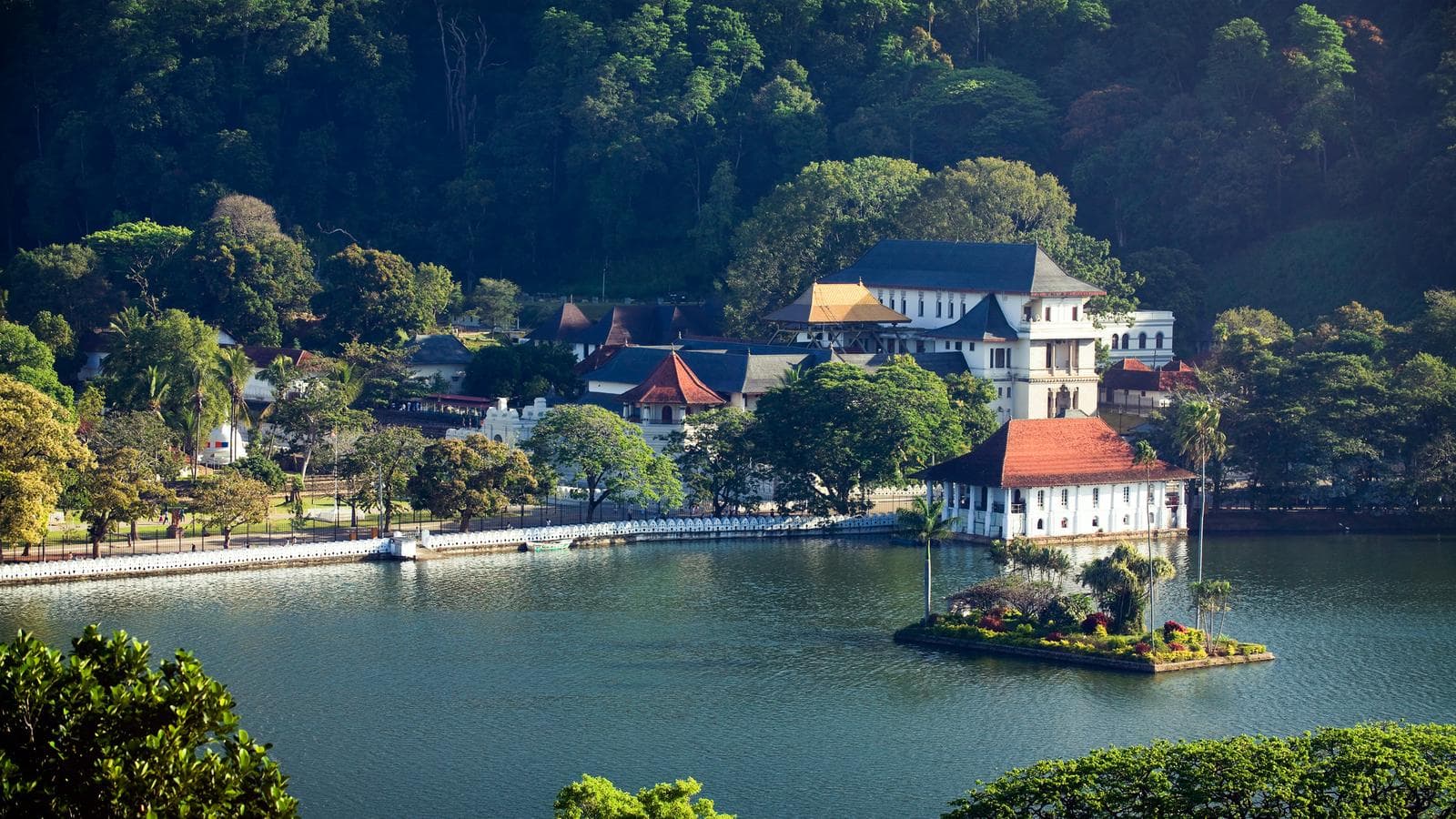
Kandy, the last capital of the Sinhalese kings, sits around a lake in the hills, and the Temple of the Tooth beside it keeps a relic of the Buddha that draws pilgrims from across the island. Nearly all our Sri Lanka tours stop here, some with the botanical gardens at Peradeniya. Cover your shoulders and knees, and leave your shoes at the entrance.
- 3
Travel through tea country to Nuwara Eliya and Ella
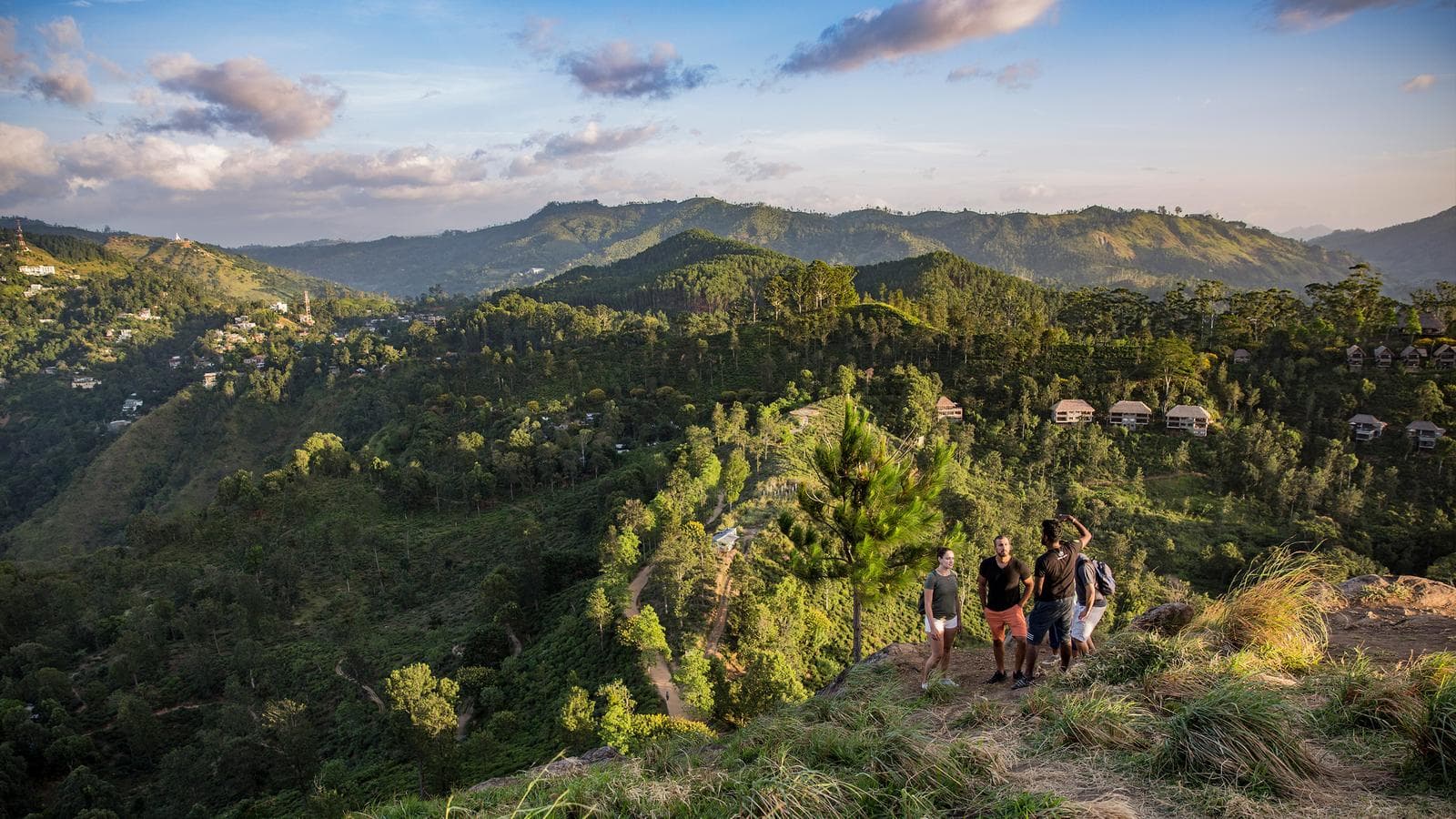
South of Kandy the road and the railway climb into cool, green hills planted with tea, past waterfalls and estate bungalows, to Nuwara Eliya and on to Ella. Several of our tours visit a tea estate here, and some go on to Horton Plains National Park. The roads are narrow and winding, so allow time and take something for travel sickness if you need it.
The cheapest Sri Lanka holidays right now
Lowest lead-in prices first, from live availability. Open one for its dates, and book directly with its operator.
Sri Lanka travel questions
- When is the best time to visit Sri Lanka?
- December to March is the best time for a classic tour of the west, the south, the hill country and the cultural triangle, with January and February the driest months. From May to September the southwest monsoon brings rain to the west and south, while the east coast is dry. October and November are often wet across much of the island.
- What is the best month to visit Sri Lanka?
- February is usually the most reliable month across most of the island, with January close behind. If you can only go in the UK summer, July and August suit a route through the cultural triangle and the east coast, and Kandy’s Esala Perahera procession usually falls then.
- What is the rainy season in Sri Lanka?
- There are two. The southwest monsoon, from about May to September, brings rain to the west, the south and the hill country; the northeast monsoon, from about December to February, brings it to the north and east. Between them, in April and in October and November, there are hot, humid spells with afternoon thunderstorms.
- How many days do I need in Sri Lanka?
- Ten days covers the cultural triangle, Kandy and the hill country, or the south coast. Two weeks lets you add a national park and Galle without rushing. Most of our Sri Lanka tours run from six nights to two weeks; some add a boat trip in the Maldives, and a few start with several weeks in India.
- What is a good two-week Sri Lanka itinerary?
- Start at Negombo or Colombo, go north to the cultural triangle for Anuradhapura, Polonnaruwa, Dambulla and Sigiriya, then to Kandy, up into tea country at Nuwara Eliya and Ella, down to Yala or Udawalawe for a safari, and finish on the south coast at Galle. It is the loop most of our tours follow in some form.
- Should I take a group tour or hire a car and driver?
- Hiring a car with a driver is common in Sri Lanka, and it gives you freedom over the route. A group tour arranges everything for you, from hotels and park entry to the guide who explains what you are looking at, and it is often better value and more sociable if you are travelling alone. Either way, roads are slow, so do not plan too many long drives back to back.
- Where can I see leopards and elephants in Sri Lanka?
- Yala, in the south-east, is the best-known park for leopards, and it can be busy with jeeps. Wilpattu in the north-west is larger and quieter. Elephants are easy to see at Udawalawe all year, and at Minneriya and Kaudulla in the cultural triangle, where large herds gather in the dry season. Many of our tours include at least one of these parks.
- Will we take the train from Kandy to Ella?
- Some tours take a stretch of the hill-country railway through the tea estates, and others travel by road. Check the tour page. The line is popular and often busy, and landslides after heavy rain occasionally close it, when tours carry on by road.
- Is Sri Lanka safe to visit?
- Most visits are trouble-free, and violent crime against foreigners is rare. Watch for bag snatching and bank card fraud, and many beaches have dangerous currents at some times of year, so check before you swim. Disrespecting Buddhist images is a serious offence: do not pose for photos in front of a Buddha statue, and cover any Buddha tattoo. Read the UK government’s advice before you go.
- Is Sri Lanka good for solo travellers?
- Yes. A group tour takes care of the transport and the evenings, and many people join one on their own. Just You’s Sri Lanka tours are for solo travellers. The UK government notes that women sometimes report harassment in crowded places, which is another reason many choose to travel with a group.
- What should I wear to visit temples in Sri Lanka?
- Cover your shoulders and knees, and take off your shoes and hat before entering a temple. Stone courtyards get very hot in the sun, so a pair of socks in your bag is useful. Take a warm layer for the hill country, which can be cool in the evenings.
- Is alcohol served on Poya days?
- Each full moon is a Poya day, a Buddhist holiday, when alcohol is not usually sold and some shops close. Your tour leader will know the dates, and the full-moon festivals can be well worth seeing.
- Should I take cash to Sri Lanka?
- Rupees are easiest to get from cash machines on arrival; use those inside banks or hotels, as card fraud is common. Cards are taken in hotels and larger restaurants and shops, but small cafés, tuk-tuks, temple donations and tips are cash.
- Do I need vaccinations or malaria tablets for Sri Lanka?
- There is no malaria in Sri Lanka, but dengue and chikungunya are spread by mosquitoes that bite in the daytime, so use repellent and cover up. See your GP or a travel clinic at least eight weeks before you go; TravelHealthPro publishes the current advice. Healthcare outside Colombo is limited, so take full travel insurance.
- Can I take my prescription medicines to Sri Lanka?
- Take enough for the whole trip, in their original packaging, with a copy of your prescription. The UK government’s advice does not list rules for medicines in Sri Lanka, so if you take anything stronger than everyday medicines, check with the Sri Lankan High Commission in London and with TravelHealthPro before you travel.