History
Ghana, from the castles of Cape Coast to the Ashanti capital at Kumasi
Ghana's coast is lined with the forts and castles of the European trade in gold and people, and its forest heart is the kingdom of the Ashanti. A week from Cape Coast to Kumasi crosses both histories.
By Walter Pellow2 November 20264 min read
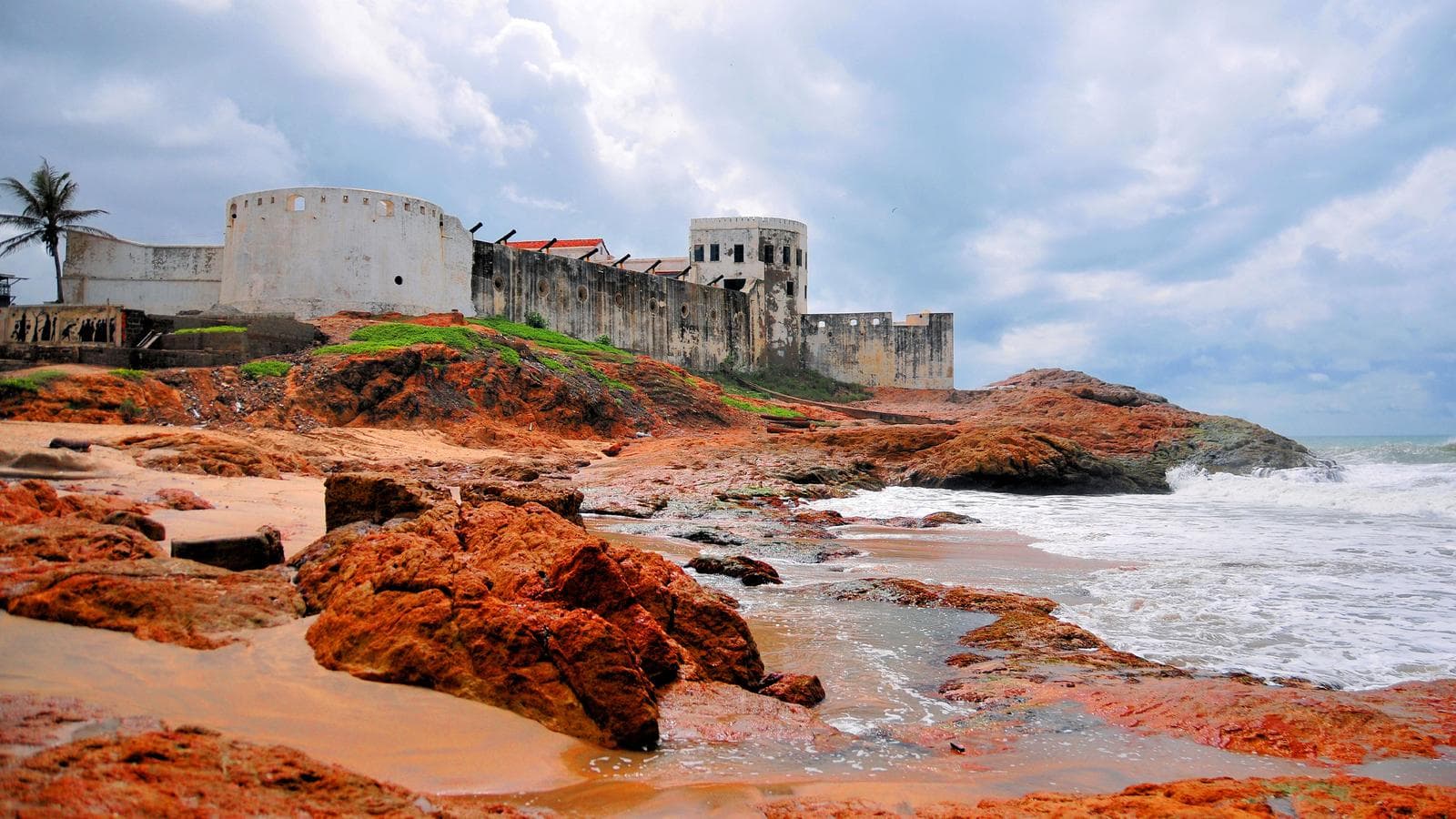
The Portuguese called it the Mina coast, the mine, and the British the Gold Coast, and for four centuries the shore of what is now Ghana was a meeting point between Europe and Africa. The Europeans came first for gold, and then, as the Atlantic slave trade grew, for people. They built forts and castles along the coast to protect their trade from each other, and dozens of them still stand, white-walled and cannon-lined above the surf, a few miles apart.
Inland, in the forest, was another power entirely. The Ashanti kingdom, with its capital at Kumasi, grew rich on gold and trade and became a powerful state, which the British fought several wars to subdue. To travel from the coast to Kumasi is to cross from one side of that history to the other.
The castles
The two great castles are Elmina and Cape Coast, a short drive apart. Elmina was built by the Portuguese in 1482, and it is often called the oldest European-built structure south of the Sahara. It later passed to the Dutch and then the British, and it grew over the centuries from a trading post into a fortress with courtyards, governors' quarters, a church and, beneath them, the dungeons where captives were held before being shipped across the Atlantic.
Cape Coast Castle, a few miles east, began as a Swedish trading lodge in the 1650s and was taken by the British in 1664, becoming the headquarters of their trade on the coast. Its whitewashed walls look out over a beach of fishing canoes, and its dungeons, too, are the reason most people come.
Both are part of a UNESCO World Heritage Site, the Forts and Castles of Ghana, and both are now museums. A guided tour takes you down into the dark, airless rooms where hundreds of people were held at a time, through the "door of no return" to the sea, and back up into the bright courtyards where the officers lived above them. It is a harrowing visit, and an essential one. For many visitors of African descent, it is a pilgrimage.
Dozens of forts still stand, white-walled and cannon-lined above the surf, a few miles apart.
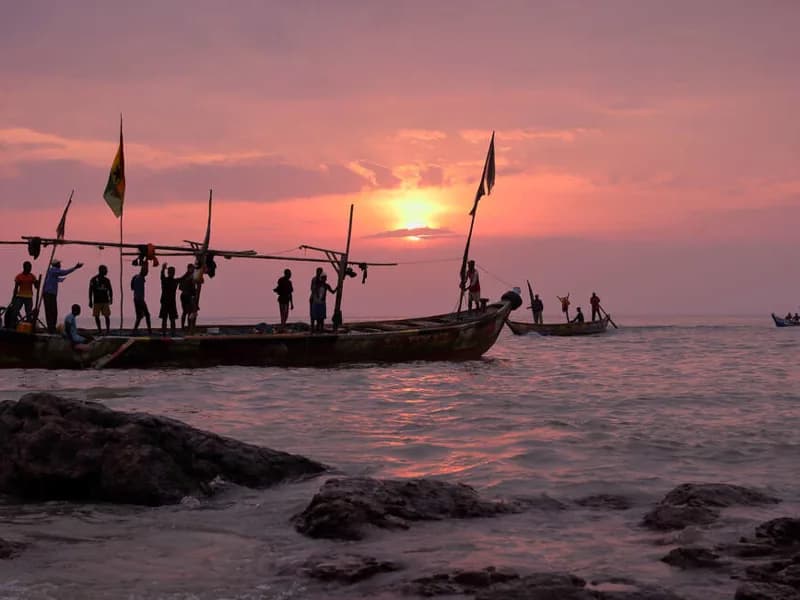
The towns around the castles are lively places in their own right: Elmina's harbour, crowded with painted fishing boats, is a fine sight, and Cape Coast is a busy, friendly university town.
The forest
North of the coast, Kakum National Park protects a block of tropical rainforest, and its canopy walkway, a chain of narrow rope bridges strung between the trees high above the forest floor, lets you walk through the treetops. It is not for the nervous, but the view across the canopy is extraordinary.
On the road north, at Assin Manso, the slave river site marks the place where captives, marched south from the interior, were made to bathe for the last time before they reached the coast. It is a quiet, wooded place, with a memorial and graves.
Kumasi
Kumasi is Ghana's second city and the capital of the Ashanti region, a big, busy, hilly place with a vast central market at its heart. It is also still the seat of the Asantehene, the Ashanti king, whose authority as a traditional ruler is recognised within modern Ghana. The Manhyia Palace Museum, in the former royal residence, tells the kingdom's story, and Ashanti culture is visible everywhere: in the kente cloth woven in the villages nearby, such as Bonwire, in the adinkra symbols stamped on cloth at Ntonso, and in the ceremonies and funerals, which can be grand occasions.
How to go
G Adventures' eight-night Ghana Classic Adventure: Cultural Festivals & National Parks starts in Accra, with Jamestown, then goes to Assin Manso, a Krobo village, the Volta River, Mount Afadjato and the Wli Falls, Ntonso, the Manhyia Palace and Kumasi, Bonkro and New Edubiase. It departs from December to May.
Explore's fourteen-night Best of Ghana goes further north: from Accra by way of the Volta River, the Aburi Botanical Gardens and Koforidua to Kumasi, Adanwomasie, Ntunso and the Manhyia Palace, then Mole National Park, the monkey sanctuary at Boabeng-Fiema, Kintampo and Mognori Village. It departs in January, March, October, November and December.
G Adventures' fifteen-night Ghana, Togo, & Benin: Castles, Coastlines and Voodoo Discoveries begins on the coast, with Cape Coast, Elmina, Kakum National Park, Ankasa Village and Accra, before continuing east into Togo and Benin.
Ghana's dry season, roughly from November to March, is the most comfortable time to travel, though the dusty harmattan wind from the Sahara can haze the skies in December and January. The rains come from about April. Whatever the season, give the castles time, and do not rush from one to the next. They deserve to be seen slowly, and they leave a great deal to think about on the long road north.
By Walter Pellow, the name Atlas & Passage’s editorial team writes under. Prices and dates in the trips below come from the operators and can change.