Seasons
Keukenhof, and the seven weeks the Dutch call spring
The world's best-known tulip garden opens for less than two months a year and is replanted from scratch every single time. It is a strange business model for a garden, and it works because the Dutch have been doing it for four centuries.
By Arthur Penhallow26 September 20264 min read
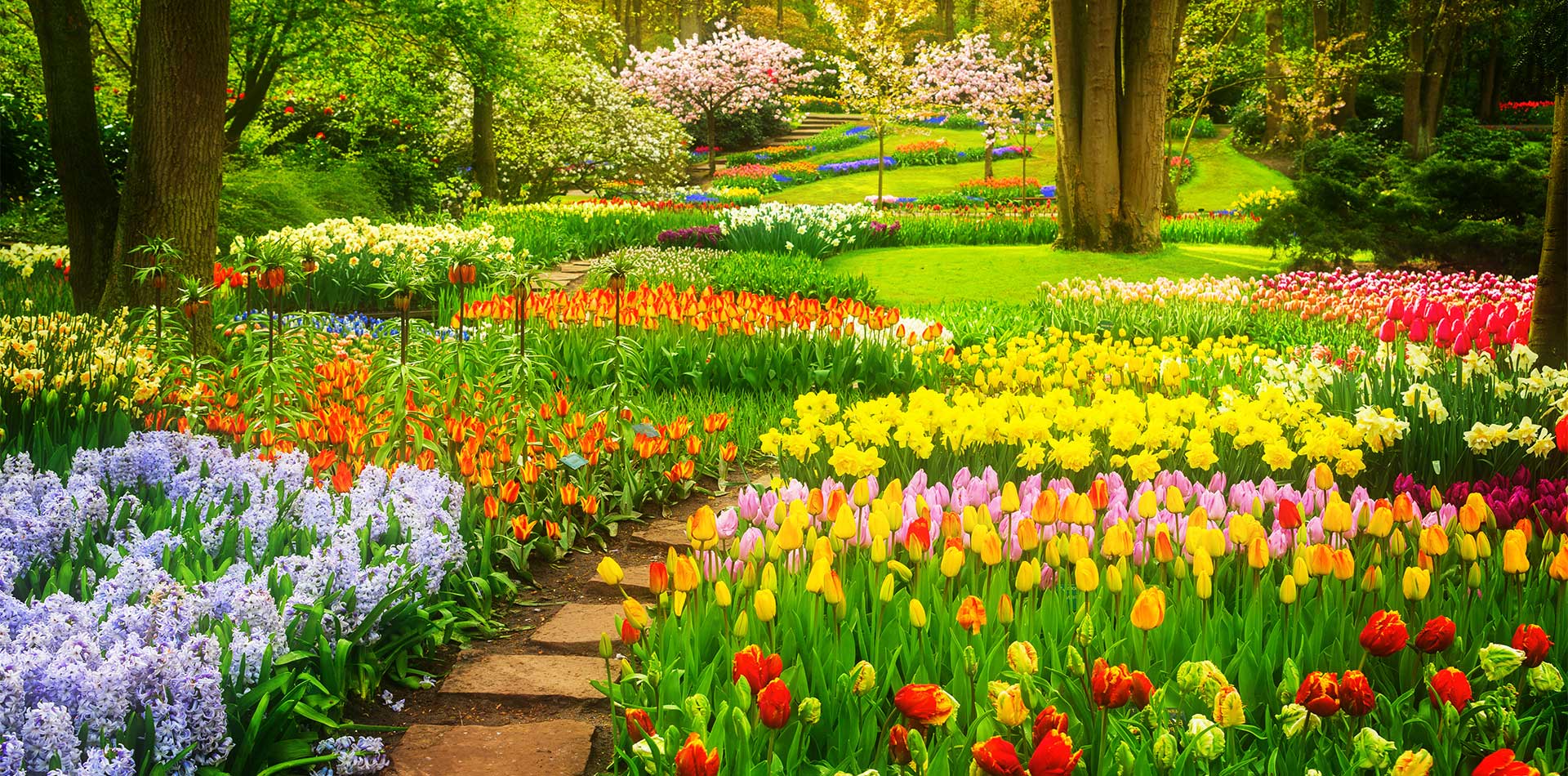
Keukenhof, the garden that supplies most people's mental image of the Netherlands in spring, plants roughly seven million bulbs by hand each year for a display that lasts, at most, eight weeks before the garden closes and the whole thing begins again. It is an unusual way to run any attraction, let alone one that draws well over a million visitors a season, but the timing is not a marketing decision so much as an honest description of how long tulips actually stay tulips. The gardens sit near Lisse, in the heart of the Dutch bulb-growing region between Haarlem and Leiden, and the surrounding fields, planted commercially rather than for display, extend the colour for miles beyond the garden's own fences during the same short window.
A kitchen garden that outgrew its name
Keukenhof means, roughly, kitchen courtyard, a name that dates to the fifteenth century, when the grounds supplied herbs and vegetables for the kitchen of a nearby castle belonging to a countess of Holland. The formal garden in its current form is a much later invention: it opened to the public in 1949, designed as a permanent showcase where Dutch bulb growers could exhibit their flowers to buyers and visitors from across Europe, at a moment when the country's flower export industry badly needed the publicity. The show garden model succeeded well beyond its original purpose and has been replanted and reopened every spring since.
A trade with a notoriously overheated history
Tulips are not, in fact, native to the Netherlands; they arrived from Ottoman Turkey in the sixteenth century, imported as a botanical curiosity before Dutch growers began breeding and trading them in earnest. The trade reached its most famous extreme during the period now known as tulip mania, in the 1630s, when prices for rare bulb varieties, particularly those affected by a virus that produced dramatic flame-like streaking in the petals, rose to sums that could, by some contemporary accounts, buy a substantial house in Amsterdam, before collapsing abruptly in February 1637. Modern economic historians disagree about how widespread or economically damaging the crash actually was beyond a small circle of speculators, but the episode has endured as one of the earliest recorded examples of a speculative bubble, and the flower at its centre never entirely lost the association. The commercial bulb trade that followed, steadier and considerably less feverish, is the direct ancestor of the fields around Keukenhof today.
Colour that moves through the season
The display changes character as the weeks pass rather than peaking on a single date: crocuses and early narcissi open the season in March, hyacinths and the first tulip varieties follow through early April, and the classic tulip fields reach their fullest colour in the second half of April into early May, weather permitting, before the display fades and the garden closes for the year until the following March's replanting begins. Visitors chasing a specific colour or variety are, in effect, chasing weather as much as a calendar date, and no cruise operator can promise which week will turn out to be the best one.
Timing a visit
Fred. Olsen's Tulip Season in the Netherlands, six nights from Newcastle, is built specifically around this window, with a call timed for the display's peak and a stop at Rotterdam alongside Amsterdam.
Ambassador's Dutch Springtime Delights, four nights from London Tilbury, pairs a spring Amsterdam call with Bruges, while the longer Blooming Spring: Amsterdam & Nordic Coastal Charms extends a similar spring sailing north towards Scandinavia after the Dutch leg.
Late April is, on balance, the safest bet for the fields at their fullest, though anyone who has watched a Dutch spring arrive knows that safest is still some distance from certain.
Much of the display never needs a garden gate at all. The commercial growing fields around Lisse are working farmland rather than public parkland, laid out in the same long, ruler-straight rows a bulb needs for efficient harvesting, and in peak season they turn the flat polder landscape into blocks of solid colour, red beside yellow beside white, stretching to the horizon in a pattern no natural landscape would ever arrange itself into. Many of the short cruises that call at Amsterdam or Rotterdam in April route their coach excursions specifically past these fields on the way to or from Keukenhof itself, on the reasonable theory that the free view from the road is, in its way, as memorable as the garden most people have paid to see. The bulbs themselves are, in the end, a by-product rather than the point of the exercise: growers harvest and sell them once the flowers have finished, which is why the whole cycle of planting, blooming and clearing begins again each autumn regardless of how spectacular the previous spring happened to be.
By Arthur Penhallow, the name Atlas & Passage’s editorial team writes under. Prices and dates in the trips below come from the operators and can change.