Travel guide
Brazil holidays: a travel guide for UK visitors
Rio de Janeiro beneath Sugarloaf and Christ the Redeemer, the Iguaçu Falls and the colonial coast at Paraty: a practical guide to Brazil holidays and tours, often with Argentina, and the best time to visit Brazil month by month.
Why visit Brazil
Rio de Janeiro has one of the most famous settings of any city: granite peaks rising out of the bay, Christ the Redeemer on the summit of Corcovado, the cable car up Sugarloaf and the long curve of Copacabana below. It is where most Brazil holidays begin or end, and the reason many people go. A short flight west, the Iguaçu Falls pour over a horseshoe of cliffs on the border with Argentina, more than two hundred separate cascades in the rainforest, and few people who see them are disappointed. South of Rio, Paraty is a whitewashed colonial town that once shipped gold to Portugal, and Ilha Grande, offshore, has no cars at all. Further afield, Salvador, the Pantanal wetlands and the Amazon make a longer and more ambitious trip. Brazil is a country of great warmth, music and food, and it has a reputation for crime that worries many first-time visitors. A tour with a local guide, arranged transfers and someone who knows the cities is the most straightforward answer to both.
Best time to visit Brazil
The best time to visit Brazil for most tours is from about May to September, when Rio is mild and mostly dry and sightseeing is comfortable; August is usually Rio’s driest month. This is also the dry season in the Pantanal, from about July to October, when its wildlife gathers at the shrinking water and is easiest to see. Summer, from December to March, is hot, humid and stormy in Rio, and the busiest time, with Brazilian holidays, New Year and Carnival, usually in February. It is also when the Iguaçu Falls carry the most water. April, October and November are good in-between months. For Brazil and Argentina together, the spring and autumn months, roughly April to May and September to November, suit both Rio and Buenos Aires, while Patagonia is best from October to March.
Brazil month by month
- JanuaryQuiet
- High summer in Rio: hot, humid and stormy, with beaches crowded for the Brazilian holidays; Iguaçu is in full flood.
- FebruaryGood
- Carnival month in most years, when Rio is at its busiest and liveliest; still hot, with heavy showers.
- MarchGood
- Late summer: still hot, with rain easing towards the end of the month and the falls at Iguaçu running high.
- AprilGood
- Autumn brings lower humidity and more comfortable days in Rio; Easter week is busy with Brazilian travellers.
- MayBest
- Warm and drier, with clear days in Rio and on the coast, and the rains easing in the Pantanal.
- JuneGood
- Winter in the south-east: mild, settled days in Rio, cooler evenings, and a good month for sightseeing.
- JulyGood
- Mild and mostly dry in Rio; the Pantanal is in its dry season, the best time for its wildlife.
- AugustBest
- Usually the driest month in Rio, with comfortable temperatures for walking the city and the hills.
- SeptemberBest
- Spring: warming, still largely dry, with the Pantanal at its driest and wildlife gathered at water.
- OctoberGood
- Warmer and more humid, with the first rains returning inland towards the end of the month.
- NovemberGood
- Early summer: hot, with more frequent showers, but quieter than the Christmas and New Year rush.
- DecemberQuiet
- Hot, humid and often stormy, with New Year’s Eve on Copacabana beach drawing very large crowds.
Top things to do in Brazil
- 1
See Rio de Janeiro from Sugarloaf and Corcovado
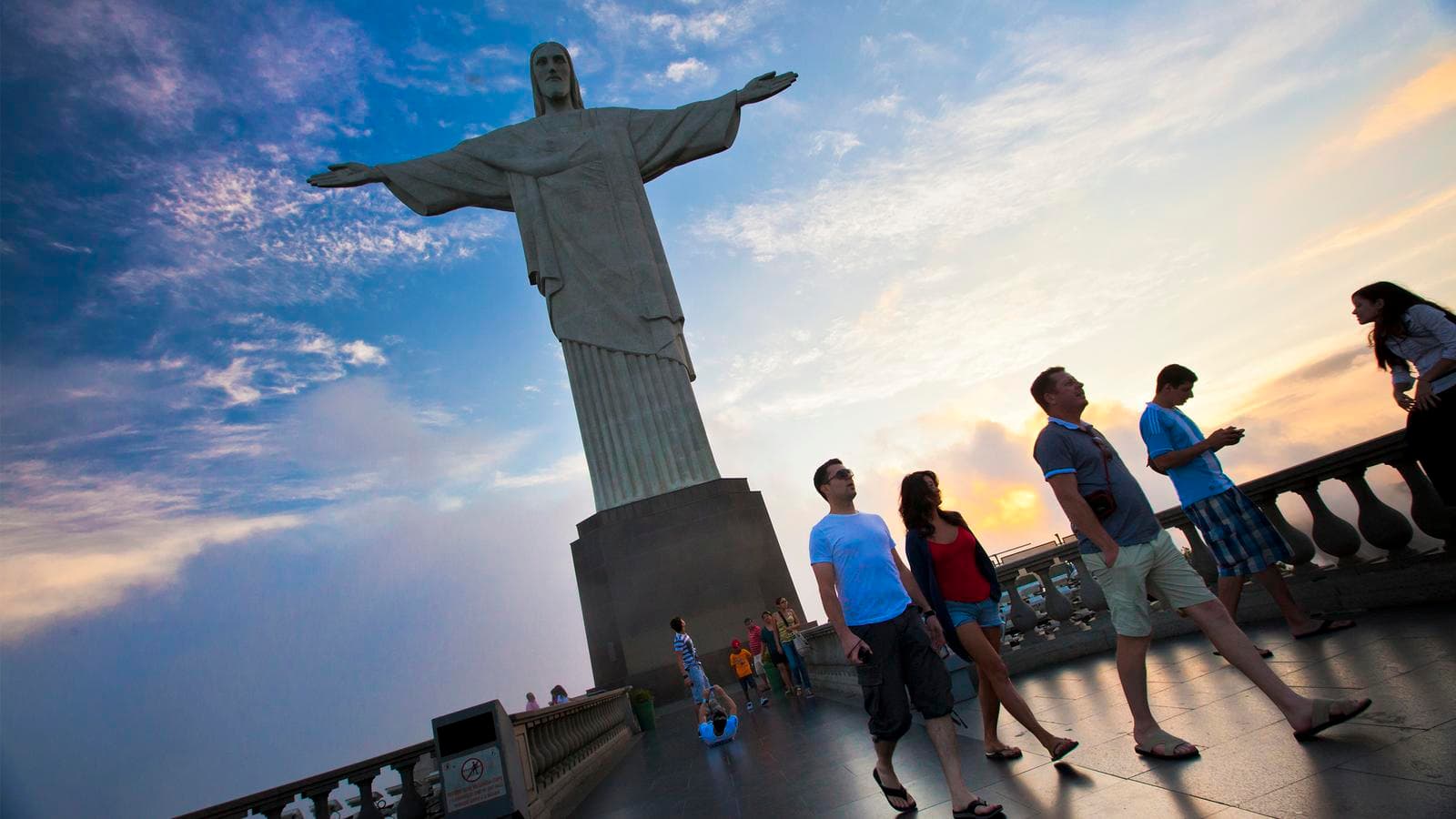
Almost all of our Brazil holidays include Rio. The cable car to the top of Sugarloaf gives the classic view across the bay, and the train or road up Corcovado reaches the statue of Christ the Redeemer, best early before the cloud and the crowds. Below them are Copacabana and Ipanema, the hillside streets of Santa Teresa and the old centre. Some of our tours are timed for Carnival.
- 2
Stand beside the Iguaçu Falls
The falls stretch for nearly three kilometres along the border with Argentina. The Brazilian side has the panorama, from a path along the gorge to a walkway over the water; the Argentine side has trails above and among the falls, out to the Devil’s Throat. Most of our holidays that include Brazil visit Iguaçu, and many see both sides. Expect to get wet.
- 3
Visit Paraty and Ilha Grande
Between Rio and São Paulo, Paraty’s cobbled streets of white colonial houses flood at the highest tides, with the forested mountains of the Serra do Mar behind. Offshore, Ilha Grande has no cars, only trails through the rainforest to beaches and fishing villages. Several of our tours stop at both on the way to Rio.
The cheapest Brazil holidays right now
Lowest lead-in prices first, from live availability. Open one for its dates, and book directly with its operator.


Brazil travel questions
- When is the best time to visit Brazil?
- May to September for most tours, when Rio is mild and dry and the Pantanal is in its dry season. December to March is hot, humid and stormy, but it is summer, the time of Carnival and of the fullest falls at Iguaçu.
- What is the best time to visit Rio de Janeiro?
- May to September, when the weather is warm rather than hot, and August is usually the driest month. If you want Carnival, go in February or early March, depending on the year, and book well ahead. December to March is the hottest and wettest time.
- Is Rio de Janeiro safe for tourists?
- Crime is a real concern in Rio and other Brazilian cities, and it is sensible to take care, but most visits are trouble-free. Don’t wear jewellery or carry valuables, keep your phone out of sight on the street, and don’t walk on beaches or quiet streets after dark. On a tour, transfers and guides are arranged for you. Read the UK government’s travel advice before you go.
- Can I see Rio, Iguaçu and Argentina in one trip?
- Yes, and many of our holidays do: typically Buenos Aires, a flight to Iguaçu, then Rio, sometimes with Chile or Peru as well. A trip like this usually takes two to three weeks.
- Which side of the Iguaçu Falls is better, Brazil or Argentina?
- They are different, and both are worth seeing. The Brazilian side gives the wide panorama of the falls and takes a few hours. The Argentine side has more trails, close to and above the water, including the walk to the Devil’s Throat, and needs most of a day.
- How long should a Brazil tour be?
- Rio, Paraty, Ilha Grande and Iguaçu fit into about ten days to two weeks. Adding the Amazon, the Pantanal or Salvador needs three weeks, as each involves flights. Many of our holidays combine Brazil with Argentina over two to three weeks.
- Should I visit the Amazon or the Pantanal for wildlife?
- For seeing animals, the Pantanal is usually better: it is open wetland, so capybaras, caimans, birds and, with luck, jaguars are far easier to see than in dense forest. The Amazon is the place for the scale of the rainforest and its rivers. The Pantanal is best in the dry season, from about July to October.
- Do UK citizens need a visa for Brazil?
- No. UK tourists can visit Brazil without a visa for up to 90 days. Your passport must be valid for at least six months after you arrive. Check the UK government’s travel advice before you go.
- Do I need a yellow fever vaccination for Brazil?
- Yellow fever is a risk in many parts of Brazil, including some areas visited on tours, and vaccination is often recommended. See your GP or a travel clinic at least six weeks before you go; they will also advise on other vaccinations, malaria in the Amazon and mosquito-borne illnesses such as dengue. TravelHealthPro has the current advice.
- Is English widely spoken in Brazil?
- Less than you might expect. Brazilians speak Portuguese, not Spanish, and English is spoken in larger hotels and by guides, but less in shops, restaurants and taxis. A few words of Portuguese go a long way, and your guide will help with the rest.
- Can I drink the tap water in Brazil?
- It is best not to. Drink bottled or filtered water, and be wary of ice and fresh juices from stalls unless you are confident they use treated water. Food from busy restaurants and freshly cooked street food is generally fine.
- Is tipping expected in Brazil?
- Restaurants usually add a ten per cent service charge to the bill, so you need not tip on top. Tips for guides and drivers are customary on tours; many operators suggest an amount, so ask before you travel.
- Do I need a travel adaptor for Brazil?
- Yes. Brazil uses Type N and Type C sockets, which UK plugs don’t fit. The voltage is 127V in some places, including Rio, and 220V in others, so check that your chargers are rated 100–240V; most phone and laptop chargers are.
Related travel guides
Argentina
Buenos Aires, the Iguazú Falls and the glaciers and peaks of Patagonia: a practical guide to Argentina holidays and tours, often with Chile or Brazil, with the best time to visit Argentina month by month.
Peru
Machu Picchu, Cusco and the Sacred Valley, Lake Titicaca and the Amazon: a practical guide to Peru holidays and tours, with the best time to visit Peru and Machu Picchu month by month, and plain advice on altitude.