Travel guide
Denmark holidays: a travel guide for UK visitors
Harbour-side capitals, fairy-tale castles and easy island-hopping — Denmark pairs design-led Copenhagen with a gentle Baltic coastline that cruises love.
Why visit Denmark
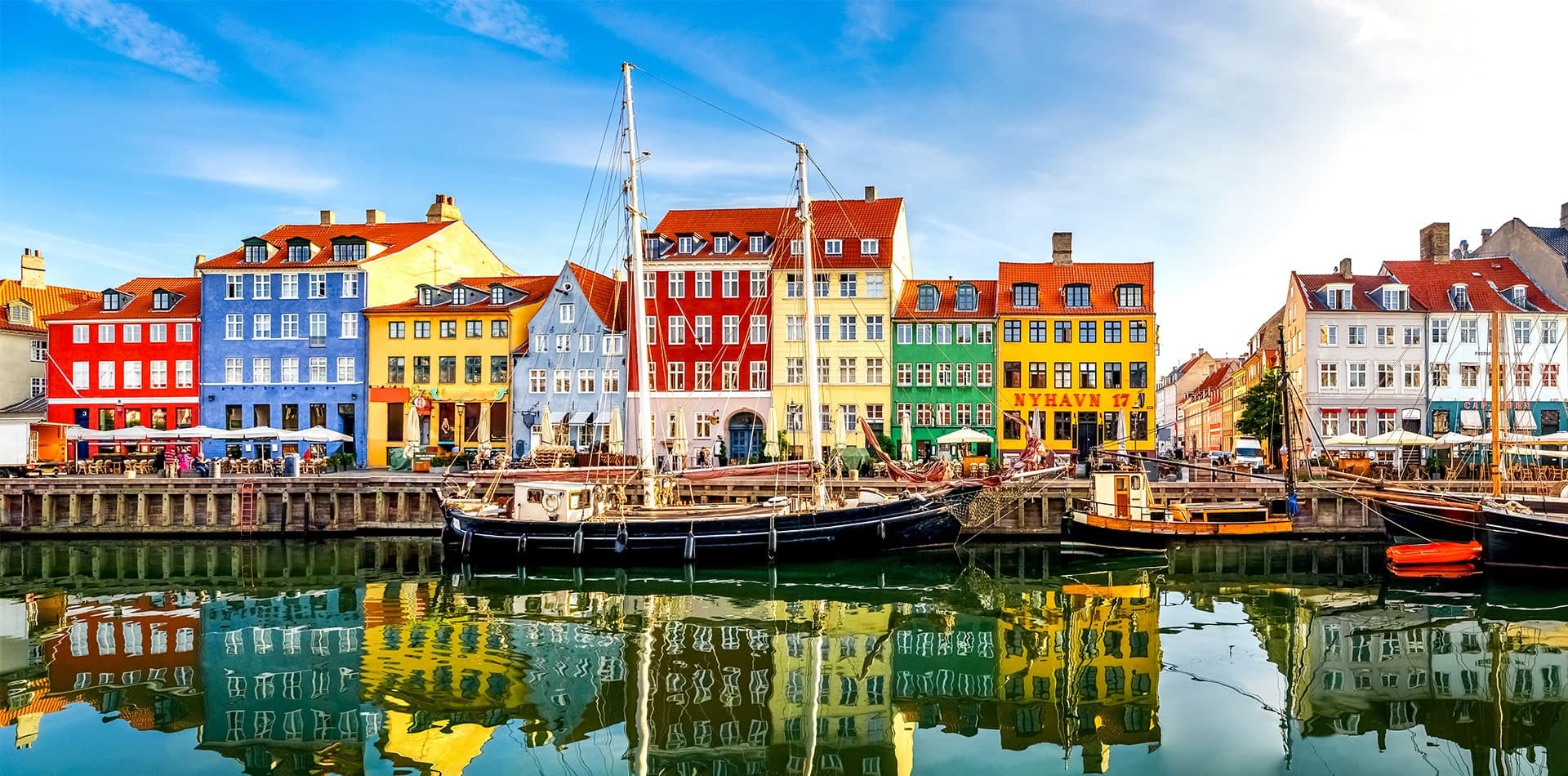
Denmark wears its charm lightly. Copenhagen sets the tone — a low-rise, bicycle-friendly capital of canalside cafés, royal palaces and the colourful quayside of Nyhavn, with the New Nordic kitchens that reshaped how Europe eats. Beyond the city lie Renaissance castles straight out of Hans Christian Andersen, the windswept beaches of Jutland and a scatter of islands linked by bridges and ferries. It is an unhurried, design-conscious country where the pleasure is in the details, and a natural call on Baltic and Norwegian-fjord sailings alike.
Best time to visit
May to September brings the long, light days that suit Copenhagen and the coast best, with June and July warmest and busiest. Late spring and early autumn are quieter and still pleasant, while the run-up to Christmas turns the capital festive with markets and lights, if you do not mind the cold.
Top things to do in Denmark
- 1
Wander Copenhagen and Nyhavn
The candy-coloured townhouses of Nyhavn, the Little Mermaid statue and the pleasure gardens of Tivoli give Copenhagen its postcard moments, all walkable from a compact, harbour-hugging centre that many Baltic cruises use as a turnaround port.
- 2
Visit fairy-tale castles
Kronborg, the real-life setting for Shakespeare’s Hamlet, and the moated Frederiksborg Castle sit within easy reach of the capital, turning a day ashore into a tour through Denmark’s royal and Renaissance past.
- 3
Discover New Nordic food and design
From street-food halls to Michelin-starred kitchens, Copenhagen helped invent modern Scandinavian cooking — and its galleries, boutiques and furniture studios make the city a magnet for design lovers.
The cheapest Denmark holidays right now
Lowest lead-in prices first, from live availability. Open one for its dates, and book directly with its operator.


Denmark travel questions
- When is the best time to visit Denmark?
- May to September is ideal, with long daylight hours and the mildest weather for exploring Copenhagen and the coast. June and July are warmest and busiest; spring and early autumn are quieter while still pleasant.
- Do UK citizens need a visa for Denmark?
- No. UK passport holders can visit Denmark without a visa for tourism and stay in the Schengen Area for up to 90 days in any 180-day period.
- What currency does Denmark use?
- Denmark uses the Danish Krone (DKK), not the Euro, despite being an EU member. It is an extremely card-friendly country, so you may barely need cash at all.
- Is Denmark expensive to visit?
- Denmark is one of Europe’s more expensive countries, particularly for eating out and alcohol. A cruise can help, bundling meals and accommodation, while free harbour walks and public parks keep day-to-day costs down ashore.
- Do they speak English in Denmark?
- Yes, very widely and to a high standard. English is taught from a young age, so you will have no trouble communicating in shops, restaurants, attractions or on board ship.
- How many hours ahead is Denmark compared with the UK?
- Denmark is one hour ahead of the UK on Central European Time, and changes its clocks for daylight saving on the same dates, so the one-hour difference holds all year.
- Is Denmark safe for tourists?
- Denmark is one of the safest countries in the world, with very low crime. Ordinary care with your belongings in busy spots such as Copenhagen’s central station is all that is needed.
- Do I need a travel adaptor for Denmark?
- Yes. Denmark uses Type E and Type F sockets at 230V, so a standard European travel adaptor will fit your UK three-pin plugs. UK devices run happily on the local voltage.
- Which Danish ports do Baltic cruises visit?
- Copenhagen is the headline port and a common departure city for Baltic and Scandinavian sailings, while smaller calls such as Skagen and Aarhus appear on some itineraries.
- Is Copenhagen easy to explore on foot?
- Yes. Copenhagen is compact, flat and famously bicycle-friendly, with most headline sights — Nyhavn, the palaces and Tivoli — within a comfortable walk or a short cycle of the harbour.
Related travel guides
Iceland
Volcanoes, glaciers, geysers and the Northern Lights — Iceland is a land of raw, elemental scenery and one of the North Atlantic’s most striking cruise destinations.
Norway
Mirror-still fjords, midnight sun and the Northern Lights — Norway is one of the world’s great cruising destinations, dramatic in every season.
Sweden
A capital built on fourteen islands, deep forests and a thousand miles of Baltic coast — Sweden blends cool, walkable cities with vast, calming nature.