Walking
Baltistan on foot, below the highest mountains on earth
In the far north of Pakistan, the high valleys of Baltistan lie beneath K2 and a crowd of other great peaks. Their villages of apricot orchards and stone houses, and their restored royal forts, make some of the most remarkable walking country in Asia.
By Walter Pellow20 October 20264 min read
Baltistan is a region of high valleys in the Karakoram mountains of northern Pakistan, in the territory of Gilgit-Baltistan, close to the borders of China and India. It is sometimes called Little Tibet, and for good reason. Its people, the Balti, are of Tibetan origin and speak a language closely related to Tibetan, though they have been Muslim for centuries. Their mosques and shrines, built of wood and stone in a style that owes much to Tibetan and Kashmiri traditions, are among the most distinctive buildings in the region.
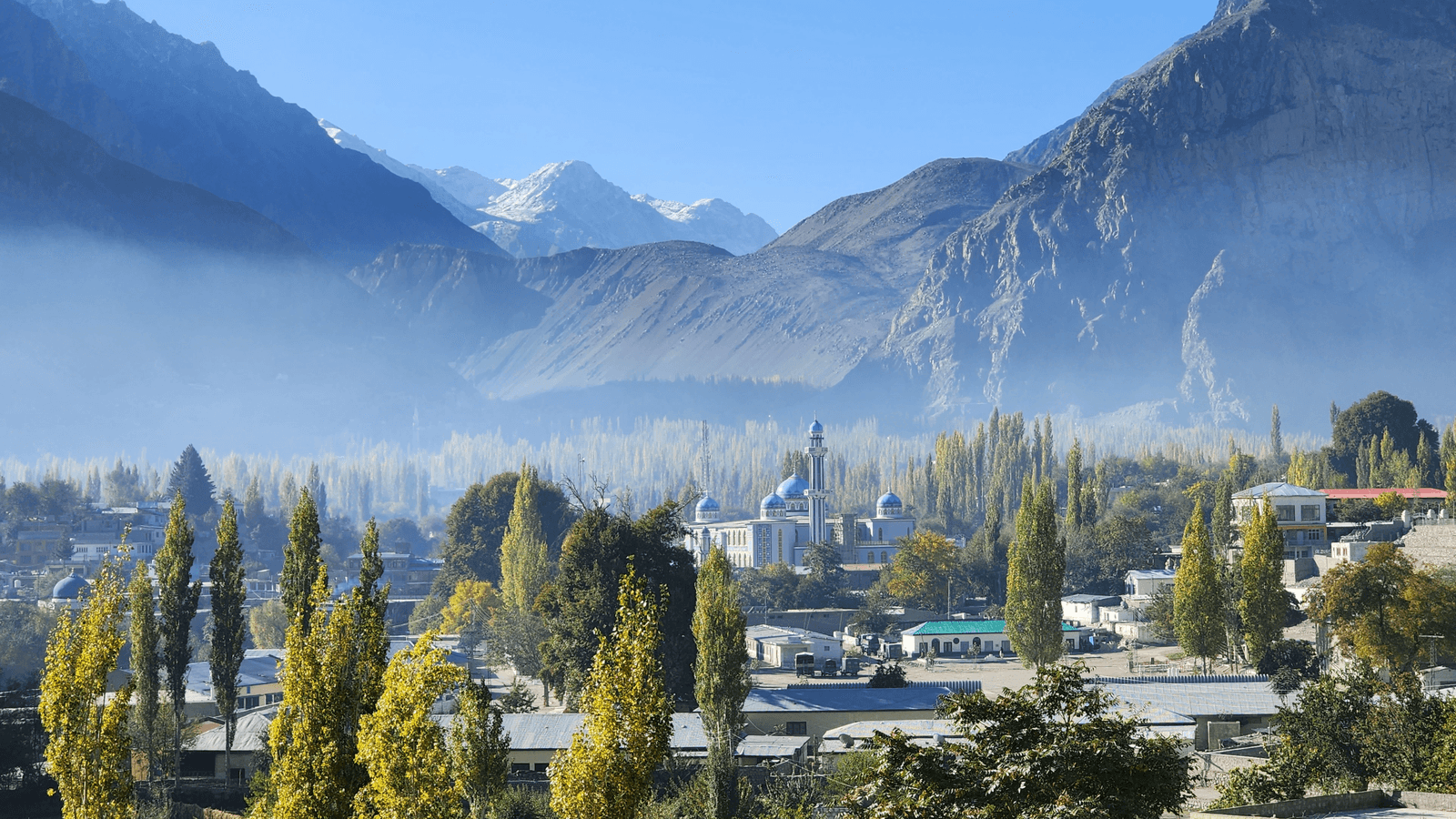
The landscape is on a colossal scale. Baltistan holds some of the highest mountains and longest glaciers outside the polar regions, including K2, the second-highest mountain in the world, and several other peaks over eight thousand metres. The valleys between them are high, dry and stony, a desert of rock and scree, but wherever water from the glaciers can be led onto the land, the villages are green oases of terraced fields, poplars, willows and fruit trees, especially apricots.
Khaplu and Shigar
Two of Baltistan's old royal seats have been beautifully restored. In Khaplu, in the valley of the Shyok River, the palace of the former rajas, a wooden and stone building of the nineteenth century with balconies and carved windows, stands above the village with views up to the Masherbrum range. It has been restored by the Aga Khan Trust for Culture and now operates as a hotel and museum. Nearby, the Chaqchan Mosque, one of the oldest in the region, is a fine example of Balti architecture, with timber and stone in alternating layers.
Shigar, in a side valley north of Skardu, has a seventeenth-century fort and palace of the local rajas, built on a great rock above the village. It too has been restored, with its carved woodwork and courtyards, and it also operates as a hotel and museum. Both projects were part of a wider effort to restore the heritage of the region and to bring tourism to its villages.
Wherever water from the glaciers can be led onto the land, the villages are green oases of terraced fields, poplars, willows and fruit trees.
Walking in Baltistan
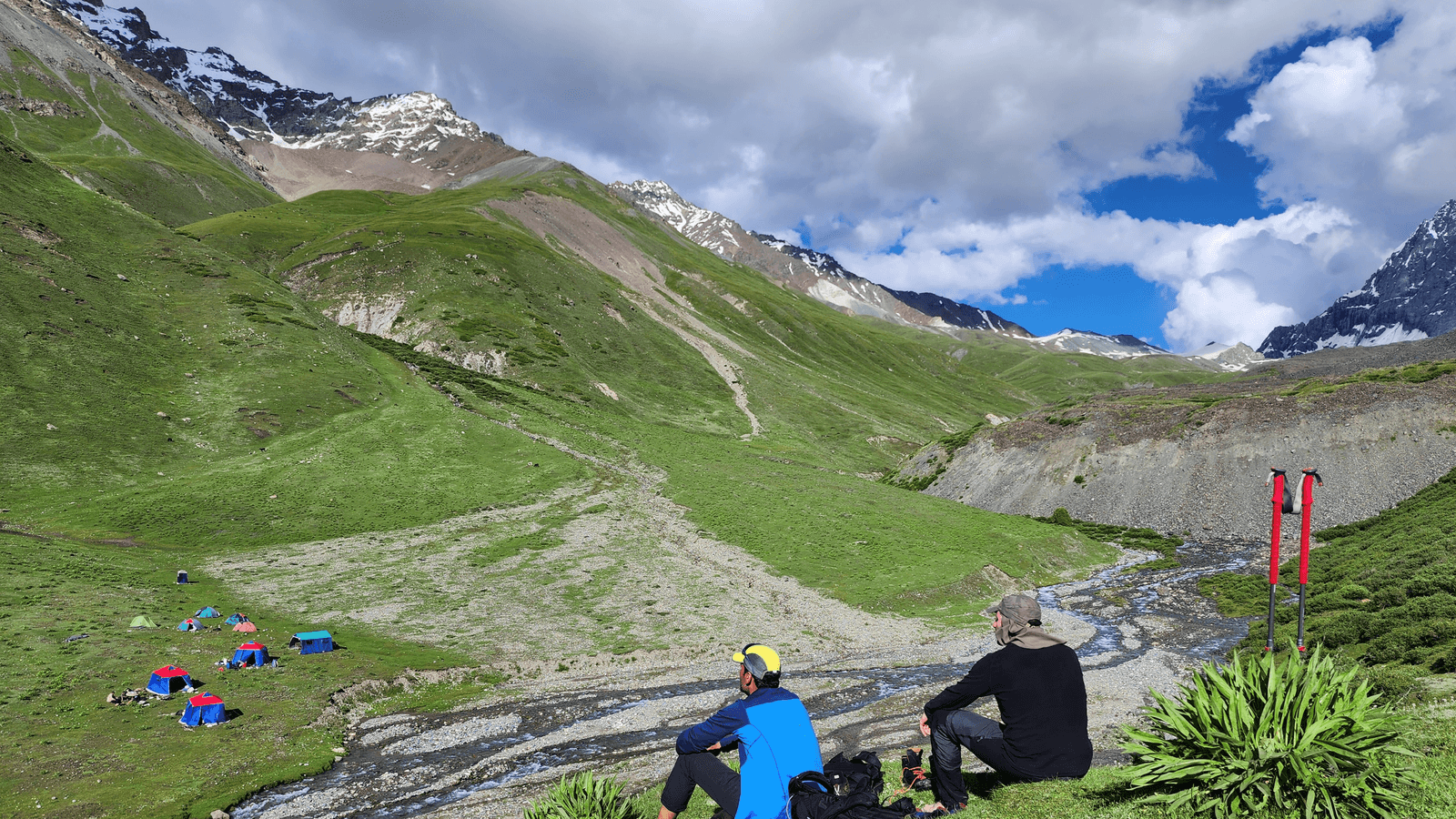
The great expeditions to K2 and the other giants of the Karakoram set off from here, on long treks up the Baltoro glacier that take weeks. But there is plenty of walking for those with less time or ambition. Village paths link settlements through orchards and fields, along irrigation channels and up into the side valleys, with views of the high peaks. Longer day hikes and treks climb to high passes, such as the Thalle La, at well over four thousand metres, between Shigar and Khaplu, with views across the ranges.
Walking here is demanding. The altitude is high, the sun strong and the terrain rough, and good fitness and a period of acclimatisation are important. The season is short, from about July to September, when the passes are clear of snow.
Baltistan's food reflects its high, cold climate and its Tibetan roots. Apricots, fresh in summer and dried for the winter, are eaten everywhere, and their kernels are pressed for oil. Thick wheat and buckwheat breads, butter tea and hearty soups are staples. The Balti people's hospitality is warm, and walkers are often invited into homes for tea and dried fruit.
On the way: Taxila
On the way north from Islamabad, many visitors stop at Taxila, an ancient city that was a great centre of learning and of Buddhist art in the centuries around the time of Christ. Its ruined monasteries and stupas, in the Gandhara style, are a World Heritage Site, and its museum has fine sculpture.
G Adventures' Pakistan: Hike the Karakoram Mountains, eight nights from July to September, includes Islamabad and Taxila, Khaplu and Shigar, Yugo village, Thosqi Khar and the Thallay La trail.
G Adventures' Pakistan: Lahore and Hiking the Karakoram Mountains, ten nights in the same season, adds Lahore to Islamabad, Khaplu, Shigar and Thoqsi Khar in Baltistan.
Before booking any trip to northern Pakistan, check the latest Foreign, Commonwealth and Development Office travel advice, and be prepared for flights into the mountains to be delayed by weather. The road alternative is long, and patience is part of travelling in the Karakoram.
By Walter Pellow, the name Atlas & Passage’s editorial team writes under. Prices and dates in the trips below come from the operators and can change.