Slow travel
France, at the speed a bicycle allows
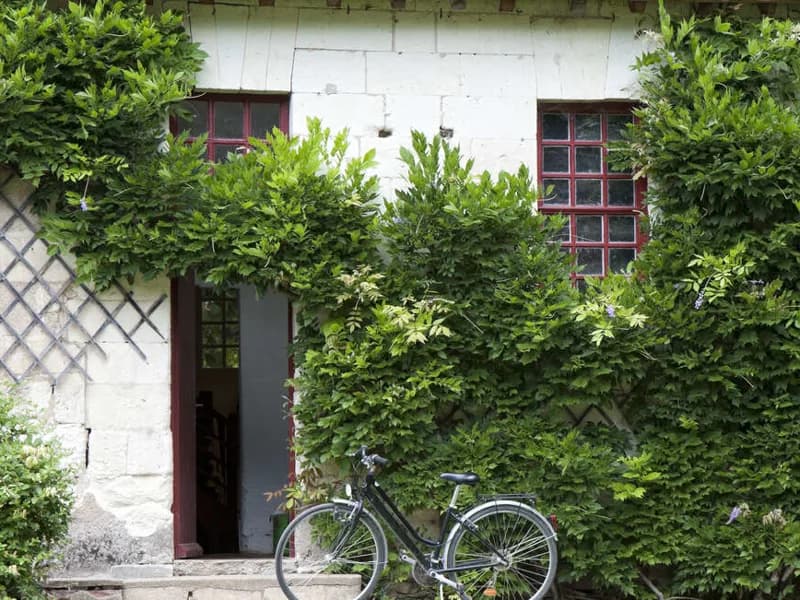
A car crosses the Loire valley in an afternoon and remembers almost none of it. A bicycle takes three days over the same ground and remembers everything, chateau by chateau and lock by lock.
By Arthur Penhallow26 September 20264 min read
France built more of itself around slow, deliberate travel than almost any country in Europe, and it shows in the infrastructure a cyclist actually uses: towpaths beside canals dug for barge traffic two centuries ago, quiet departmental roads that once carried nothing faster than a cart, and a network of dedicated cycle routes, the Loire à Vélo chief among them, built specifically to let visitors move through the country at a pace that notices things. A car on the same roads is generally trying to get somewhere. A bicycle, in the right part of France, is already there.
The Loire, chateau by chateau
The Loire valley was where the French monarchy chose to build its country houses from the fifteenth century onwards, and the result, a cluster of several hundred chateaux strung along the river between Orléans and Angers, is arguably the single best-preserved concentration of Renaissance and late-medieval domestic architecture in Europe. Villandry's formal Renaissance gardens, laid out in geometric vegetable beds as much for show as for eating, sit within a short ride of Chenonceau, built across the River Cher on a series of arches, and of Chambord, the largest of them all, with a double-helix central staircase said, on no very solid evidence, to have been designed with input from Leonardo da Vinci in his final years at the French court nearby.
A cycling route through this stretch of the valley moves at roughly the pace the chateaux themselves were built to be approached: along flat river paths, through vineyards producing some of France's better-known white wines, and past villages that a coach itinerary would pass in minutes rather than the better part of a day.
The canal that let barges skip the sea
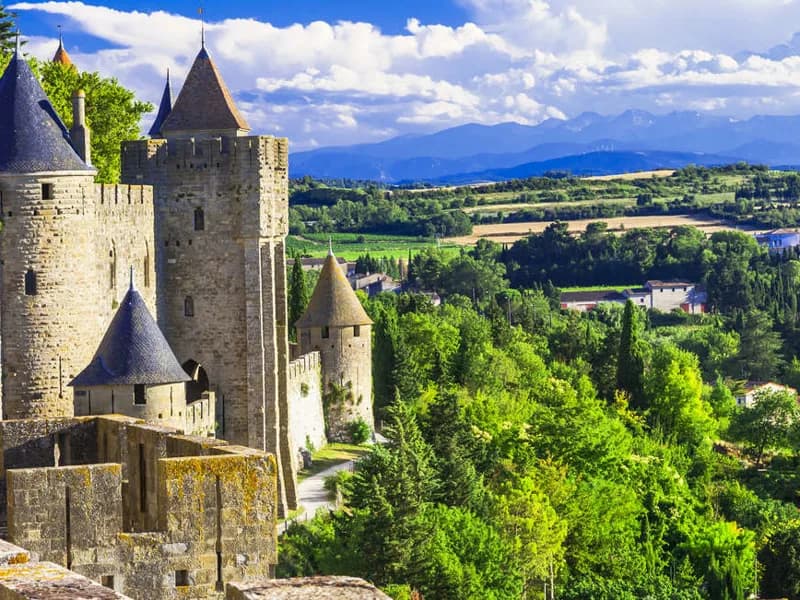
In the far south-west, the Canal du Midi does for cycling what it once did for freight: it provides a single, continuous, almost entirely flat route through a stretch of country a road would otherwise cross in a straighter and far less interesting line. Built in the seventeenth century under Pierre-Paul Riquet to link the Atlantic to the Mediterranean without a voyage around Spain, the canal is lined for much of its length with plane trees planted to shade the towpath and stabilise the banks, and it passes directly beneath the walls of Carcassonne, the restored medieval fortress city whose double ring of ramparts and round towers has supplied the popular image of a French castle to more films and board games than almost any other building in the country. The canal's engineering, its two hundred and forty-odd structures including locks, aqueducts and a tunnel, was recognised by UNESCO in 1996, and travelling its towpath by bicycle remains one of the more direct ways to appreciate what an achievement it was to build without a single modern machine.
The coast where the Camargue meets Catalonia
Further east, a route from Marseille towards the Spanish border trades canals and chateaux for a different kind of French landscape entirely: the flat, marshy Camargue delta where the Rhône reaches the sea, home to wild white horses and pink flamingos, followed by the fortified medieval walls of Aigues-Mortes, built by Louis IX as a departure point for crusade even though the sea has since retreated some distance from its gates. The route continues along the Mediterranean coast towards Collioure, a small fishing port whose light drew Matisse and Derain to paint there at the start of the twentieth century, before crossing into Catalonia and Barcelona, a route Explore Worldwide covers on its Cycle Marseille to Barcelona tour.
Choosing a route
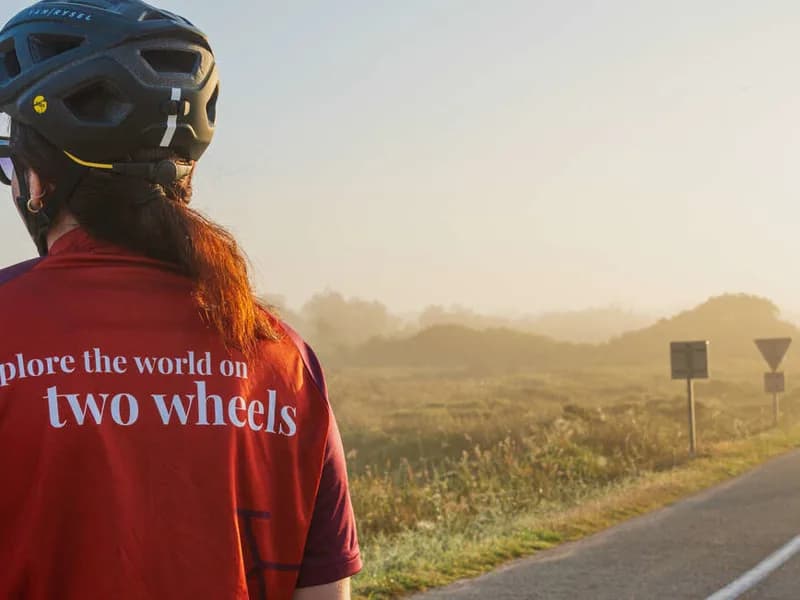
Explore Worldwide's escorted cycling tours cover all three of these regions on a supported basis, with luggage transferred between stops and a guide setting the pace rather than a rigid schedule. Cycling in France, in the Loire valley, spends a week moving between the valley's grandest chateaux and its quieter wine villages at a pace no coach tour could match.
None of the three routes demands serious fitness; the terrain in each case is chosen for its flatness as much as its scenery, which is rather the point. The reward for going slowly is simply seeing more of what a faster journey would miss entirely.
By Arthur Penhallow, the name Atlas & Passage’s editorial team writes under. Prices and dates in the trips below come from the operators and can change.