Walking
Provence on foot, between the Luberon villages
The hill villages of the Vaucluse were built to be seen from a distance and reached on foot. Walking between them, from the Dentelles to Gordes and Sénanque, is the slow way into Provence, and the best one.
By Walter Pellow2 November 20264 min read
From a distance, a Provençal hill village looks like part of the rock it stands on: a cluster of pale stone houses stacked up a slope, a church tower or a castle at the top, and terraces of vines and olives falling away below. The villages were built on high ground for safety, and they were built to be walked to. Seen from a car, they come and go in a minute. Seen from a path, they hang on the horizon for an hour and then let you in through a gate in the wall.
The Vaucluse, the department east of Avignon, has more of them than most. Its countryside runs from the jagged limestone of the Dentelles de Montmirail in the north to the long ridge of the Luberon in the south, with Mont Ventoux, over 1,900 metres high and often white-topped, looking down on all of it.
The Dentelles and the wine villages
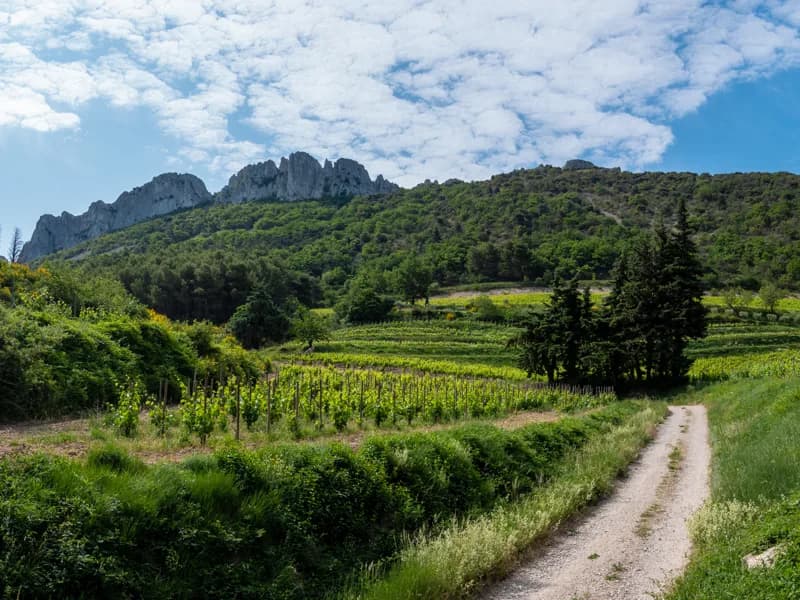
The Dentelles de Montmirail are a small range of thin limestone ridges, worn by weather into points and blades. Dentelles means lace, which is about right. Around their foot lie some of the best-known wine villages of the southern Rhône: Gigondas, Beaumes-de-Venise, Séguret on its terrace above the vines. The paths between them climb through pine and oak to the ridges and come down through the vineyards, and at the end of the day there is generally a cellar door open in the square.
To the north, Vaison-la-Romaine is a town in two halves: a medieval upper town on a rock, and a Roman lower town spread out across the valley floor, with a Roman bridge over the river between them that is still in use. A little to the south, the Benedictine abbey of Sainte-Madeleine du Barroux stands on its own above the plain, and the château of Le Barroux above its village.
Gordes, the bories and Sénanque
Further south, on the edge of the Luberon, Gordes is the most photographed of all the hill villages: tiers of stone houses wrapped round a rock, with a Renaissance château on top. It is busy in summer for good reason, and the best way to arrive is on foot, from the valley, so that the village rises in front of you.
Close by is the Village des Bories, a group of bories, the dry-stone huts of Provence, built without mortar from flat stones laid in overlapping courses into domes and corbelled roofs. The countryside here is scattered with them; this is the largest group of them in the area, and it has been restored as an open-air museum of rural life.
North of Gordes, in a narrow wooded valley, is the Abbaye Notre-Dame de Sénanque, founded in 1148 by Cistercian monks. It is a building of great plainness, as Cistercian abbeys were meant to be, and in early summer the lavender is in flower in the field in front of it, in purple rows that lead the eye straight to the church. It is still home to a community of monks, and visitors are asked to keep quiet.
Seen from a path, the villages hang on the horizon for an hour and then let you in through a gate in the wall.
Three ways to see it
Explore's seven-night Walking in Provence links all of these. It walks from Séguret to Vaison-la-Romaine, Sainte-Madeleine du Barroux Abbey and the Château du Barroux, through the wine villages of Gigondas and Beaumes-de-Venise, through the Gorges de la Nesque to Monieux, and then to Gordes, the Village des Bories and Sénanque Abbey, ending at Saint-Rémy-de-Provence. It runs in April, May, September and October.
Those are the right months for walking. July and August are hot, the light hard and the villages crowded; spring brings wild flowers and cherry blossom, and autumn the grape harvest and clearer air. The lavender, it is fair to say, flowers in summer, from about late June, so a walker in May or September sees the fields green or cut.
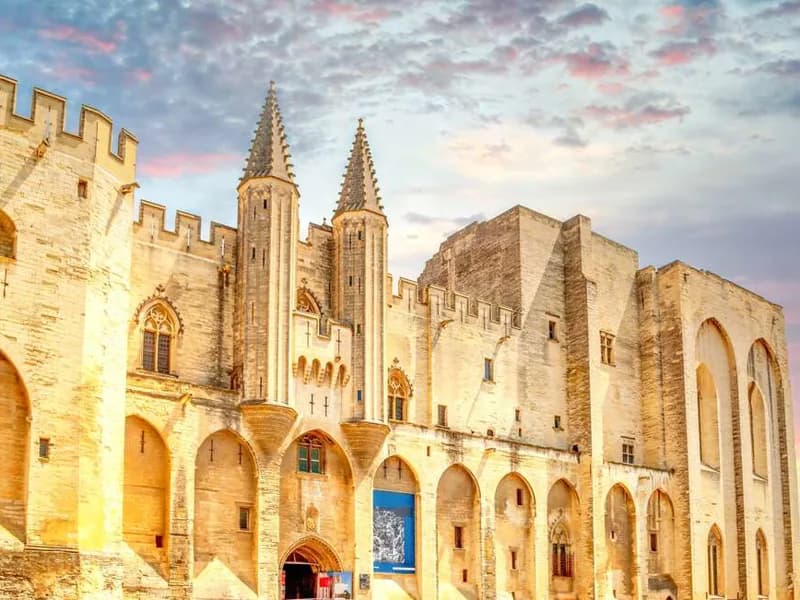
For those who would rather ride, Explore's seven-night Cycle Provence covers similar country on two wheels: from Avignon to Châteauneuf-du-Pape, Barbentane, the abbey at Frigolet, Saint-Rémy-de-Provence, L'Isle-sur-la-Sorgue with its waterwheels, Pernes-les-Fontaines, Gordes, the spring at Fontaine-de-Vaucluse and Mormoiron, with Mont Ventoux in the list before the trip ends at Marseille. It runs in the same spring and autumn months.
And for those who would rather float, Just You's seven-night Cruising the Rhone & Picturesque Provence is a river cruise for solo travellers from Lyon, calling at Viviers, Arles, Avignon, Tournon-sur-Rhône and Trévoux. It sees Provence from the river rather than the hills, but Avignon and Arles are two of the great towns of the south.
Walking it well
The paths here are well marked, and many follow the long-distance GR routes, but the country is drier and rockier than it looks in pictures, and a day can be longer than the map suggests. Carry more water than you think you need. Start early, and plan to be in a village at lunchtime, because the Provençal lunch is a serious matter and the afternoon is hot. Market days move round the villages, one a day, and are worth arranging a walk around.
Above all, look back. The point of walking between hill villages is that each one is the view from the last.
By Walter Pellow, the name Atlas & Passage’s editorial team writes under. Prices and dates in the trips below come from the operators and can change.