First time
Green Spain, and a first cruise across the Bay of Biscay
If you are wondering whether cruising suits you, the north coast of Spain is a sensible place to find out. It is close, it is green, and it is nothing like the Spain of the posters.
By Arthur Penhallow26 September 20265 min read
The Spain most British people know faces the Mediterranean and comes with a sunbed. The north coast faces the Atlantic and comes with an umbrella. It is green because it rains, the hills run straight down to the sea, and the towns have the grey stone and fishing harbours of somewhere much closer to home. Visitors from Cornwall and Galway tend to find it oddly familiar. It is also, for anyone wondering whether a cruise is for them, a very good place to start.
The reason is simple arithmetic. From Portsmouth, Tilbury or Newcastle, the first Spanish port is a day or two away rather than a week, so a trip of nine or ten nights can take in three or four calls without any long stretches of open ocean. You find out whether you like the rhythm of it, the unpacking once, the waking up somewhere new, the dinner with a view of a harbour, before committing to a fortnight in the Canaries.
About the Bay of Biscay
It would be dishonest not to mention the bay. Biscay has a reputation, and it earned it: the continental shelf rises sharply off the French coast, Atlantic swells arrive with nothing to stop them, and in autumn and winter the crossing can be lively. In high summer it is usually calm, and often glassy, but nobody can promise that. The sensible approach is to choose a sailing between May and September if your stomach is untested, to take whatever remedy suits you before rather than after, and to remember that a ship is a large and stable thing, and that a day of rolling is generally followed by a day in port.
There is a compensation, too. The bay is one of the better places in European waters to see whales and dolphins, and on a calm day people line the rails watching for them. They are a possibility, not a feature of the itinerary, but they are a possibility worth packing binoculars for.
Four ports, four characters
The northern coast is a string of regions with strong opinions about themselves, and the ports reflect it.
Bilbao, reached from the port at Getxo, is the Basque Country's industrial city, which reinvented itself when the Guggenheim Museum opened in 1997: Frank Gehry's building, clad in titanium, looks rather as if a ship had come up the river and changed its mind about leaving. Near the port, the Vizcaya Bridge, completed in 1893, still carries cars and passengers across the river mouth in a gondola slung from a high steel frame. It was the first bridge of its kind in the world and is now on UNESCO's World Heritage List, which is a great deal of distinction for a ferry on a wire.
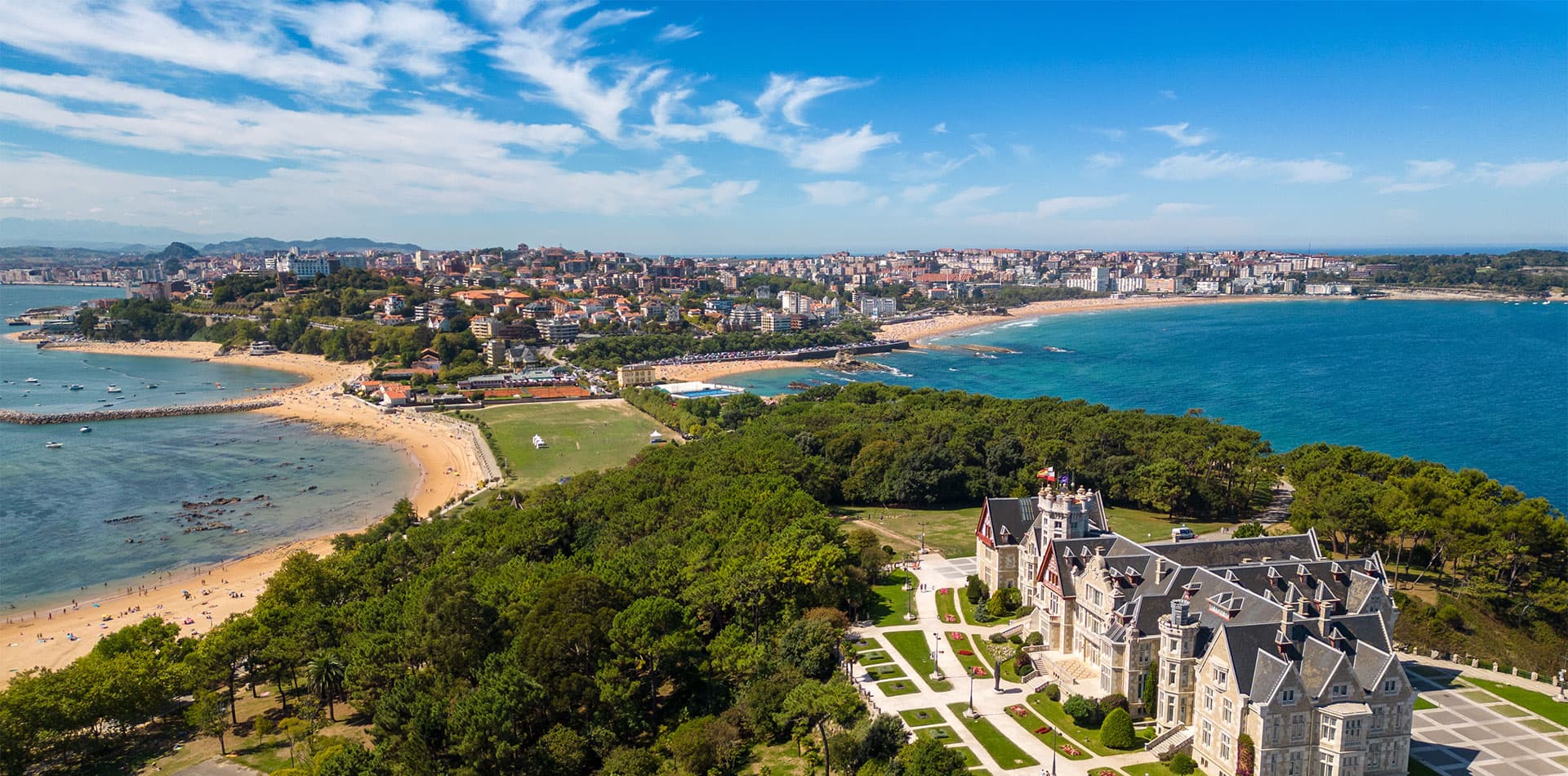
Santander is an elegant resort city, built on trade with the Americas and later adopted by the Spanish royal family as a summer retreat. The Magdalena Palace, on its headland, was given to King Alfonso XIII in the early twentieth century, and some sailings make a point of passing it. Inland lies Altamira, whose cave paintings of bison are among the oldest art in the world. The original cave is closed to protect it, but the replica nearby is careful and remarkable.
Gijón is in Asturias, which has a claim to being where Christian Spain began again: according to tradition, the reconquest of the peninsula from the Moors started at Covadonga, in the mountains behind, in the early eighth century. Asturias is also cider country, and its cider is poured from above the head into a glass held at the hip, a technique that aerates the cider, impresses visitors and requires the floors of its bars to be cleaned frequently.
A Coruña, in Galicia, has the oldest working lighthouse in the world. The Tower of Hercules was built by the Romans in the first or second century, refaced in the eighteenth, and has been warning ships off this coast for most of the time since. Sailings often pass it close in. The city also holds the grave of Sir John Moore, the British general killed in 1809 while covering his army's evacuation by sea, and there is something fitting about arriving by ship at the place where so many British soldiers once left by one.
A day of rolling is generally followed by a day in port.
Santiago, if you want it
From A Coruña, or from the naval port of Ferrol further along the coast, excursions run inland to Santiago de Compostela, the great pilgrimage city of the Middle Ages, whose cathedral stands over what is venerated as the tomb of St James. It is a long day, but for many people it is the point of the whole trip. Pilgrims arrive on foot in the square in front of the cathedral from all over Europe; you will arrive by coach, and nobody will mind.
Choosing a first sailing
A few practical thoughts, for a first-timer. Pick a port you can reach easily; the time saved on getting to Southampton or Newcastle is time added to the holiday. Pick the season with your stomach as well as your calendar in mind. And do not be put off by the green north's reputation for rain: it is the reason the hills look the way they do, and the local cooking, heavy on fish, beans and cider, is designed for exactly that sort of weather.
If you enjoy it, the Atlantic coast continues south, to Vigo, Lisbon and Cádiz, and the ships go with it. If you don't, you will at least have seen Bilbao's titanium and the oldest lighthouse in the world, which is more than most people manage on a long weekend.
By Arthur Penhallow, the name Atlas & Passage’s editorial team writes under. Prices and dates in the trips below come from the operators and can change.