Walking
La Gomera on foot, the island cut by ravines
La Gomera is a round volcanic island split into wedges by deep ravines, with a cloud forest on top. It is an hour's ferry from Tenerife and a world away from it, and it is best seen on foot.
By Walter Pellow2 November 20264 min read
From the south coast of Tenerife, on a clear day, La Gomera looks like a dark loaf of an island floating on the sea to the west. Close up, it turns out to be anything but smooth. The island is old and volcanic, roughly round, and its centre rises to a high plateau; from there, deep ravines, the barrancos, fall away to the sea in every direction, so that the island is cut into wedges like a cake. Between them run sharp ridges, and in the bottoms, terraces, palms and white villages.
That shape is the reason La Gomera stayed quiet. Until the roads were driven along and through the ridges in the twentieth century, getting from one barranco to the next meant going up and over on foot or by mule, and the paths that did the job are still there. They are what makes the island one of the best walking places in the Canaries.
The forest on top
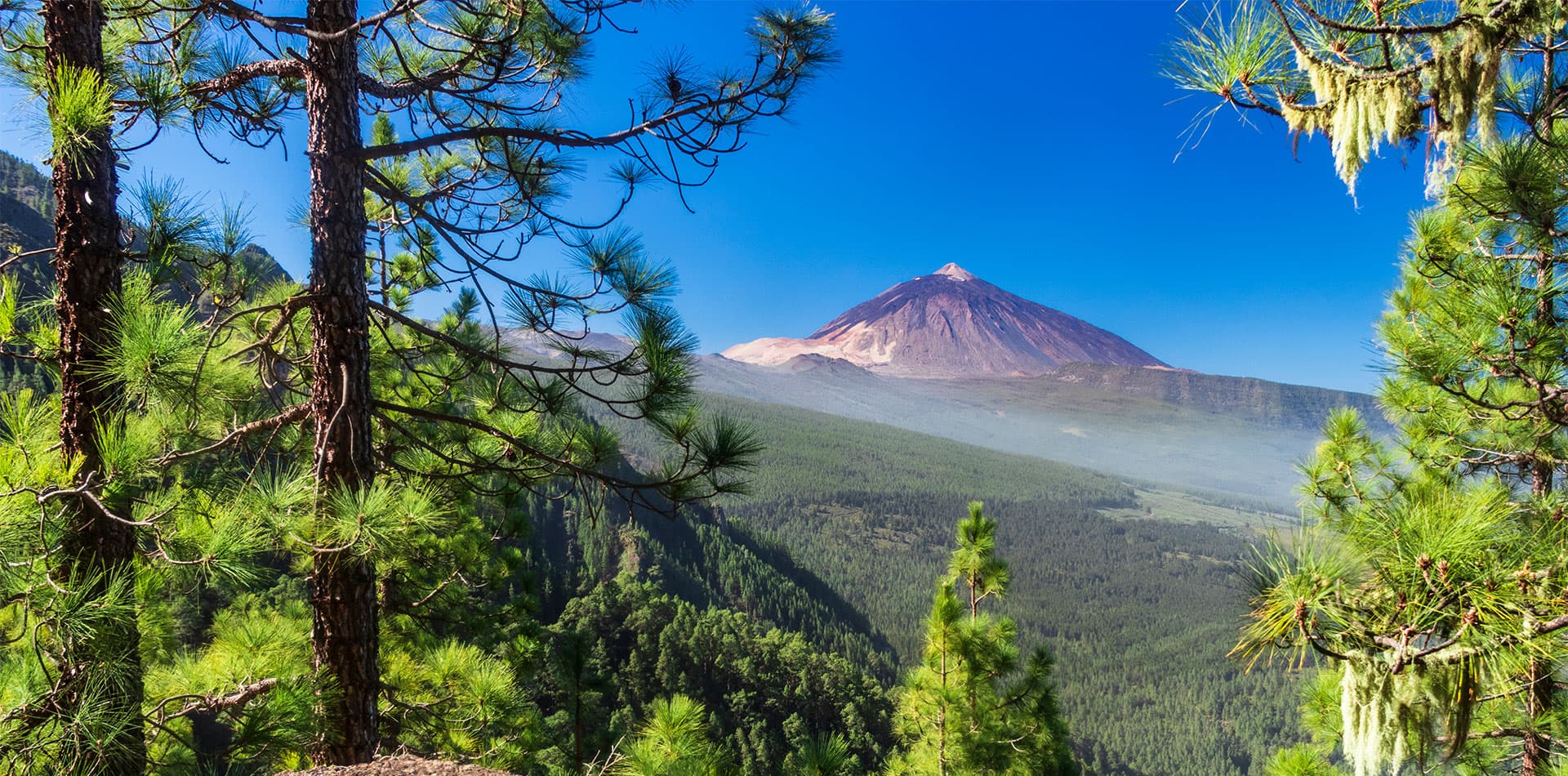
The high centre of La Gomera is the Garajonay National Park, made a national park in 1981 and a UNESCO World Heritage Site in 1986. Its forest is laurisilva, laurel forest, a kind of woodland that once covered much of southern Europe and north Africa and now survives only on a few Atlantic islands. It lives on the clouds. The trade winds push damp air up against the island's slopes, the mist settles in the trees, and the moss and lichen hang from the branches in long beards. On a cloudy day it is dim, cool and silent; when the sun breaks through, it is green in a way that seems impossible on a dry, volcanic island off Africa.
The highest point, the Alto de Garajonay, is 1,487 metres above the sea, and on a clear day you can see Tenerife and Mount Teide from it, and La Palma and El Hierro the other way.
From the forest, the classic walks go down. The path from the plateau into the Barranco del Cedro, past the little chapel of Nuestra Señora de Lourdes, follows a stream through the laurels to the hamlet of El Cedro, and then continues down the barranco through terraces and palms to Hermigua on the north coast. It is a long descent, kind to the lungs and hard on the knees, and it passes through most of the island's landscapes in one day.
The island is cut into wedges like a cake.
The whistled language
La Gomera's other famous inheritance is the Silbo Gomero, a way of whistling the Spanish language, so that a message can be sent across a ravine that would take an hour to walk round. Shepherds used it for centuries. By the late twentieth century it was dying out, and the island responded by teaching it in its schools. In 2009 UNESCO added it to its list of the Intangible Cultural Heritage of Humanity. You may hear it in demonstrations; you may also, if you are lucky, hear it used.
Columbus's last stop
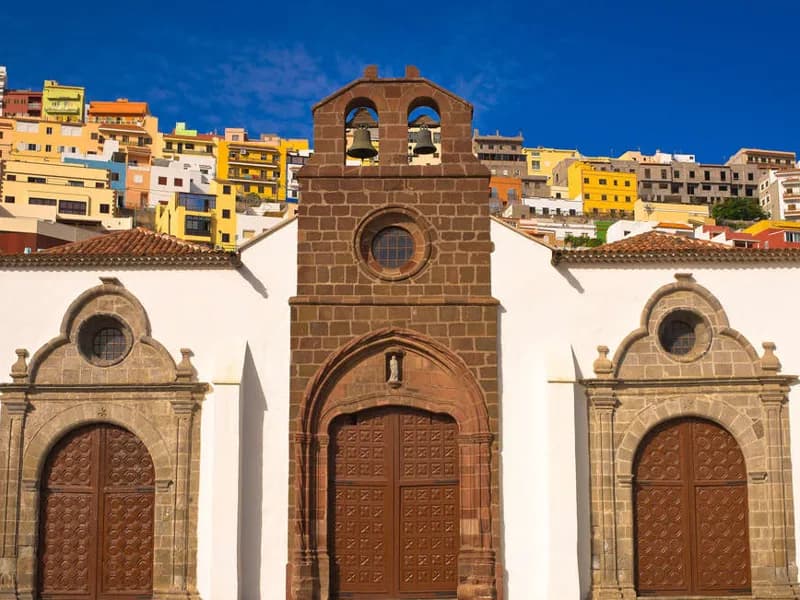
The island's capital and port, San Sebastián de la Gomera, was the last place Christopher Columbus touched in the known world in 1492. He took on water and supplies there and sailed west on 6 September, and the town has kept the connection: there is a well from which, the town says, his ships took their water, and a house where tradition says he stayed. It is a small, pleasant harbour town with a church and a seafront, and the ferry from Tenerife comes in to it.
How to go
Explore's seven-night Canary Islands Walking - La Gomera and Tenerife starts at Los Cristianos on Tenerife and crosses to San Sebastián, and its walks include the Collada de Peraza, La Laja, Chejelipes and Pajarito, the Garajonay National Park, the chapel of Nuestra Señora de Lourdes, the Barranco del Cedro and El Cedro, and Hermigua and Playa Caleta on the north coast. It departs in January, March, April, October, November and December, which are the right months: the walking weather in the Canaries is best outside the heat of summer.
La Gomera is also a cruise call. Fred. Olsen's thirteen-night Canary Islands, Madeira & the Solar Eclipse sails from Málaga in January, and its places include Santa Cruz de Tenerife, Las Palmas, San Sebastián de la Gomera, La Estaca on El Hierro, Santa Cruz de La Palma, Funchal and Lisbon, before ending at Portsmouth. The thirty-four-night Mediterranean, Canaries & the Solar Eclipse, also from Málaga in January, reaches the Canaries after a long loop of the eastern Mediterranean. A day ashore is enough to see San Sebastián and, with an excursion, to reach the forest.
The paths are well marked and signed, but La Gomera is steep, and many walks are long descents or long climbs. Walking poles help on the cobbled sections, and the weather in the forest can be cold and wet even when the coast is sunny, so take a layer. The island's buses are few, and a walk usually needs a plan for getting back, which is the main argument for a guided holiday. And save something for the evening: the barrancos are at their finest in the last hour of light, when the ridges throw long shadows across the terraces and the sea turns gold.
By Walter Pellow, the name Atlas & Passage’s editorial team writes under. Prices and dates in the trips below come from the operators and can change.