Seasons
Madeira's flower festival, and the island in spring
Each spring Funchal fills its streets with flowers, its children build a wall of them, and its floats parade through the town. The festival lasts a month in 2027, and the island around it is at its greenest.
By Walter Pellow2 November 20264 min read
Madeira is an island where things grow. It rises steeply out of the Atlantic some way off the coast of Africa, with a climate mild enough for almost anything and enough rain on its northern slopes to keep it green all year. The gardens of Funchal are full of plants from every warm corner of the world, and in spring, when most of them flower at once, the island holds a festival in their honour.
The Festa da Flor is one of the fixed points of Madeira's year. The island's official calendar gives the 2027 festival as 29 April to 30 May, with flower installations in the streets of Funchal for the whole month and the main events on its first weekends. As with any calendar set this far ahead, the dates are subject to change, so check them before you book.
The wall, the carpets and the parade
The festival opens with its gentlest moment. At the Wall of Hope ceremony, usually held on the festival's first Saturday, which in 2027 would be 1 May, schoolchildren gather in the Praça do Município, the town hall square, each carrying a flower, and one by one they place them on a wall to build a single display, as a call for peace. It is short and unpretentious and very much a local occasion, and a good reason to be in Funchal for the first weekend.
Through the following weeks the town is dressed with flowers: displays in the squares, flower carpets laid on the paving of the old streets, stalls selling bulbs and cut flowers. The main event is the Grand Flower Parade, when floats covered in blooms and dancers in costume make their way through the centre to music. It draws a crowd, so arrive early and find a kerb.
One by one they place them on a wall, to build a single display, as a call for peace.
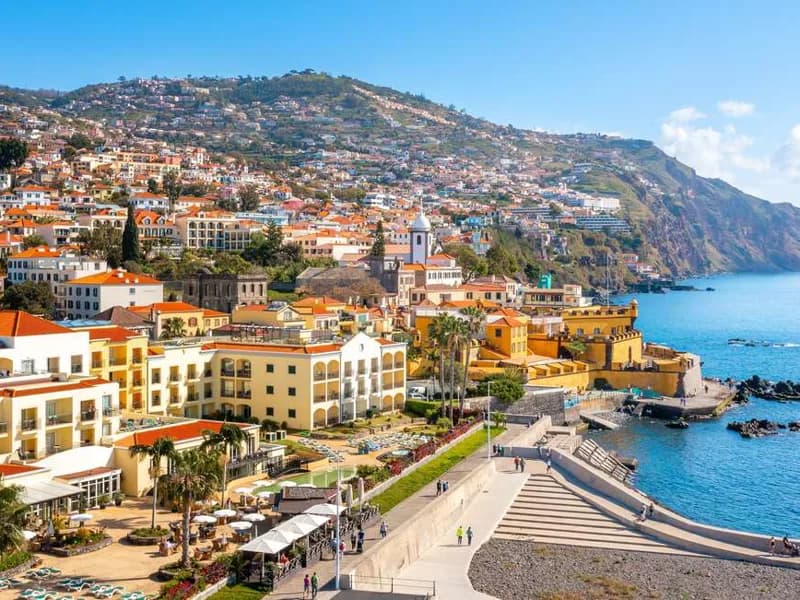
Most events are free, and the festival is not a ticketed show so much as a month in which the island's capital puts its gardens into the street. The rest of the time, Funchal is as it always is: a small, steep, cheerful city of black-and-white cobbles, harbour views and a cable car up to Monte, where the old wicker toboggans still carry passengers down the hill on runners, steered by two men in straw hats.
The island beyond the festival
Spring is a fine time to see the rest of Madeira too. The island is small, but its mountains are high, its roads twist and its interior is crossed by the levadas, the narrow irrigation channels cut along the hillsides over the centuries since the island was settled, to carry water from the wet north to the farms of the drier south. A path runs beside most of them, which makes them some of the best-kept walking paths in Europe: level, often shaded, and occasionally on the edge of a long drop.
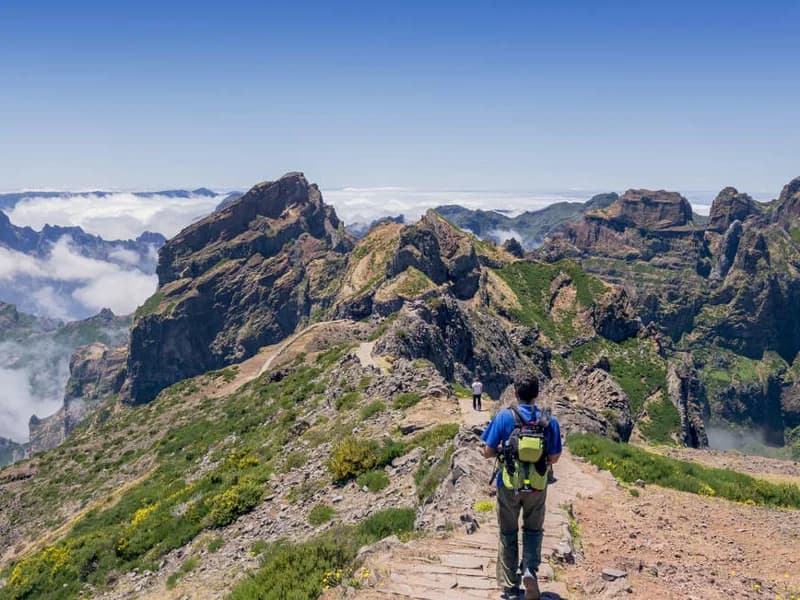
The levadas pass through the Laurisilva, the laurel forest that once covered much of southern Europe and survives in its largest form here, on Madeira's northern slopes. It is a UNESCO World Heritage Site, a damp, mossy, green world of old trees and ferns, at its freshest in spring after the winter rains. Higher still, the central peaks rise above 1,800 metres, and on a clear morning the view from Pico do Arieiro looks down on a sea of cloud.
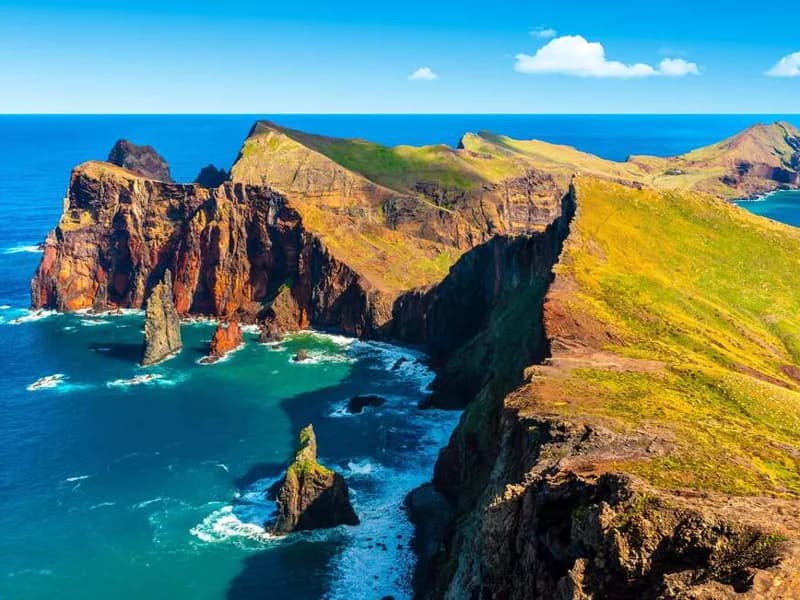
Explore's seven-night Upgraded - Madeira Island Discovery covers this range: it is based in Funchal and visits the eastern headland of Ponta de São Lourenço, Santana and its thatched houses, the Laurissilva Forest and Ribeiro Frio, Pico do Arieiro, the natural rock pools of Porto Moniz, Seixal, Câmara de Lobos, Camacha, the Cristo Rei viewpoint and Ponta do Pargo in the far west. It departs from February to November, so a May departure can fall in festival time.
For walkers, Explore's seven-night Walking in Madeira begins in Santana and follows the island's paths by way of Boca do Risco, Porto da Cruz, Boaventura, the Laurisilva, Fajã do Penedo, Porto Moniz, Rabaçal and the Tunel dos Cavaleiros, ending at Calheta and Ponta do Vigia. It runs in most months of the year.
For families, Explore's seven-night Family Madeira Adventure starts in Funchal and takes in Câmara de Lobos, Monte, Ribeira Brava, Ponta de Sol, the high plateau of Paul da Serra, Porto Moniz, São Vicente, Ponta de São Lourenço and the marina at Quinta do Lorde. It runs in April, May, July, August and October.
When to go
The festival weeks are busier than the rest of spring in Funchal, and the hotels nearest the centre fill first. If you want the walking without the crowds, late April and the second half of May are a fair compromise. If you want the festival, aim for the opening weekend, when the Wall of Hope is built and the town is at its most excited.
Either way, bring a layer. Madeira's weather changes with the altitude, and a warm morning on the Funchal waterfront can become a cold, wet afternoon on the peaks. That is the price of all the green.
By Walter Pellow, the name Atlas & Passage’s editorial team writes under. Prices and dates in the trips below come from the operators and can change.