Walking
Madeira's levadas, the water channels you can walk beside
For five centuries Madeirans have carried water from the wet north of their island to the dry south in narrow stone channels cut along the mountainsides. The paths beside them make walking like nowhere else.
By Walter Pellow2 November 20264 min read
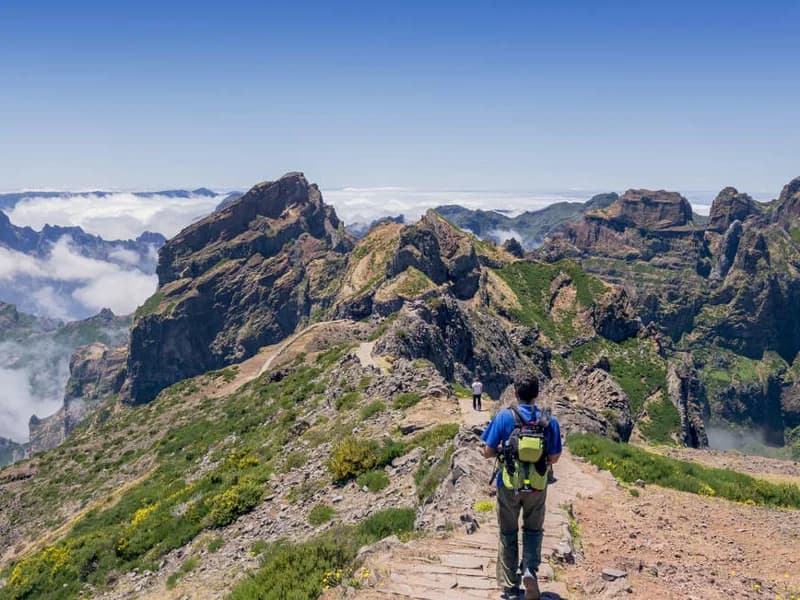
A levada is a simple thing: a channel of water, usually less than a metre wide, running along a hillside at a gentle, steady gradient. What makes Madeira's levadas remarkable is where they go. They contour along the sides of steep valleys, cling to cliff faces, plunge through tunnels in the rock and cross ravines, carrying water for miles from the high, rain-soaked mountains of the north to the sunny, dry south, where the people live and the crops grow. And beside almost every one of them runs a path, built for the men who maintained it. Those paths are what bring walkers to Madeira.
Water on a mountain island
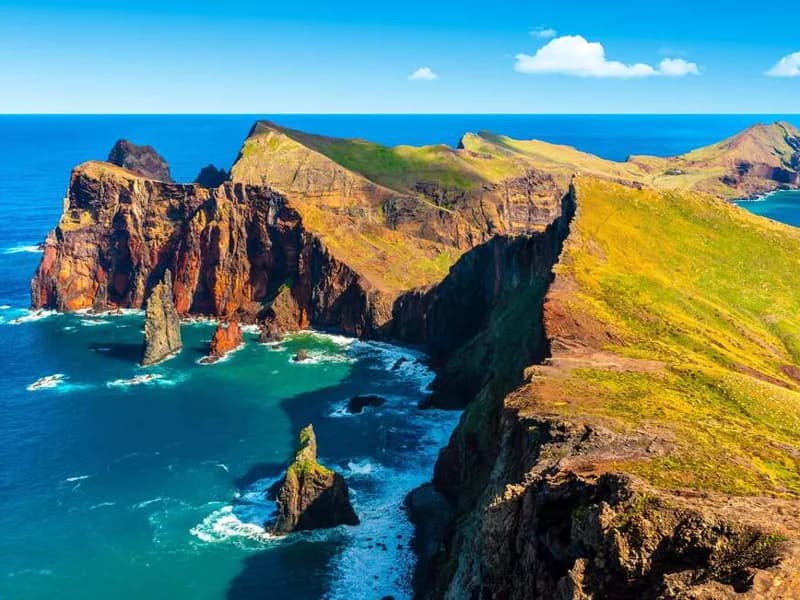
Madeira is a volcanic island rising steeply out of the Atlantic, and its weather divides it in two. The north-east trade winds bring cloud and rain to the northern slopes and the central mountains, while the south, in their shelter, is warm and much drier. When the Portuguese settled the island in the fifteenth century, they found the water in one place and the land they wanted to farm, for sugar, then vines and bananas, in another.
The levadas were the answer, and building them was heroic work. The first were dug early in the island's history, and they went on being built for centuries, with the most recent in the 1940s. Workers, often slaves in the early centuries, were lowered down cliffs in baskets on ropes to cut ledges for the channels, and many lost their lives doing it. The total length of the network is counted differently by different sources, depending on which channels are included, but several put it at over two thousand kilometres. The levadas are still in use, managed and maintained, and their keepers, the levadeiros, still walk them to clear blockages and open the sluices that share out the water.
Beside almost every levada runs a path, built for the men who maintained it.
What the walking is like
Because a levada has to flow gently, its path is usually nearly level, and that is the charm: you can walk for hours through mountain scenery without much climbing, the water flowing quietly beside you. Some paths are wide and easy, along terraces of vines and banana plants; others are narrow ledges with a long drop on one side, sometimes protected by a fence and sometimes not, and are not for anyone nervous of heights. The tunnels can be long, low and wet, and a torch is essential.
The finest walks are in the north and the centre, in the Laurisilva, the laurel forest, a relic of the evergreen forests that once covered much of southern Europe millions of years ago and now survive only on the Atlantic islands. Madeira's is the largest surviving area of it, and a World Heritage Site since 1999: a dense, dripping, moss-hung world of laurels, ferns and lichens, often in mist. At Rabaçal, in the high west, paths lead down into a deep green bowl of waterfalls, among them the Risco falls and the 25 Fontes, a pool fed by a cascade of springs. Ribeiro Frio, in the centre, and the country around Santana in the north-east are well walked too.
Holidays that go there
Explore's seven-night Walking in Madeira walks the north and west of the island: its places include Santana, Boca do Risco, Porto da Cruz, Boaventura, the Laurisilva, Faja do Penedo, Porto Moniz, Rabaçal and the House of Rabaçal, the Tunel dos Cavaleiros, Calheta and Ponta do Vigia. It departs in every month except August.
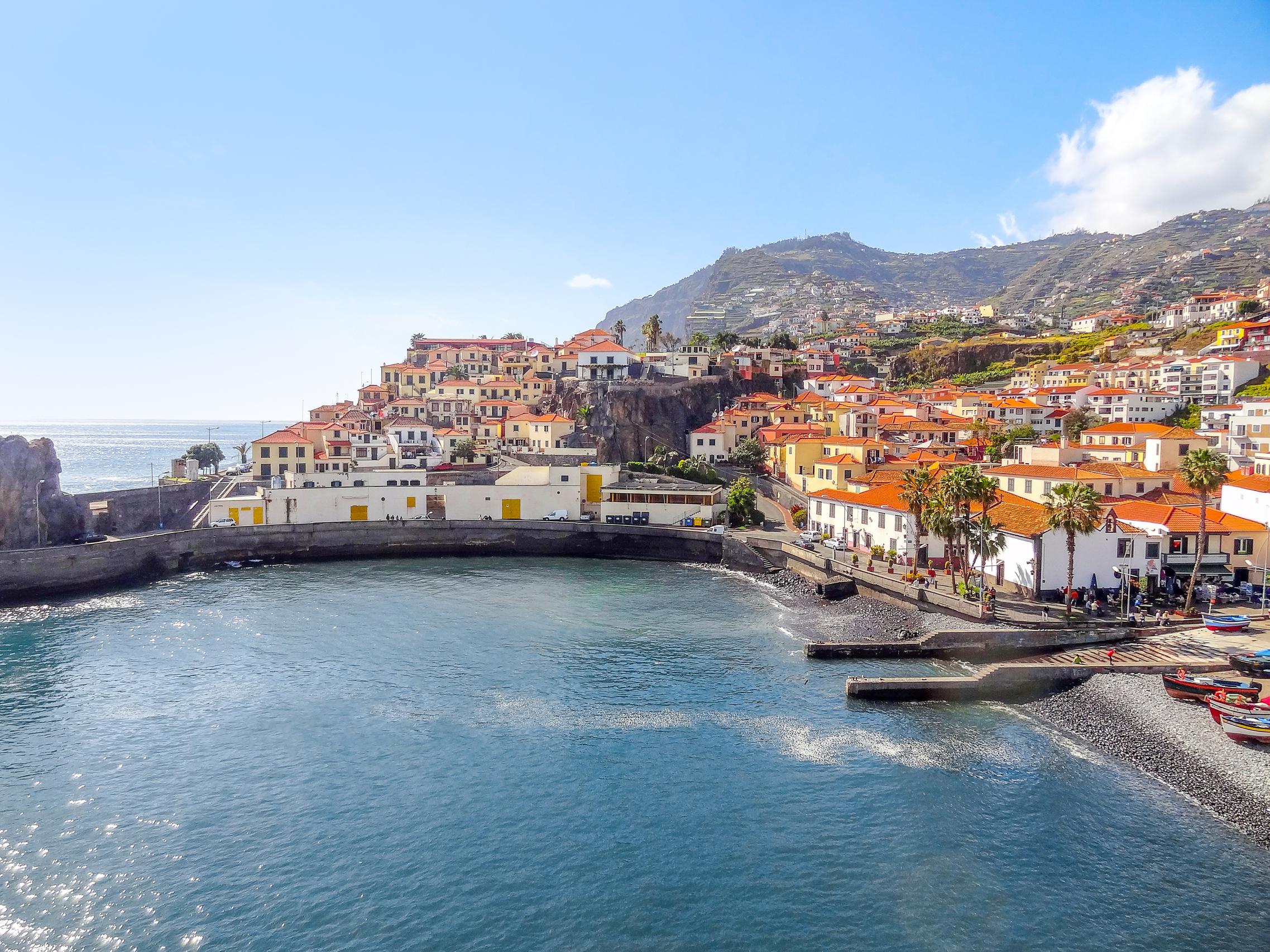
Explore's seven-night Upgraded - Madeira Island Discovery is a wider tour of the island, from Funchal to the Ponta de São Lourenço, Santana, the Laurissilva forest, Ribeiro Frio, the Pico do Arieiro, Porto Moniz and Seixal, Camara de Lobos, Camacha, the Cristo Rei viewpoint and Ponta do Pargo. It departs in every month from February to November.
Just You's seven-night Madeira - the Pearl of the Atlantic, for solo travellers, is a touring holiday that takes in Funchal, Santana, Machico, Monte, Câmara de Lobos, Cabo Girão, Porto Moniz, Paúl da Serra, Ribeiro Frio and the Curral das Freiras.
Pack a torch, a waterproof and boots with a good grip; the paths are often wet. And keep to the levada's pace. It was built to carry water slowly, and it rewards walkers who do the same.
By Walter Pellow, the name Atlas & Passage’s editorial team writes under. Prices and dates in the trips below come from the operators and can change.