History
Manila, Intramuros and the walled city inside the capital
In the middle of a huge, busy capital, the old Spanish walled town of Intramuros survives, with its fort, its stone church and its quiet streets. It was nearly destroyed in 1945, and what remains is the place to begin understanding the Philippines.
By Walter Pellow2 November 20263 min read
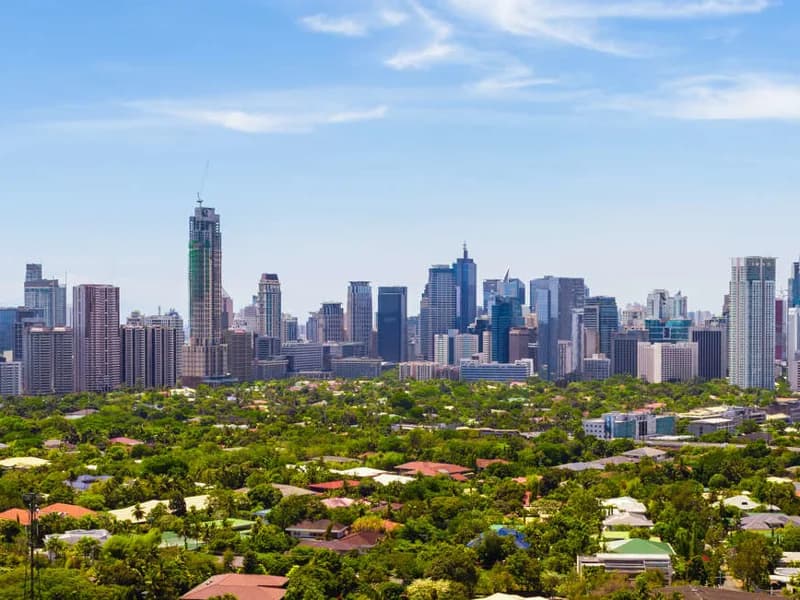
Manila does not make an easy first impression. It is a huge, sprawling, traffic-choked metropolis by a bay, hot, loud and crowded, and most visitors pass through it as quickly as they can on the way to the islands or the mountains. That is a pity, because at its heart, on the south bank of the Pasig river where it meets Manila Bay, is a place that explains a great deal about the country: Intramuros, the walled city built by the Spanish, the place where the colonial Philippines began.
Intramuros means "within the walls", and the walls are still there.
The walled city
In 1571 the Spanish conquistador Miguel López de Legazpi took the settlement at the mouth of the Pasig and declared Manila the capital of the Spanish colony. Over the following centuries the Spanish built a walled city here, enclosing churches, convents, schools, government buildings and the houses of the colonial elite. For centuries it was the seat of Spanish power in the islands, and the centre of a trade that linked China, the Americas and Europe through the galleons that sailed between Manila and Acapulco.
The walls survive for much of their length, with gates and bastions, and a walk along them, past moats turned into golf courses and gardens, is the best way to get the shape of the place.
Fort Santiago and Rizal
At the north-western corner of Intramuros, guarding the mouth of the river, is Fort Santiago, the citadel. It has been rebuilt several times after earthquakes, fires and war, and its gate, walls and courtyards are now a park and memorial.
It is also a place of pilgrimage. José Rizal, the writer, doctor and reformer whose novels exposed the abuses of Spanish rule and who became the national hero of the Philippines, was imprisoned here in November 1896, tried and sentenced to death. On the morning of 30 December 1896 he was marched from his cell to Bagumbayan, the field outside the walls that is now Rizal Park, and shot. His footsteps are marked in brass on the ground of the fort, leading from his cell towards the gate, and a shrine to him inside tells his story.
The walls are still there.
San Agustín Church
The great survivor of Intramuros is the church of San Agustín. Built of stone between the late sixteenth and early seventeenth centuries, it is the oldest stone church in the Philippines, and with its heavy walls, carved doors, painted ceiling and cloister, it has outlasted earthquakes, wars and fires. In 1993 it was listed by UNESCO as one of the Baroque Churches of the Philippines, and its monastery is now a museum of religious art.
1945
What happened to the rest of Intramuros is the darkest part of its story. In February 1945, in the Battle of Manila, American and Filipino forces fought to retake the city from the Japanese army, which made its last stand in the walled city. The fighting and the bombardment destroyed almost all of Intramuros, and a great many civilians in the city died, many of them killed by Japanese troops. When it was over, San Agustín was among the very few buildings left standing.
Much of what you see today, including the cathedral, has been rebuilt since the war, and a good deal of the walled city is still being restored. Knowing that makes a walk through its quiet streets more, not less, moving.
G Adventures' four-night Manila: Jungle Treks, Delicious Bites & City Sights is a short introduction to the capital, with Manila and the Mount Purro Nature Reserve. It departs in November and December.
G Adventures' eight-night Manila and Palawan: Jungle Trekking, Local Eats & Epic Beaches adds the island of Palawan, with Manila, Mount Purro Nature Reserve, Puerto Princesa and El Nido, and also departs in November and December.
Explore's twelve-night North Philippines Explorer begins in Manila before heading north to the Ilocos coast and Vigan, and into the mountains for Sagada, Banaue and the rice terraces.
Give Intramuros at least half a day, ideally the early morning or late afternoon, when it is cooler. Walk the walls, visit Fort Santiago and San Agustín, and sit for a while in one of its quiet plazas. In the middle of all of Manila's noise, it is a place of unexpected calm, and one with a great deal to say.
By Walter Pellow, the name Atlas & Passage’s editorial team writes under. Prices and dates in the trips below come from the operators and can change.