Journeys
Panama, the canal and the city at its Pacific end
Panama City sits where the canal meets the Pacific, with its colonial quarter on a point, its towers along the bay and the ships queueing offshore. Here is how to see the canal and the city, from the locks and from the sea.
By Walter Pellow2 November 20264 min read
Look at the bay of Panama City on any morning and the sea is full of ships at anchor: container ships, tankers, bulk carriers, all waiting their turn. They are queueing for the canal, and they explain the city. Panama City exists where it does because this is one of the narrowest crossings between the Atlantic and the Pacific, and for five centuries people have been moving goods across the isthmus here, by mule train, by railway and, since 1914, by water.
The canal is about eighty kilometres long, and it does not run quite the way the map suggests. Because the isthmus bends, the canal runs roughly north-west to south-east, so its Pacific entrance at Panama City lies to the east of its Atlantic entrance at Colón. Ships climb through locks to Gatún Lake, an artificial lake about 26 metres above sea level formed by damming the Chagres river, cross it, and come down by locks on the other side.
The locks
The French tried first, in the 1880s, under Ferdinand de Lesseps, who had built the Suez Canal, and failed, beaten by landslides, money and above all disease: yellow fever and malaria killed thousands of workers. The United States took over the project in 1904, controlled the mosquitoes, dammed the river, built the locks, and opened the canal on 15 August 1914. For most of the twentieth century it ran the canal and the zone around it; Panama took full control at noon on 31 December 1999. In 2016 a new, larger set of locks opened alongside the old ones, for the giant ships that could not fit the originals.
The place to watch is Miraflores, the set of locks nearest Panama City, a short drive from the centre. A visitor centre has viewing terraces above the lock chambers, and the sight is absorbing in a way that is hard to explain until you see it: a ship the size of a street slides into a concrete chamber with only a narrow gap on either side, guided by small electric locomotives on rails along the walls; the gates close; and the whole ship rises or falls in front of you as the water moves.
A ship the size of a street slides into a chamber with only a narrow gap on either side.
The city at the Pacific end
Panama City has two old towns, a century and a half apart. The first, Panamá Viejo, was founded in 1519, often described as the first European settlement on the Pacific coast of the Americas, and grew rich on the treasure of Peru carried across the isthmus. In 1671 the Welsh buccaneer Henry Morgan crossed from the Caribbean and attacked it, and the city burned. Its ruins, with the square stone tower of its cathedral, stand on the shore east of the modern centre.
The new city was built in 1673 on a rocky point a few miles to the west, easier to defend, and that is Casco Viejo, the old quarter. Its streets of balconied houses, churches and squares were long neglected, and have been restored over the past few decades. Both old towns are part of a World Heritage Site. From the point, the view across the bay is of the glass towers of the modern city, and from the Amador Causeway, built with rock dug out of the canal, of the ships waiting at the entrance.
Trips that go there
Ambassador Cruise Line's forty-five-night Caribbean Sunsets & South American Secrets sails from London Tilbury in January. Its ports include Ponta Delgada in the Azores, Bridgetown, Willemstad, Oranjestad, Santa Marta and Cartagena in Colombia, then Colón and Panama City, Puerto Limon in Costa Rica, Belize City and George Town.
By land, Explore's twenty-four-night Central American Explorer begins in Panama City with the Miraflores Locks, then heads to Boquete in the highlands and the islands of Bocas del Toro, and on through Costa Rica, with Arenal and the Monteverde cloud forest, and Nicaragua, with Ometepe Island and the San Ramon Falls. It departs in February and November.
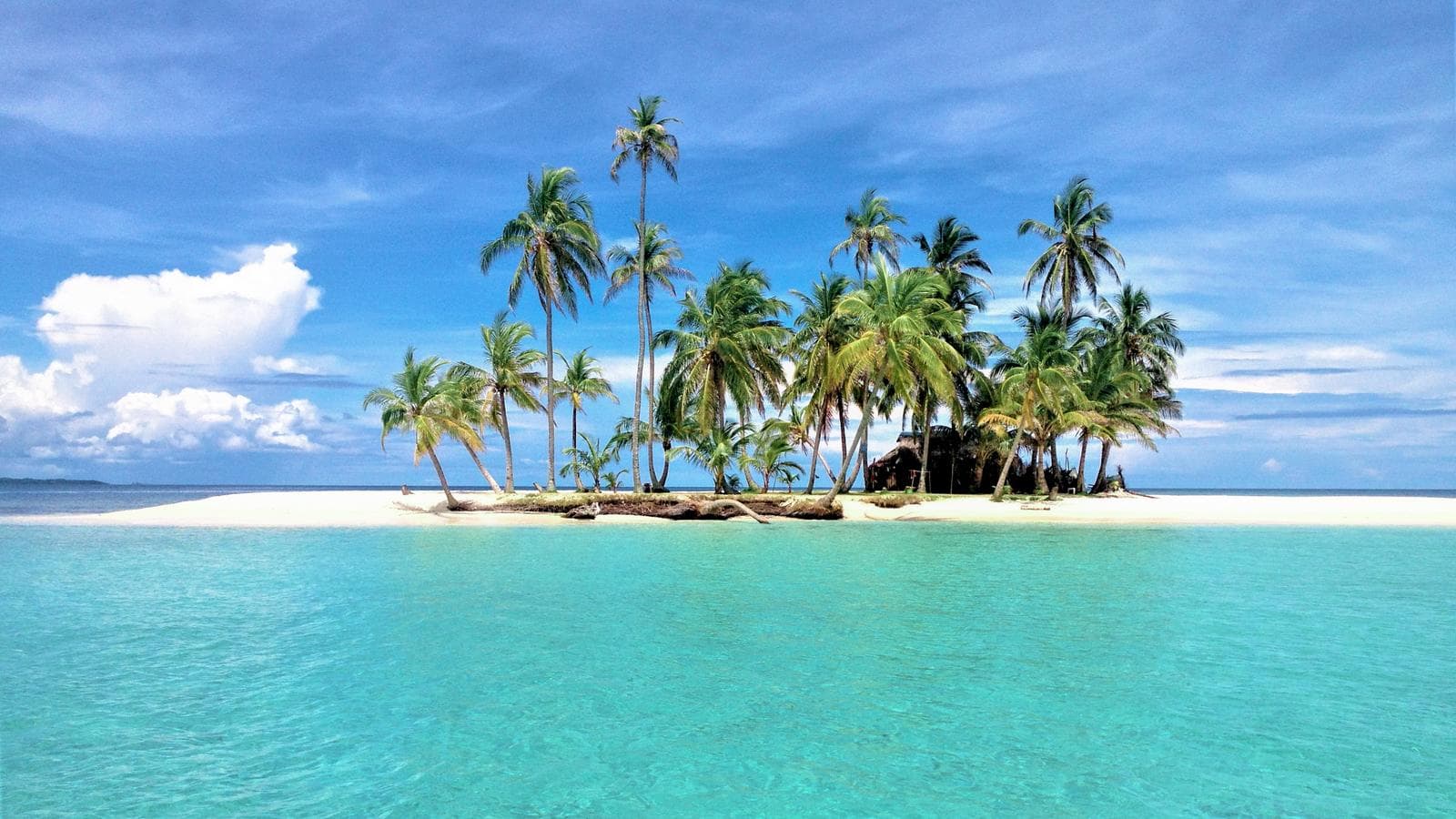
For a shorter trip, G Adventures' five-night Panama: Sandy Beaches & San Blas Sunsets combines Panama City with the San Blas Islands, the low coral islands off the Caribbean coast that are home to the Guna people. It departs in January, February, March, April and December.
Whichever way you arrive, go to Miraflores, and time it for when ships are moving through. It is a famous short cut, and it is still hard at work.
By Walter Pellow, the name Atlas & Passage’s editorial team writes under. Prices and dates in the trips below come from the operators and can change.