Journeys
Costa Rica by bike, from the Caribbean to the volcano
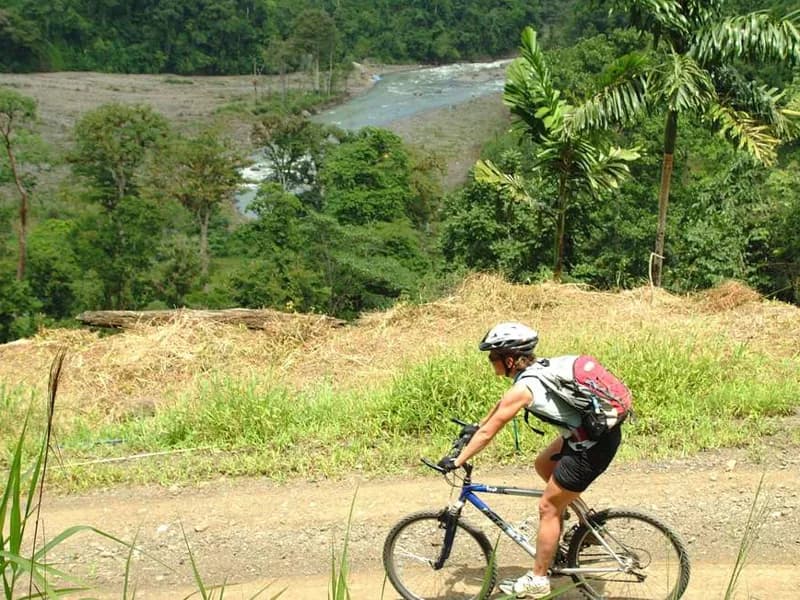
Costa Rica is small enough to cross by bicycle, from the rainforest canals of the Caribbean coast, past the cone of Arenal and its windswept lake, to the dry cattle country of Guanacaste. It is hilly, hot and immensely rewarding.
By Walter Pellow20 October 20264 min read
Costa Rica is a small country, about the size of Denmark, but it packs a great deal of variety into a short distance. A spine of volcanic mountains runs down its middle. On one side lies the wet, green Caribbean lowland, on the other the drier Pacific, and the climate, the vegetation and the culture change from one to the other. Crossing it by bicycle is a way of feeling those changes, mile by mile, and of seeing the country between the famous parks.
From the Caribbean lowlands
The Caribbean side of Costa Rica is low, hot and very green, crossed by rivers and covered in rainforest and plantations of bananas and pineapples. Tortuguero, on the coast, is reached only by boat or light aircraft, along a network of canals through the forest, and it is famous for its nesting turtles. Inland, the Sarapiquí region is a land of rivers, rainforest reserves and small farms, with good cycling on quiet roads through the lowlands.
Arenal and its lake
Westwards, the land rises to the northern plains around La Fortuna, at the foot of Arenal volcano. Arenal is an almost perfect cone. It lay quiet for centuries until 1968, when it erupted violently, destroying villages on its western side. For decades afterwards it was continuously active, with glowing lava visible on clear nights, until it went quiet again in 2010. Hot springs heated by the volcano feed the pools and spas around La Fortuna.
Beyond the volcano, Lake Arenal, the largest lake in the country, was created by a dam in the 1970s to generate electricity. The road around its northern shore, up and down through the hills with views of the water and the volcano, is one of the finest cycling routes in Costa Rica, though it is hilly. The area around Tilarán, at the lake's western end, is famously windy, which is why it is dotted with wind turbines and popular with windsurfers.
Down into Guanacaste
West of the lake, the land drops into Guanacaste, the dry north-west of Costa Rica, a land of cattle ranches, cowboys, dry tropical forest and volcanoes. Here the climate is quite different from the Caribbean: in the dry season the landscape turns brown and golden, and it is hot. Towns such as Cañas and Bagaces lead towards Miravalles volcano, whose heat is tapped for geothermal power, and Liberia, the provincial capital, known as the white city for its old whitewashed houses.
Explore Worldwide's Cycle Costa Rica, thirteen nights, includes San José, Tortuguero, Sarapiquí, Muelle de San Carlos and La Fortuna, Lake Arenal, Tilarán, Cañas and Bagaces, Miravalles volcano and Liberia, and Manuel Antonio National Park on the Pacific coast.
Food on the road is simple and filling. Gallo pinto, rice and beans fried together with onion and peppers, is the national breakfast, served with eggs, fried plantain and fresh tortillas. At lunch, a casado brings rice, beans, salad, plantain and meat or fish on a single plate. Roadside stalls sell fresh fruit, from pineapples to mangoes and papayas, along with coconut water drunk straight from the shell. It is exactly what a cyclist needs, and cheap enough to stop for often.
Into Nicaragua and Panama
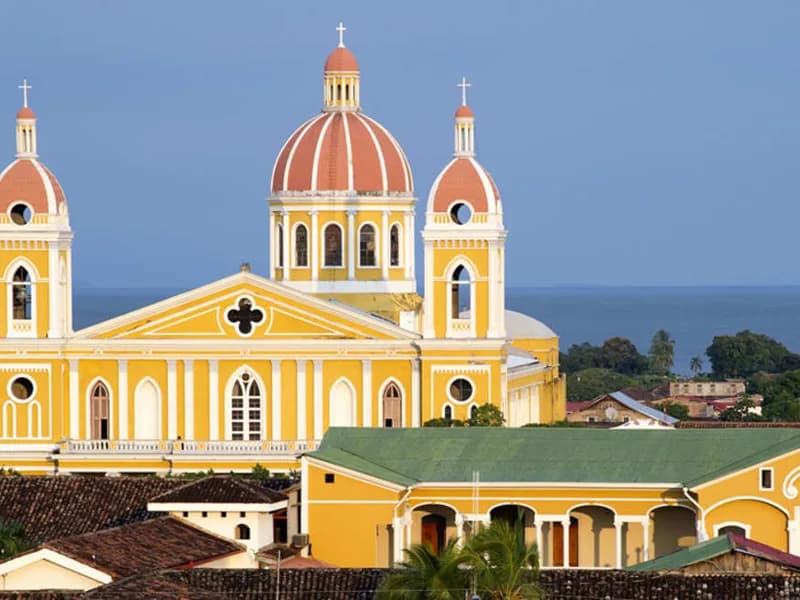
For a longer ride, Explore Worldwide's Cycle Nicaragua to the Panama Canal, thirteen nights, crosses three countries. In Nicaragua its places include the colonial city of Granada, Mombacho volcano and Ometepe, an island in Lake Nicaragua formed by two volcanoes, with Charco Verde and Santo Domingo beach. In Costa Rica it includes Tilarán, Lake Arenal and La Fortuna, the coffee-growing Orosi Valley and Turrialba Volcano National Park, and it ends, as its name says, at the Panama Canal.
The cycling is not flat. The roads climb and descend constantly through the hills, and the heat and humidity of the lowlands are hard work. Riding starts early and is best done slowly, with frequent stops for fruit, cold drinks and the view. Main roads can be busy, and the quieter back roads are the ones to look for. The dry months, from about December to April, are the most comfortable for cycling, though both tours also run in the autumn.
By Walter Pellow, the name Atlas & Passage’s editorial team writes under. Prices and dates in the trips below come from the operators and can change.