Wildlife
The quetzal, and the cloud forest at San Gerardo de Dota
The resplendent quetzal, with its emerald body and long trailing tail, was sacred to the Maya and the Aztecs. It is still one of the most sought-after birds in the Americas, and a high valley in Costa Rica's Talamanca mountains is one of the best places to see one.
By Walter Pellow20 October 20264 min read
Few birds have a reputation like the resplendent quetzal. The male is a jewel of a bird, its head, back and wings a shimmering iridescent green that turns blue or gold in the light. It has a crimson breast and, in the breeding season, a pair of extraordinary trailing tail plumes, longer than the bird itself, which ripple behind it in flight. The ancient Maya and Aztecs prized the feathers above gold. They were worn by rulers and priests, and the bird was associated with the feathered serpent god Quetzalcoatl. Today it is the national bird of Guatemala, whose currency is named after it. For many birdwatchers, and for plenty of visitors who would not normally call themselves birdwatchers, seeing one is a highlight of a trip to Central America.
Where the quetzal lives
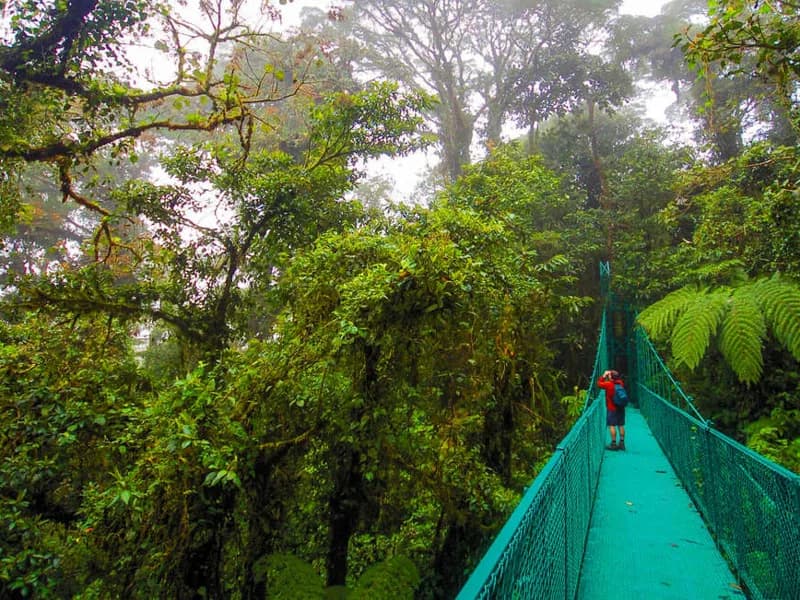
Quetzals live in the cloud forests of the mountains of southern Mexico and Central America, from about twelve hundred to three thousand metres. Cloud forest is a particular kind of mountain rainforest, kept constantly damp by the clouds and mist that blow through it. Its trees are draped in mosses, ferns, bromeliads and orchids, and the light is soft and green. In Costa Rica, the main areas are in the central and southern mountains, including Monteverde and the Talamanca range.
San Gerardo de Dota is one of the best places of all. It is a small village in a steep, wooded valley high in the Talamanca mountains, along the Savegre River, with trout farms, apple orchards and a few lodges. Much of the surrounding forest is protected, including Los Quetzales National Park. The valley is cool, often misty, and very peaceful, and the nights can be cold.
How to see one
The secret to finding quetzals is food. They feed largely on the fruit of wild avocado trees and their relatives, swallowing the small fruits whole and regurgitating the stones. When the trees are fruiting, the birds come to them reliably, often in the early morning. Local guides know which trees are fruiting and where the birds have been seen, and that makes an enormous difference.
The best time is the breeding season, from about February to June or July, when the males have their long tail plumes, the birds are most active, and they nest in holes in dead trees, which guides often know. At other times of year the birds can still be seen, but less reliably, and the males may have lost their tails.
Early starts are the rule. Dawn walks in the valley, with a guide and a telescope, give the best chance. The first sight of a male quetzal, perched in a mossy tree with its tail hanging below the branch, or swooping down to pluck a fruit, is a thrill that justifies the cold morning.
Cloud forests are among the most threatened forests in the world. They are narrow belts on mountain slopes, vulnerable to clearing for farming and to climate change, which can lift the cloud base higher up the mountain and dry out the forest beneath. Costa Rica's long commitment to conservation has protected much of its cloud forest, and the money spent by visitors who come to see the quetzal helps to make that protection worthwhile for local communities.
The rest of the cloud forest
The valley has plenty of other birds, including hummingbirds of many kinds, which visit the feeders and flowers at the lodges in astonishing numbers. Walks along the Savegre River lead through oak forest and past waterfalls, and the cloud forest itself, with its moss-draped giant oaks, is beautiful whether or not the quetzals appear.
Explore Worldwide's Costa Rica Wildlife Tour, fourteen nights, includes San Gerardo de Dota and Savegre. It also covers the Doka coffee estate, Turrialba and the Pacuare River, Cano Blanco and Pavona, Tortuguero, and the lowland forests of Sarapiquí and Selva Verde. It runs all year.
Explore Worldwide's Upgraded Costa Rica Wildlife, thirteen nights, takes in Monteverde, another famous cloud forest where quetzals can be seen. It also covers Irazú volcano, the Turrialba valley, Tortuguero, Arenal and La Fortuna, Dominical, and the Osa Peninsula with Corcovado National Park.
Bring warm clothes for the mountains, which are surprisingly cold for the tropics, binoculars, and patience. The quetzal doesn't perform on demand.
By Walter Pellow, the name Atlas & Passage’s editorial team writes under. Prices and dates in the trips below come from the operators and can change.