Seasons
Costa Rica's green season, and the case for going in it
Costa Rica calls its rainy season the green season, and it is not just marketing. From May to November the forests are at their lushest, the turtles come ashore to nest, and there are fewer visitors. It rains, of course, but usually on a timetable.
By Walter Pellow20 October 20264 min read
Costa Rica has two seasons. The dry season, roughly from December to April, is what locals call verano, summer. It is the most popular time to visit, with sunshine on the Pacific coast and in the central valley, and it coincides with the northern winter, when Europeans and North Americans most want to escape. The rest of the year, roughly May to November, is the rainy season, invierno, winter, though temperatures change little. The tourist industry long ago renamed it the green season, and for once the euphemism has a good deal of truth in it.
What the rain is like
The fear of rain keeps many people away, but the rainy season is rarely a washout. On the Pacific side and in the central valley, the typical pattern, particularly early in the season, is a clear, sunny morning, clouds building around midday, and a heavy downpour in the afternoon or evening, often with thunder. The rain then clears, and the next morning starts bright again. Planning activities for the morning, as most local guides do, works well.
The rain increases as the season goes on. On the Pacific side, September and October are usually the wettest months, and some areas, such as the Osa Peninsula in the south-west, can be very wet indeed. There is often a short, drier spell in late June or July, known locally as the veranillo, the "little summer".
The Caribbean coast is different. Its weather follows its own pattern, with rain spread through much of the year. September and October, the wettest months on the Pacific side, are often among the driest and sunniest on the Caribbean coast, so a well-planned trip can follow the sun.
It rains, of course, but usually on a timetable.
What the green season gives you
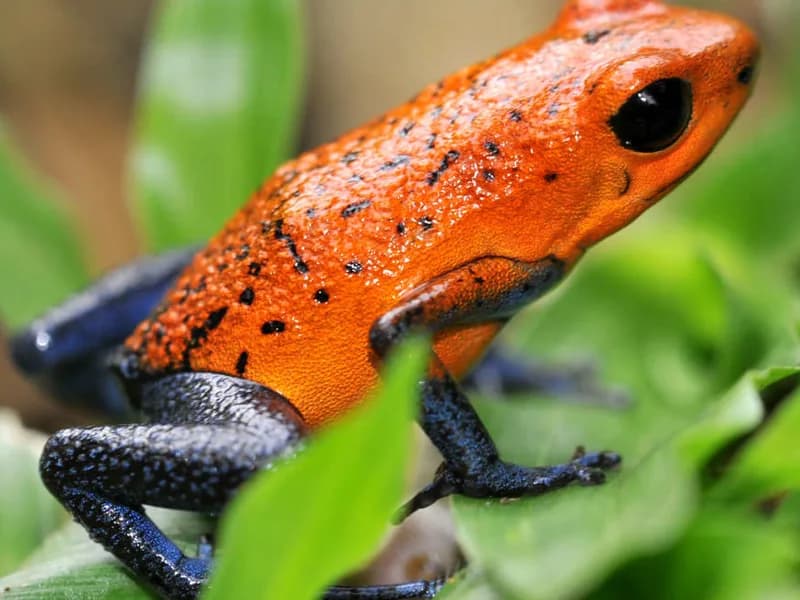
The forests are at their best. The rain brings out new leaves, flowers and fruit, the waterfalls are full, and the landscapes are a deep, vivid green. Many animals are more active, and frogs are everywhere at night.
The green season is also the time of the great turtle nesting on the Caribbean coast. At Tortuguero, green turtles come ashore in large numbers to lay their eggs on the beach, mainly from about July to October, and watching them at night with a licensed guide is one of the great wildlife experiences of Central America. Leatherback turtles nest earlier in the year. On the Pacific side, humpback whales from the southern hemisphere visit Costa Rican waters from about July to October to breed and give birth.
And there are fewer visitors. The most popular national parks, beaches and hotels are quieter, and there is more room on the trails and the boats.
One more point in the green season's favour is the light. The air, washed clean by the rain, is often clearer in the mornings than in the dusty dry season, and the colours of the forest, the flowers and the birds are at their most vivid. Photographers, in particular, often prefer it. Rainbows over the forest, after an afternoon storm, are an almost daily sight.
The drawbacks, and the tours
The rain does bring problems. Some unpaved roads become muddy or impassable, river crossings can be difficult, and a few lodges in remote areas close for part of the season. Hiking trails can be slippery, and waterproofs and quick-drying clothes are essential. Views of the volcanoes, such as Arenal, are often hidden in cloud.
Explore Worldwide's Highlights of Costa Rica, seven nights, runs all year, including the green season. It includes San José, La Fortuna and Arenal National Park, Monteverde, the Tárcoles river bridge, known for crocodiles, the Carara reserve and Manuel Antonio National Park.
Just You's Real Costa Rica, eleven nights for solo travellers, includes the Caribbean coast at Puerto Viejo de Limón and Cahuita National Park, the Bribri reserve and the Rio Dos Aguas waterfall, Tortuguero, Muelle de San Carlos and the Pacific coast of Guanacaste at Playa Carrillo. Travelsphere's The Best of Costa Rica, eleven nights, includes Tortuguero, Monteverde, Carara and Manuel Antonio.
Pack light waterproofs, quick-drying clothes and a sense of humour. Costa Rica in the rain is still Costa Rica, and the forest in a downpour is quite something.
By Walter Pellow, the name Atlas & Passage’s editorial team writes under. Prices and dates in the trips below come from the operators and can change.