Walking
The Canaries, where the lava cooled into scenery
The Canary Islands are usually sold as somewhere to fly to and lie still. Walked instead, on paths laid over old lava flows, they turn out to be several quite different countries sharing one archipelago.
By Arthur Penhallow26 September 20264 min read
At the Islote de Hilario, on Lanzarote, guides have a party trick that has been startling visitors for decades. They push dry brushwood into a shallow hole in the ground, and it catches fire within seconds, with no match involved. Pour water down a nearby pipe and it returns almost at once as a jet of steam. Neither is a stunt. The ground beneath Timanfaya National Park is still warm from eruptions that buried a quarter of the island under lava and ash in the 1730s, and it has not entirely cooled off since.
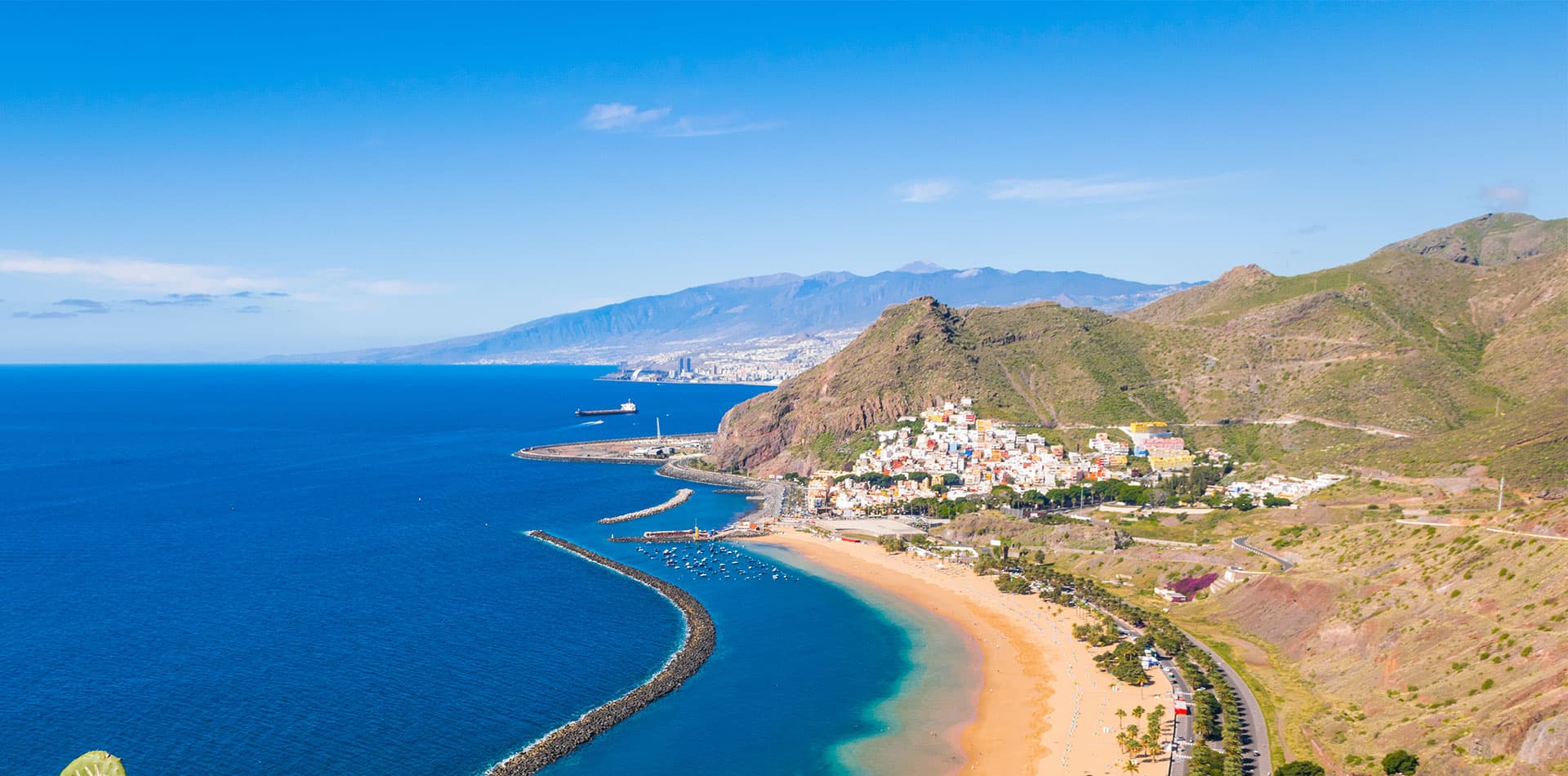
That is the thing to know about the Canaries before you arrive: the archipelago is young, geologically speaking, and still finishing itself. Seven main islands, and a scatter of smaller ones, sit over a volcanic hotspot off the coast of Morocco, closer to the Sahara than to Madrid, and each has cooled into a different kind of landscape. Flying in and staying by a pool tells you almost nothing about this. Walking does.
An island each, and none of them alike
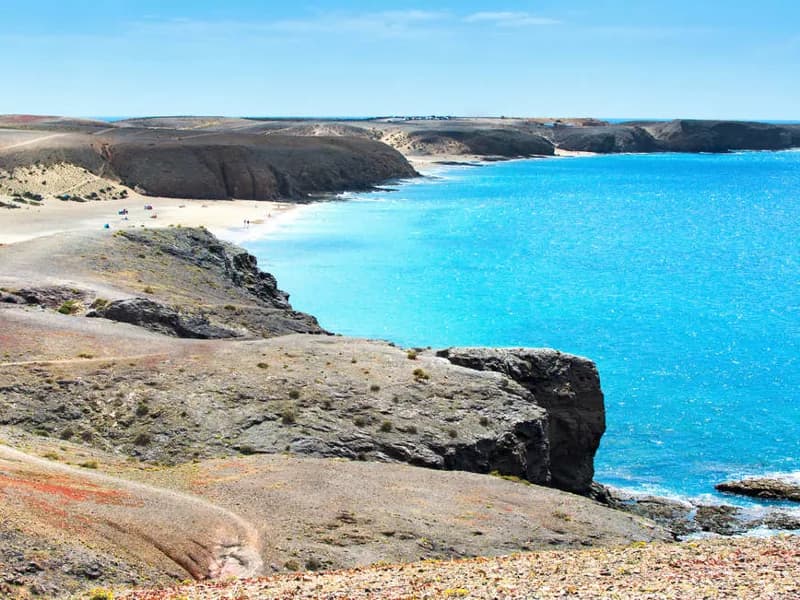
Lanzarote is the starkest of the group, a black and ochre moonscape that the artist and architect César Manrique spent much of his career trying to keep that way, campaigning against the high-rise development that swallowed so much of the Spanish coast elsewhere. His low white houses with green shutters set the template the island still follows. A week's walking here moves through the Geria vineyards, where vines are grown in individual pits scooped from the ash to catch what little rain falls, up to the Mirador del Río viewpoint and across to La Graciosa, the smaller island just offshore that has no paved roads at all.
Gran Canaria, by contrast, is sometimes called a continent in miniature, and the claim is not far off. A short drive can take you from a subtropical coast to pine forests and a windswept summit, and the walking routes through the Guayadeque ravine and up to the Roque Nublo, a volcanic monolith at the island's centre, cross several distinct microclimates in a single day.
The green island that shouldn't exist
La Gomera is the odd one out, and the most quietly remarkable. While Lanzarote and Fuerteventura bake, La Gomera stays wrapped for part of most days in cloud that catches on its central peak and condenses into rain, feeding a forest that has been growing, more or less undisturbed, since before the Ice Age. Garajonay National Park, a UNESCO World Heritage Site, is laurisilva: laurel forest of a kind that once covered much of the Mediterranean basin and now survives in only a few pockets, this one among the largest. Walking through it, hung with moss and dripping quietly, feels less like the Canaries than like somewhere in the Atlantic that got lost on its way to being Ireland.
The archipelago is young, geologically speaking, and still finishing itself.
A week's walking on La Gomera also takes in the deep, terraced ravines that separate villages so thoroughly that the islanders developed Silbo Gomero, a whistled language, to communicate across them before roads made it unnecessary. It is still taught in island schools, a rare case of a piece of intangible heritage surviving mainly because the geography demanded it.
When to go, and what to add
The Canaries have no real off-season by British standards; that is most of the point of them. But the best walking weather is outside the height of summer, when temperatures at sea level climb and the popular routes get crowded, and outside the brief winter storm season that occasionally closes upper paths. Late winter and spring bring wildflowers to the lower slopes; autumn brings clearer air and cooler evenings.
For those travelling by ship rather than on foot, several cruises call at more than one island, or pair the Canaries with Madeira, the Portuguese archipelago a day's sailing to the north-east that shares the same volcanic ancestry and a similarly forgiving winter climate. Fred. Olsen's fortnight from Liverpool takes in La Palma and Madeira, a fair introduction to both without ever setting foot in an airport.
Whichever island you choose, the lava is worth remembering as you go. Almost everything else about the Canaries, the vines in their ash pits, the whistled language born of impassable ravines, the forest sealed off by cloud, follows from where and how it cooled.
By Arthur Penhallow, the name Atlas & Passage’s editorial team writes under. Prices and dates in the trips below come from the operators and can change.