Seasons
The case for travelling in between
The shoulder season has an unglamorous name for what it actually offers, which is most of the weather people want and considerably fewer of the crowds they do not.
By Arthur Penhallow26 September 20264 min read
Peak season is, by definition, when everyone else has also decided to go, and the two things that make a destination popular in July and August, reliable heat and school holidays, are precisely the two things that make it crowded, expensive and, in some climates, genuinely uncomfortable. The shoulder season, roughly the weeks either side of that peak, trades a few degrees of certainty for a great deal less competition for the same view, and in several parts of the Mediterranean and the Middle East, it is arguably the better trip outright, not merely the cheaper one.
This is a harder sell than it should be, mostly because peak season has better marketing. A brochure photograph of a beach in July is an easier thing to sell than the promise of the same beach in late September with three-quarters of the people gone, even when the water temperature has barely changed and the walking is considerably more pleasant. The case for the shoulder season is not really a case against summer; it is a case against assuming summer is automatically the best version of anywhere.
Cappadocia, once the heat has broken
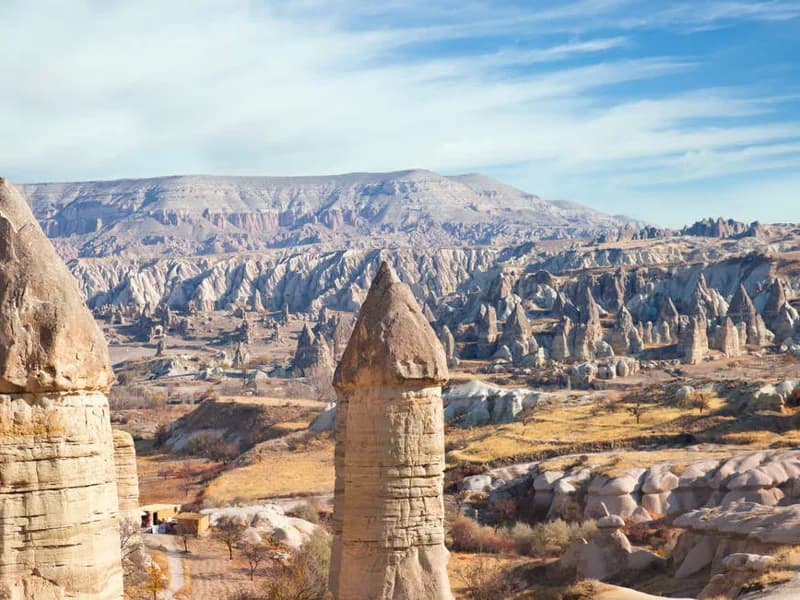
Central Turkey in high summer regularly climbs into temperatures that make a day of walking among Cappadocia's volcanic rock formations, the fairy chimneys carved by wind and water out of soft volcanic tuff, a genuinely gruelling proposition. By autumn, the heat has broken, the light is softer for the hot-air balloons that drift over the valleys each morning, and the walking routes through Rose Valley and the underground cities carved by early Christian communities become considerably more comfortable to explore on foot rather than dashing between patches of shade.
Egypt, before the Nile gets uncomfortable
Egypt makes the case even more plainly. Cairo and Upper Egypt, around Luxor and Aswan, are genuinely hot for much of the year, and high summer pushes conditions past what most visitors find comfortable for a day spent among the temples and tombs of the Valley of the Kings. The shoulder months either side of winter, when the heat has eased without yet losing the Nile's characteristic clear light, are widely considered the more forgiving time to see Karnak, Abu Simbel and the pyramids at Giza without simply enduring the country rather than enjoying it.
The shoulder season trades a few degrees of certainty for a great deal less competition for the same view.
Cyprus, and the crowds that thin
Cyprus tells a slightly different version of the same story. The island's beaches are at their busiest and most expensive in high summer, but its considerable historical interest, particularly in the north, around Kyrenia's harbour and the Crusader-era castle of St Hilarion above it, does not depend on the sea being warm enough to swim in. Visiting in spring or autumn means the sights are quieter and the walking is more comfortable, with the beach itself simply becoming one option among several rather than the main event.
What you actually give up
It is worth being honest about the trade-off rather than pretending there is none. Shoulder-season weather is less certain than peak summer's, evenings can turn cooler than expected, and the sea, particularly early in the season, may not yet be warm enough for confident swimming. What you gain in return, shorter queues, lower prices and a noticeably less harried atmosphere at the places everyone actually goes to see, is, for a great many travellers, worth considerably more than the extra few degrees they are giving up.
How to actually plan around it
The practical trick is to think in weeks rather than months. The exact boundary of a shoulder season moves a little each year and varies by destination, but the general pattern holds: the fortnight or so either side of school holidays tends to combine settled weather with a noticeable drop in both price and crowding, before the destination either heats up further or cools off properly. Checking a specific departure's actual dates against the local climate, rather than assuming an entire month is uniformly good or bad, is worth the extra five minutes it takes. A walking holiday in Cappadocia booked for late September will bear very little resemblance to the same itinerary run in July, even though both fall, strictly speaking, within the same travelling season.
By Arthur Penhallow, the name Atlas & Passage’s editorial team writes under. Prices and dates in the trips below come from the operators and can change.