Walking
The Dolomites, Bolzano and the pale mountains
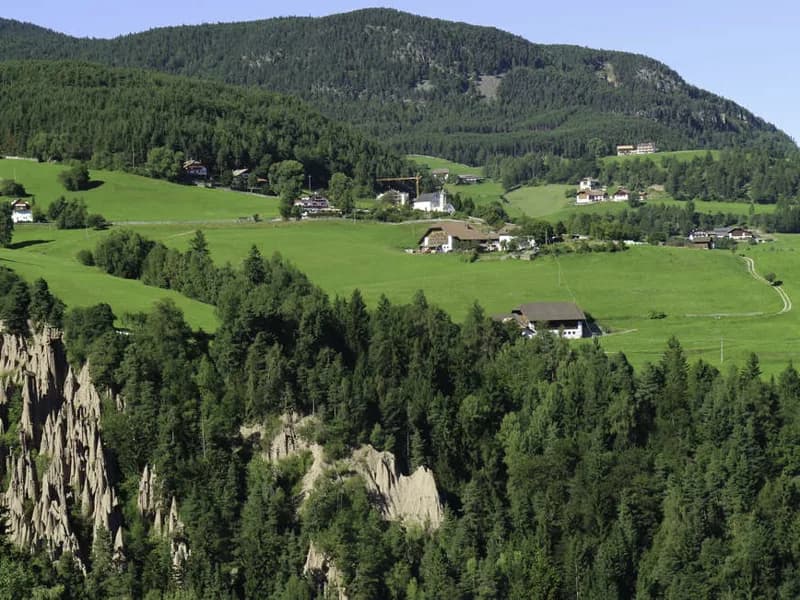
The Dolomites are pale towers of rock above green Alpine meadows, and at sunset they turn pink. Bolzano, the German-speaking Italian city at their foot, is the place to begin.
By Walter Pellow2 November 20264 min read
Most mountains are dark. The Dolomites are pale. Their rock, a grey-white limestone that glows cream and gold in the sun, rises in towers, spires and sheer walls straight out of green meadows and dark forest, and at the end of a clear day it turns pink, then red, then violet, before the light goes. The Ladin people of the valleys have a word for it, enrosadira, and a legend to explain it, about a dwarf king's rose garden turned to stone. In Italian they are sometimes called the Monti Pallidi, the pale mountains.
The name Dolomites is more prosaic. It comes from Déodat de Dolomieu, a French geologist who studied the rock in the late eighteenth century and described its unusual chemistry; the mineral, and then the mountains, were named after him. In 2009 the range became a World Heritage Site, for its scenery and its geology both.
Bolzano, where Italy speaks German
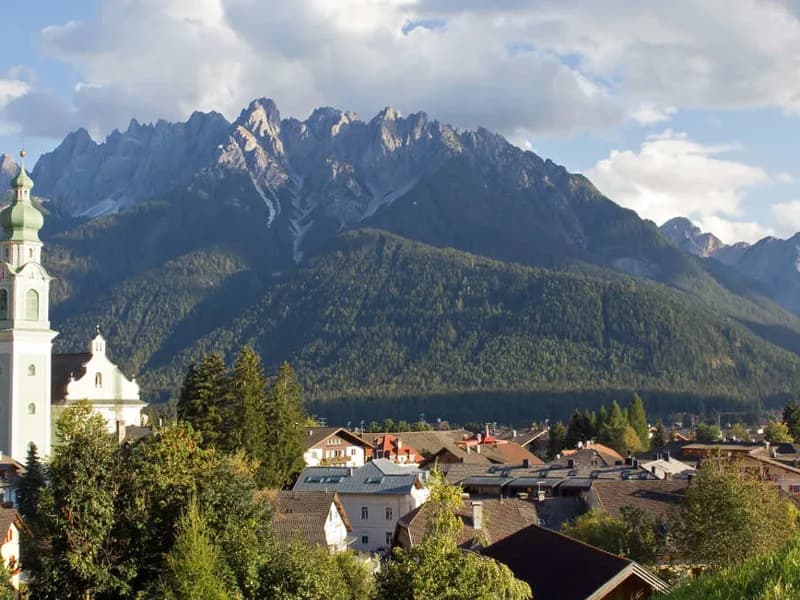
Bolzano, the capital of the province of South Tyrol, sits in a wide basin where several valleys meet, ringed by vineyards and with the peaks of the Rosengarten, the rose garden of the legend, visible to the east. It is an Italian city with an Austrian soul. Until the end of the First World War this was part of Austria-Hungary, and most people in the province still speak German as their first language. Street signs are in both languages, the city is also called Bozen, the arcaded main street, the Laubengasse, could be in Innsbruck, and the cafés serve strudel beside the espresso.
It also has a museum with a very famous resident. In 1991 two walkers in the Ötztal Alps, on the border with Austria, found a body in the melting ice. He turned out to be a man who had died there about 5,300 years ago, with his clothes, his copper axe, his bow and his arrows. Ötzi, as he became known, now lies in a cold chamber in the South Tyrol Museum of Archaeology in Bolzano, with an exhibition about his life and world around him.
At the end of a clear day the rock turns pink, then red, then violet, before the light goes.
Walking the pale mountains
The Dolomites are made for walkers. Cable cars and chairlifts lift you to the high meadows; well-marked paths run between them; and the mountain huts, the rifugi, serve lunch, coffee and cake in improbable places. The walking season runs from about June to September, when the snow has gone from the paths and the huts are open.
In the east of the range, near Dobbiaco, Lake Braies is a small, still lake of green water below a great wall of rock, a favourite with photographers; the walk round its shore is gentle. Near Sesto, the mountains carry the marks of the First World War, when the front line between Italy and Austria-Hungary ran across these summits. On Monte Piano, trenches, tunnels and gun positions survive on a plateau where the two armies faced one another at close range, and they make a sobering walk.
Holidays that go there
Explore's seven-night Hiking in the Dolomites is set in the eastern Dolomites: its places include Dobbiaco, Lake Braies and Altprags, the Putzalm hut, Sesto, Mt Elmo, Monte Piano, Brunico and Bolzano, with Lienz across the border in Austria, and Venice and Ferrara. It departs in June, July, August and September.
For the valleys rather than the heights, Explore's seven-night Cycle Dolomites, Lake Garda and Verona has places that run from the spa town of Merano and Bolzano, by Lake Caldaro and Trento, to Arco, Torbole and Riva del Garda, Limone, Malcesine and Garda, and Verona. It departs in May, June, September and October.
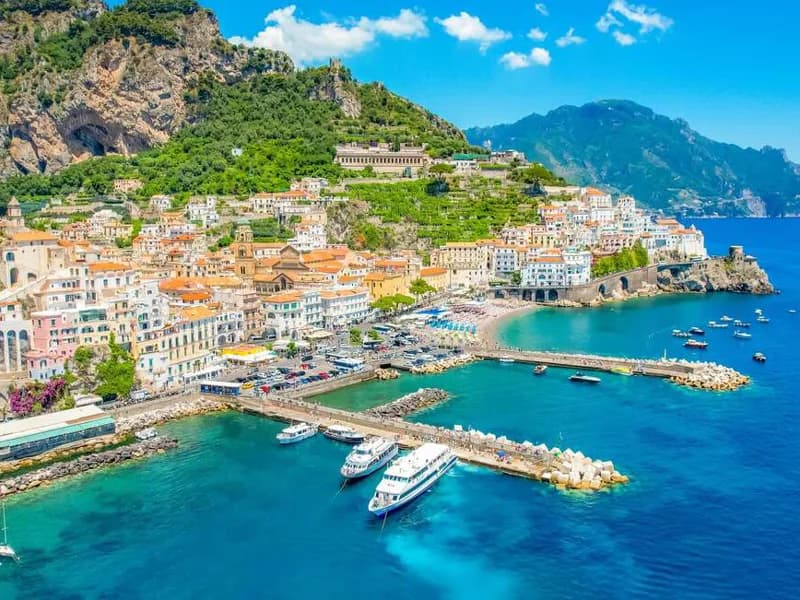
If you want the other end of Italy as well, Explore's seven-night Amalfi Coast Discovery is a walking holiday too, with Bomerano, Amalfi, Atrani, Sorrento, Capri, Herculaneum, Pompeii, Maiori, Minori and Ravello. It departs in April, May, June, September and October.
Stay out for the sunset at least once. Find a place facing west-lit rock, wait until the sun has dropped behind you, and watch the mountains change colour. It lasts a few minutes, and it explains why the Dolomites have been painted and photographed so often.
By Walter Pellow, the name Atlas & Passage’s editorial team writes under. Prices and dates in the trips below come from the operators and can change.