Walking
The High Tatras, the smallest big mountains in Europe
The High Tatras cover a small area on the border of Slovakia and Poland, but they have the shape of a much bigger range: granite peaks, glacial lakes and steep valleys, with Alpine scenery packed into a space you can cross in a day.
By Walter Pellow2 November 20264 min read
The Carpathians sweep in a great arc for over a thousand kilometres through central and eastern Europe, but for most of their length they are rounded, forested mountains. In one place, on the border between Slovakia and Poland, they rise into something different. The High Tatras are the highest part of the whole Carpathian chain, a compact range of bare granite peaks, sharp ridges and deep valleys carved by glaciers, which look as if they had been taken from the Alps and set down in the middle of the plains.
They are small. The main range is only a few dozen kilometres long, and its highest peak, Gerlachovský štít on the Slovak side, reaches a little over 2,650 metres. But within that space they have a striking concentration of mountain scenery: dozens of glacial lakes, the tarns the Slovaks call plesá and the Poles stawy, waterfalls, high meadows and the last refuges of bears, chamois and marmots.
The Slovak side
Most of the High Tatras lie in Slovakia, in a national park founded in 1949. The resorts of Starý Smokovec and Tatranská Lomnica, on the southern foot of the mountains, are linked by a narrow-gauge electric railway that runs along the base of the range. From Starý Smokovec a funicular climbs to Hrebienok, the start of easy walks to waterfalls and mountain huts in the valleys above. From Tatranská Lomnica, cable cars climb to Lomnický štít, one of the highest peaks, with an observatory on its summit.
The paths are well marked and the huts, many of them stone buildings of the early twentieth century, serve hearty food and are often supplied by porters who carry heavy loads up on their backs. It is a long and honoured tradition in the Tatras.
The forests below the peaks have had a hard time. In November 2004, a windstorm swept down from the mountains and flattened a huge area of spruce forest along the southern foot of the range, and the scars are still visible in places, where the forest is regrowing among the stumps. Further east, on the way to Košice, stands Spiš Castle, a vast white ruin on a limestone hill, one of the largest castle complexes in central Europe, and a UNESCO World Heritage Site along with the town and church at its foot.
The Polish side, and the Pieniny
Above Zakopane rises Giewont, a long limestone ridge whose outline, seen from the town, is said to resemble a sleeping knight, and which carries a large iron cross on its summit, put up in 1901.
On the Polish side, Zakopane is the main mountain town, a resort since the nineteenth century, known for its wooden architecture in a style developed from the local highlanders' houses. The Gorale, the highlanders of the region, have their own dialect, music and costume, and their cheese, oscypek, a smoked sheep's cheese pressed in decorated wooden moulds, is sold at every market stall.
East of the Tatras, the small Pieniny range is the setting for one of the most famous river trips in Europe. Wooden rafts, poled by highlanders in traditional dress, float down the Dunajec Gorge, where the river winds between limestone cliffs on the border between Poland and Slovakia.
Alpine scenery packed into a space you can cross in a day.
The walking holidays
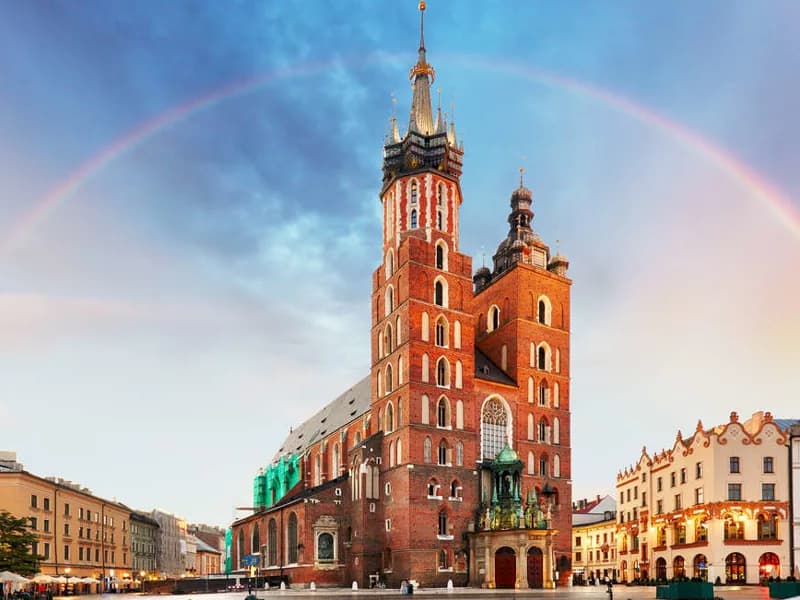
Explore Worldwide's Hiking in the Polish Carpathians, seven nights, is a walking holiday from Kraków to the Babia Góra National Park and Zawoja, Zverovka in Slovakia, Zakopane and the Tatras, and the Dunajec Gorge, Szczawnica and Krościenko in the Pieniny. It runs from May to September.
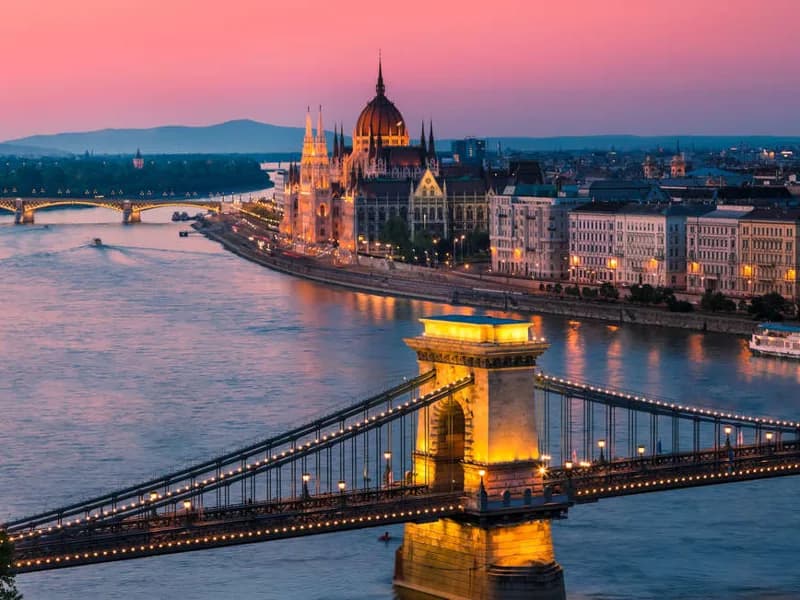
Explore's Krakow to Budapest Adventure, seven nights, crosses the mountains on the way south, with time at Tatranská Lomnica, Starý Smokovec and Hrebienok, before continuing through Košice and the Tokaj wine region to Budapest. Explore's Highlights of Eastern Europe, fourteen nights, includes the Pieniny National Park, Spiš Castle and the Tatras in a longer journey from Kraków to Vienna and Mikulov.
Summer is the main walking season, from June to September, when the high paths are clear of snow; the highest trails on the Slovak side are closed through the winter and early spring to protect the mountains. September is often the best month of all, with steady weather, fewer people and the first colour in the trees below the peaks.
By Walter Pellow, the name Atlas & Passage’s editorial team writes under. Prices and dates in the trips below come from the operators and can change.