Seasons
Tresco, and the garden the Gulf Stream built
Twenty-eight miles off Land's End, a warm current keeps a British island growing plants that have no business surviving a British winter. It also grows the country's earliest daffodils.
By Arthur Penhallow26 September 20264 min read
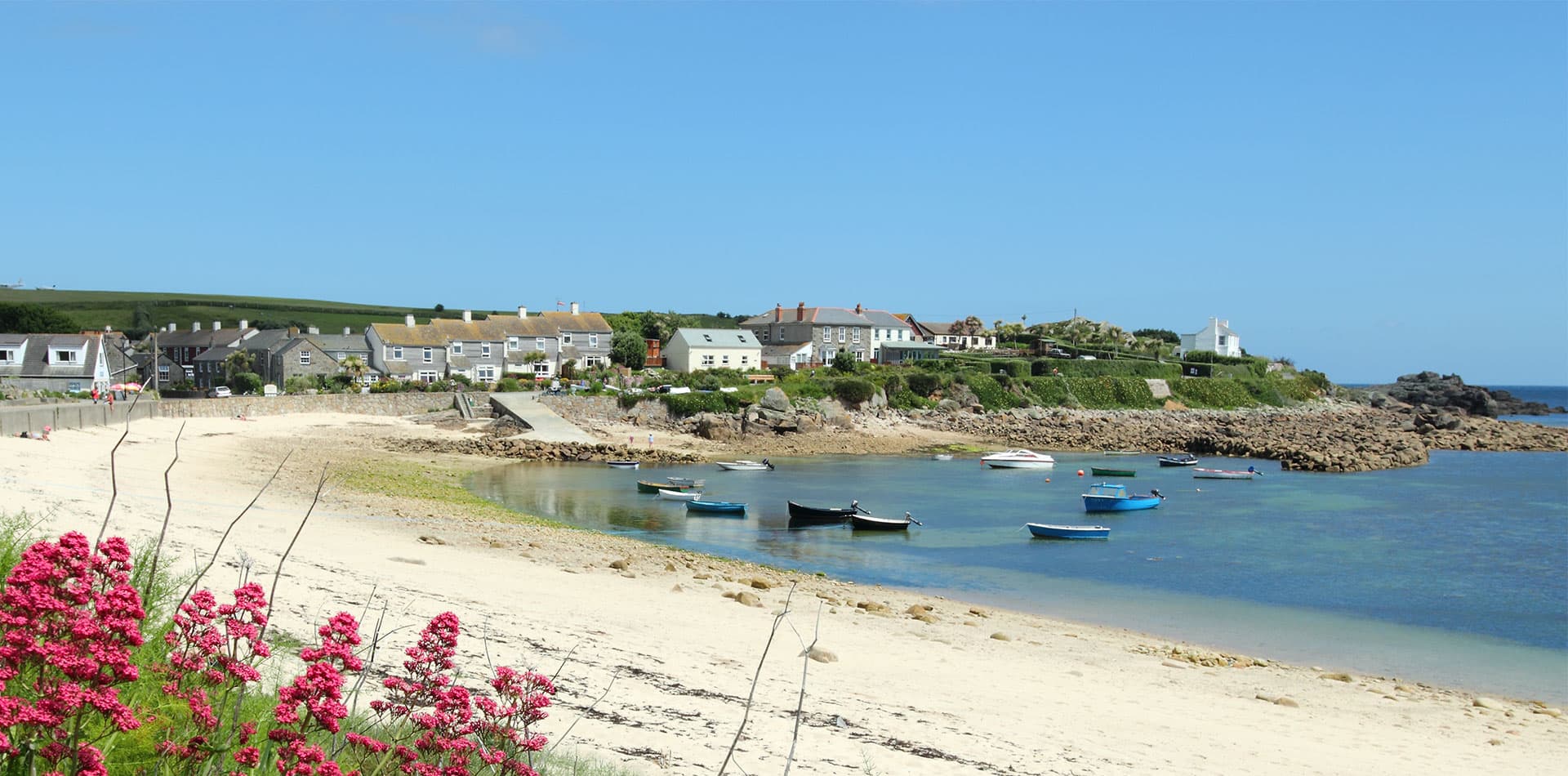
The Isles of Scilly sit about twenty-eight miles beyond Land's End, which puts them further from a supermarket than almost anywhere else in England, and closer to the warm water of the North Atlantic Drift than almost anywhere else in Britain. The current, the same one that keeps western Ireland and the Hebrides milder than their latitude has any right to be, reaches Scilly with a little more of its original warmth intact. The result is a frost that rarely bites and a growing season that barely stops, on islands that from the air look like scraps of Cornwall that drifted too far and were quietly forgotten by the weather.
Nowhere is this more visible than at Tresco Abbey Garden, laid out from the 1830s on the ruins of a Benedictine priory by Augustus Smith, who had leased the islands from the Crown and set about terracing a sheltered south-facing slope against the wind. What grows there now would not grow in Cornwall, let alone in Kent: proteas from South Africa, echiums from the Canaries, aloes and agaves that elsewhere in England exist only in a heated glasshouse. The garden is often described as sitting somewhere between the Mediterranean and the tropics, which is an odd claim to make about a small island in the Western Approaches, and is nonetheless roughly true.
An island economy built on being early
Scilly's other great trick with its climate is timing rather than exoticism. From the late nineteenth century, growers on the islands worked out that the same mild winters that let Tresco's garden flourish would also bring on narcissi and daffodils weeks before anywhere else in the country. Flower farming became a serious island industry, with bulbs planted in small, wind-sheltered fields divided by hedges of pittosporum and veronica, and the cut flowers sent to the mainland by boat and rail while the rest of Britain was still waiting for spring. The trade is much smaller than it once was, but it has never stopped, and a walk between the flower fields on St Mary's or St Agnes in March still turns up narcissi in bloom while frost sits on lawns in the south of England.
A walk between the flower fields on St Mary's or St Agnes in March still turns up narcissi in bloom while frost sits on lawns in the south of England.
A dangerous approach, remembered in stone
The same isolation that gives Scilly its climate also made it one of the most feared landfalls on the English coast under sail. In October 1707, a Royal Navy squadron returning from the Mediterranean under Admiral Sir Cloudesley Shovell misjudged its position in poor visibility and ran onto the rocks west of the islands. Four ships were lost and, by most estimates, close to two thousand sailors drowned, making it one of the worst disasters in British naval history. The wreck is widely credited with hardening official opinion that finding longitude at sea needed a proper solution, and it fed directly into the Longitude Act of 1714, the prize that eventually rewarded John Harrison's marine chronometers. It is a strange thing to owe to a shipwreck, but accurate navigation at sea, in some part, does.
Little from 1707 survives to be seen today beyond the reefs themselves, still marked with caution on the chart, but the islands' small museum on St Mary's keeps salvage from the wreck and from the many other ships Scilly has claimed over the centuries. It is a sober companion piece to the gardens: the same rocks and the same currents that shelter Tresco's palms have also, over three centuries, ended a great many voyages rather more abruptly.
Getting there, and what a call can show you
Most cruise visits to Scilly are a single day at St Mary's, the largest of the five inhabited islands and the only one with a proper harbour for tenders. That is enough time for the town of Hugh Town, a short boat trip to Tresco for the garden, or a walk along one of the coastal paths that circle each island in an afternoon. Fred. Olsen's Coast of Cornwall and the Isles of Scilly, five nights from Southampton, pairs a day at St Mary's with a call at Falmouth on the Cornish coast, which makes a neat comparison: the same warm current, softened by the time it reaches the mainland.
Longer round-Britain itineraries fold Scilly into a much bigger picture. Ambassador's Historic Harbours of Britain and France, seven nights from Tilbury, calls at St Mary's between Cobh in Ireland and Plymouth, while the thirteen-night British Isles Discovery and French Charms works Scilly into a loop that also takes in Orkney, Belfast and the Channel Islands before finishing at Honfleur.
Spring is the flower season and the mildest time to go; late summer brings the islands' own warmth without much need of the Gulf Stream's help at all. Either way, take the possibility of a rough crossing seriously, and pack for weather that can change before the tender back to the ship arrives. Scilly has never quite let sailors forget that it can be dangerous as well as gentle, which is rather the point of the museum on St Mary's.
By Arthur Penhallow, the name Atlas & Passage’s editorial team writes under. Prices and dates in the trips below come from the operators and can change.