Seasons
Where to go in July, when the high places finally open
July is the month the year's hardest ground becomes passable. Canadian mountain passes lose their snow, Central Asia's high pastures turn green, and the seas between Indonesia's islands go flat and dry enough to island-hop without a second thought.
By Arthur Penhallow26 September 20264 min read
There is a kind of travelling that only works for a few weeks a year, once the snow has gone from the high ground and before the next lot arrives. July is squarely inside that window in the world's great mountain ranges, and it is also, less obviously, the moment when a scattered archipelago on the other side of the world becomes an easy place to move between islands. The common thread is access: places that spend much of the year either buried or unreachable by sea suddenly let you in.
Where the passes have cleared
The Canadian Rockies keep their snow well into June at altitude, and the trails around Lake Louise and Moraine Lake are not reliably open until it has gone. By July, the wildflower meadows above the tree line are at their best, the glacial lakes have turned the improbable turquoise that photographs never quite capture accurately, and the long northern daylight leaves plenty of time on the trail without an early start. Walking the Rockies is a different holiday from riding through them by rail or coach: shorter days of ground covered, more time to notice the detail, and evenings back at a lodge rather than a different hotel each night.
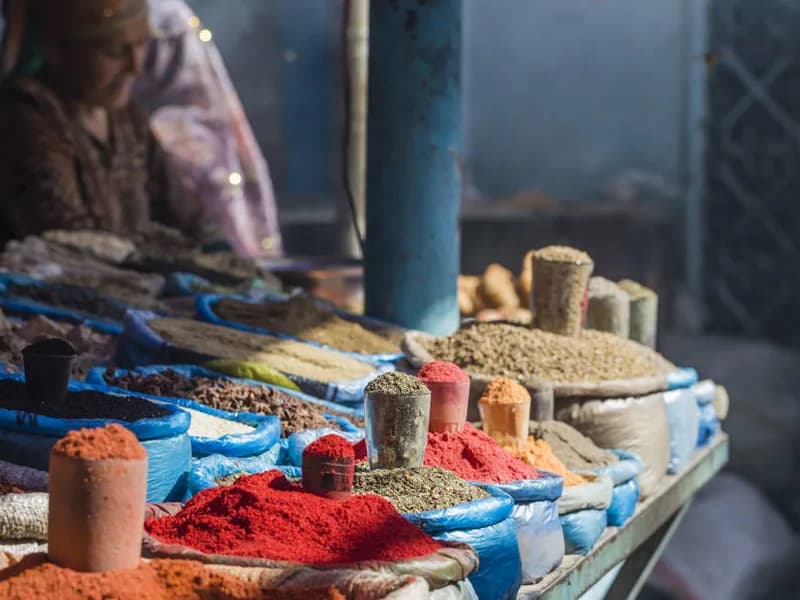
Kyrgyzstan works on the same principle, at a scale few British travellers have any frame of reference for. Its mountains, part of the Tian Shan range, hold high summer pastures called jailoos, where families still take their herds for the season, living in yurts much as they have for centuries. The passes into them are snowbound for most of the year and only walkable from around June to September. A trip built around this window takes in Lake Issyk-Kul, one of the largest alpine lakes on earth, and the gorges and pastures around Karakol, and it is one of the few places left where nomadic life is not a museum exhibit but simply how summer is still spent.
Where the sea calms down
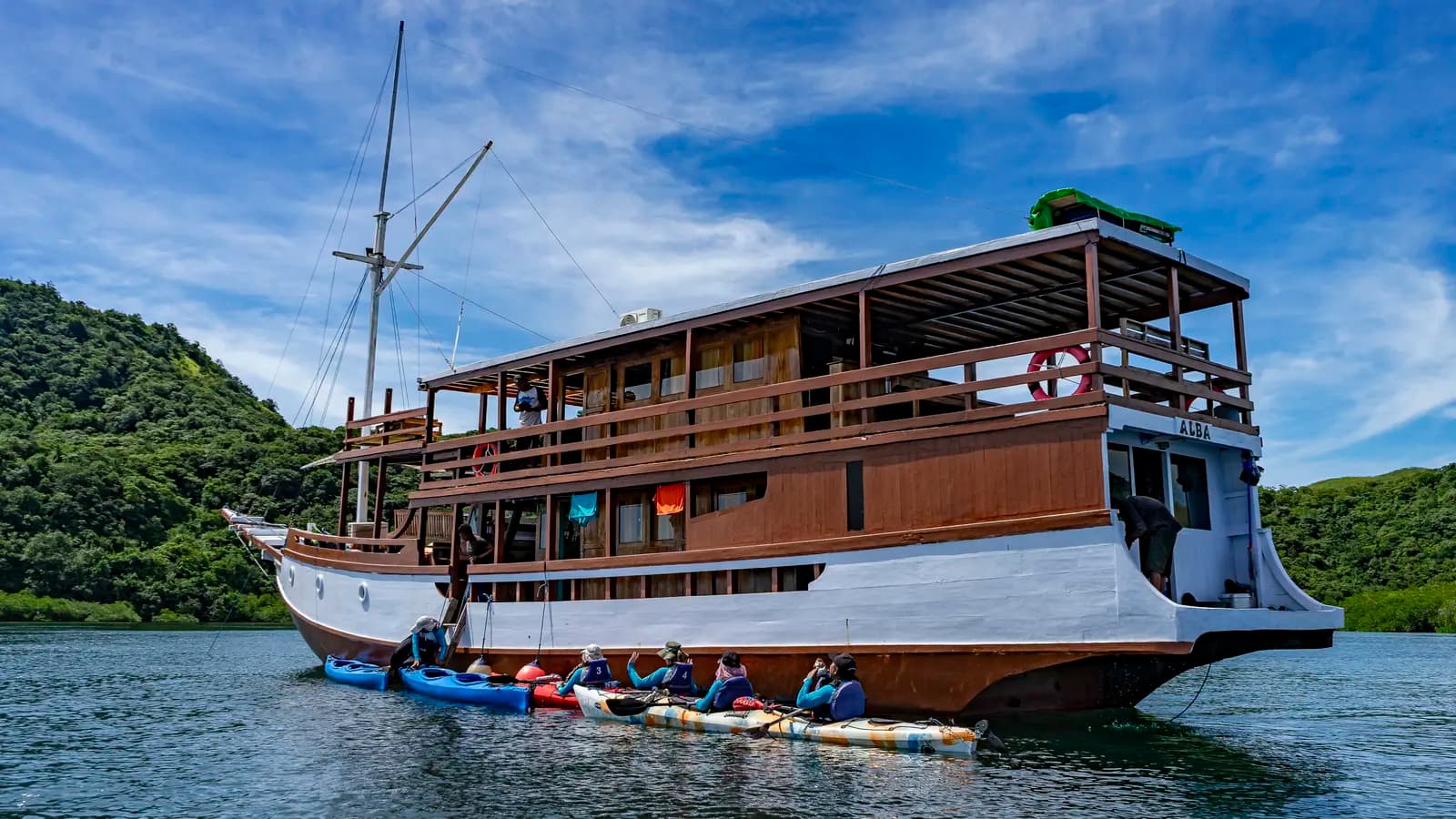
Indonesia runs on a different clock. Its dry season, roughly April to October, is when the crossings between islands are calmest and the roads on volcanic islands like Lombok and Flores are at their most reliable, which matters more than it sounds: much of this part of the archipelago is still reached by small boat and unsealed road. A route through Bali, Lombok, the Gili Islands and Flores, ending near the dragons of Komodo National Park, uses July's settled weather to string together a genuinely varied set of landscapes, from rice terraces to reef, without the wet season's cancelled crossings.
Places that spend much of the year either buried or unreachable by sea suddenly let you in.
Bali is the familiar start, with its rice terraces and temples, but the route's interest grows the further east it goes. Lombok, a short crossing away, has a coastline that has stayed considerably quieter than its neighbour's and a volcano, Rinjani, that towers over the Gili Islands offshore. Flores, further east again, is a different Indonesia altogether: Catholic rather than Muslim, mountainous, and the departure point for boats into Komodo National Park, where the dragons that give the park its name still patrol a scatter of dry, grassy islands.
What July asks of you
None of these three trips is a lie-by-the-pool holiday, and it is worth being honest about that before booking. The Rockies and Kyrgyzstan both involve walking most days, at altitude, and the Indonesian route covers a lot of ground by boat and minibus over three weeks. What they share is a narrow window in which the logistics simply work better: trails that are dry rather than slushy, herders who are actually in the high pastures rather than back in the valleys, seas that behave rather than cancel the day's crossing.
It is also worth saying what July does not solve. None of these places is quiet in the way an off-season trip would be; Lake Louise's car park fills early, and Bali's south coast has been a fixture on the backpacker circuit for decades. What July buys you is not solitude but function: the thing you came for is actually open, walkable or sailable, which is not nothing.
Choosing between them
If you want scenery on a grand scale with your evenings spent somewhere comfortable, the Rockies deliver it without asking too much of your legs, and Banff and Lake Louise have the infrastructure of a well-run national park behind them. If you want a genuinely different way of life, still being lived rather than performed for visitors, Kyrgyzstan is the more unusual choice, and a good deal cheaper than either of the others; its tourism industry is younger, and it shows in the best possible way. If islands and warmth matter more than altitude, Indonesia in July is calmer and drier than it will be again until the following spring, and the string of islands from Bali to Flores makes a far more varied fortnight than any single beach. All three share the same underlying logic: go when the place itself, rather than the calendar, is ready for you.
By Arthur Penhallow, the name Atlas & Passage’s editorial team writes under. Prices and dates in the trips below come from the operators and can change.