Travel guide
Indonesia holidays: a travel guide for UK visitors
Bali’s rice terraces and temples, the volcanoes and Borobudur on Java, and the dragons of Komodo: a practical guide to Indonesia holidays and tours, with the best time to visit Bali and the islands month by month.
Why visit Indonesia
Most people come for Bali and are right to: the rice terraces around Ubud, the temples that still manage the island’s water, the sunrise walk up Mount Batur, and a Hindu island culture that carries on whether or not anyone is watching. But Bali is one island of thousands, and the rest repay the effort. Java, next door, has Yogyakarta, a city that still has a sultan, the great ninth-century Buddhist monument at Borobudur, and the smoking crater of Mount Bromo, usually seen at dawn. East of Bali, Lombok is quieter and more rural, and the Gili Islands off its coast have no motor traffic at all. Further east again, Flores and the islands of Komodo National Park have the dragons, dry hills and some of the clearest sea in the region; in the far west, Sumatra has the rainforest where orangutans still live wild. Most of our Indonesia tours are a week or so long and stick to one or two of these islands, which is the right way to see a country this spread out.
Best time to visit Indonesia
The best time to visit Indonesia, and the best time to visit Bali, is the dry season, from May to September. Skies are clearest and the sea calmest in June, July and August, which are also the busiest months in Bali; May and September are just as dry and a little quieter. April and October sit either side, usually dry enough for touring as the seasons turn. The wet season runs roughly from November to March across Bali, Java, Lombok and Flores, at its heaviest in January and February: it rains most afternoons, often hard, sea crossings can be rough, and volcano walks get slippery. Komodo is usually at its best for boat trips from about April to November. Sumatra is wetter all year round, so a trek there always carries the chance of rain. Temperatures barely change through the year on the coasts, but the volcanoes are cold before dawn, so take a warm layer for Batur and Bromo. In Bali, Nyepi, the Hindu day of silence, usually in March, closes the island, airport included, for a day.
Indonesia month by month
- JanuaryAvoid
- The wet season at its heaviest across Bali, Java, Lombok and Flores; Sumatra sees rain most months, but this is among its wetter stretches too.
- FebruaryAvoid
- Still deep in the wet season on the southern islands, with short, heavy downpours rather than all-day rain.
- MarchQuiet
- The rains begin to ease; humid and green, with far fewer visitors than the dry months ahead.
- AprilGood
- The turn towards the dry season, and sailing conditions around Komodo start to settle.
- MayBest
- Dry, warm and comfortable from the rice terraces of Bali to the highlands of Sumatra, before the main crowds arrive.
- JuneBest
- One of the most reliable months for clear skies and calm seas around Komodo and Flores.
- JulyBest
- Peak dry season, and Bali's most popular routes and temples fill to match.
- AugustBest
- Dry and settled across the archipelago; Indonesia's Independence Day falls on the seventeenth.
- SeptemberBest
- Still dry and clear, with the crowds of high summer beginning to thin.
- OctoberGood
- The dry season's last reliable month before the rains build again in the west.
- NovemberQuiet
- The wet season returns to Bali, Java and Lombok; Sumatra's rains intensify further still.
- DecemberAvoid
- Wet and often stormy, though the turn of the year still draws visitors despite it.
Top things to do in Indonesia
- 1
See Bali’s rice terraces, temples and Mount Batur
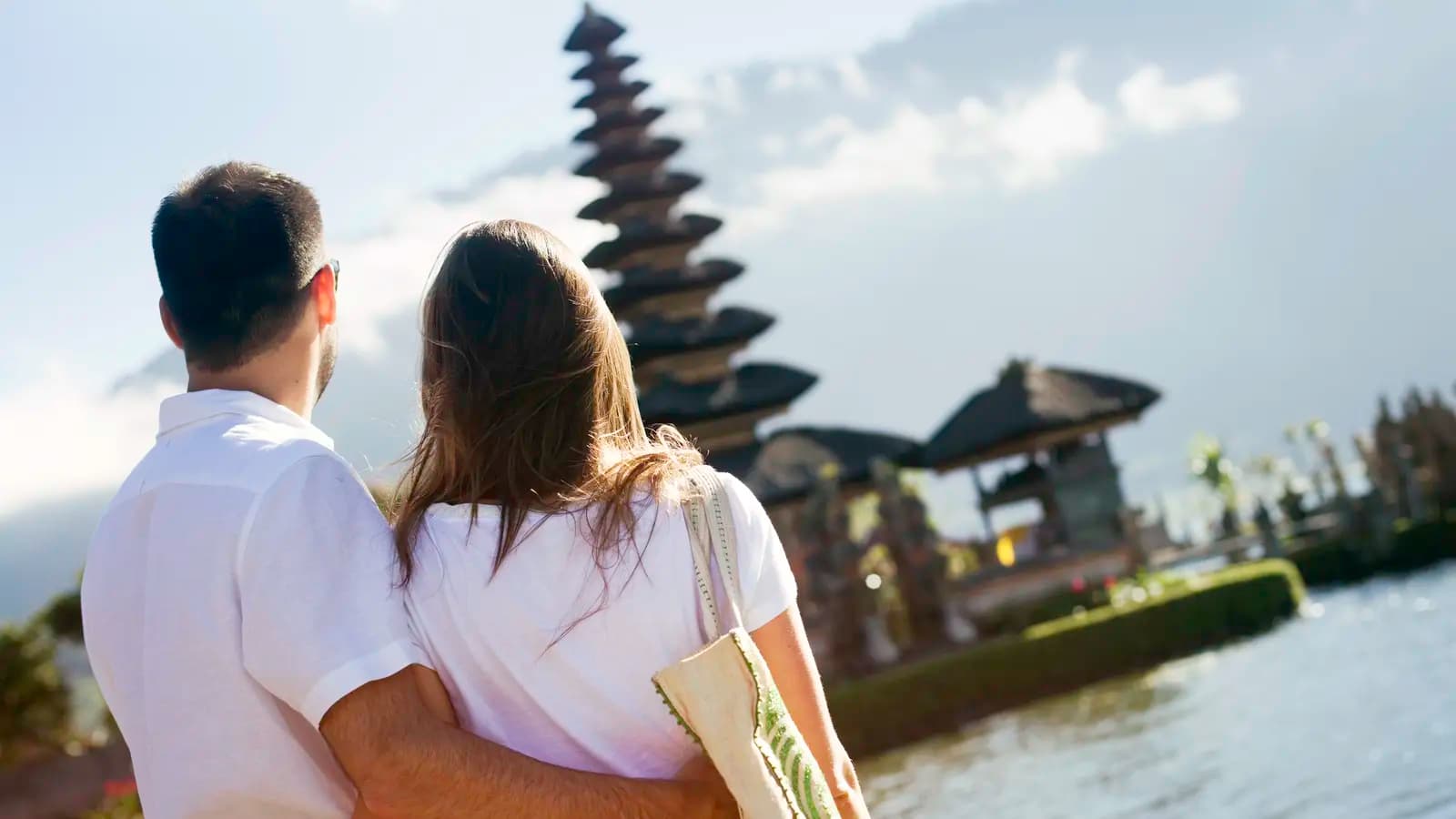
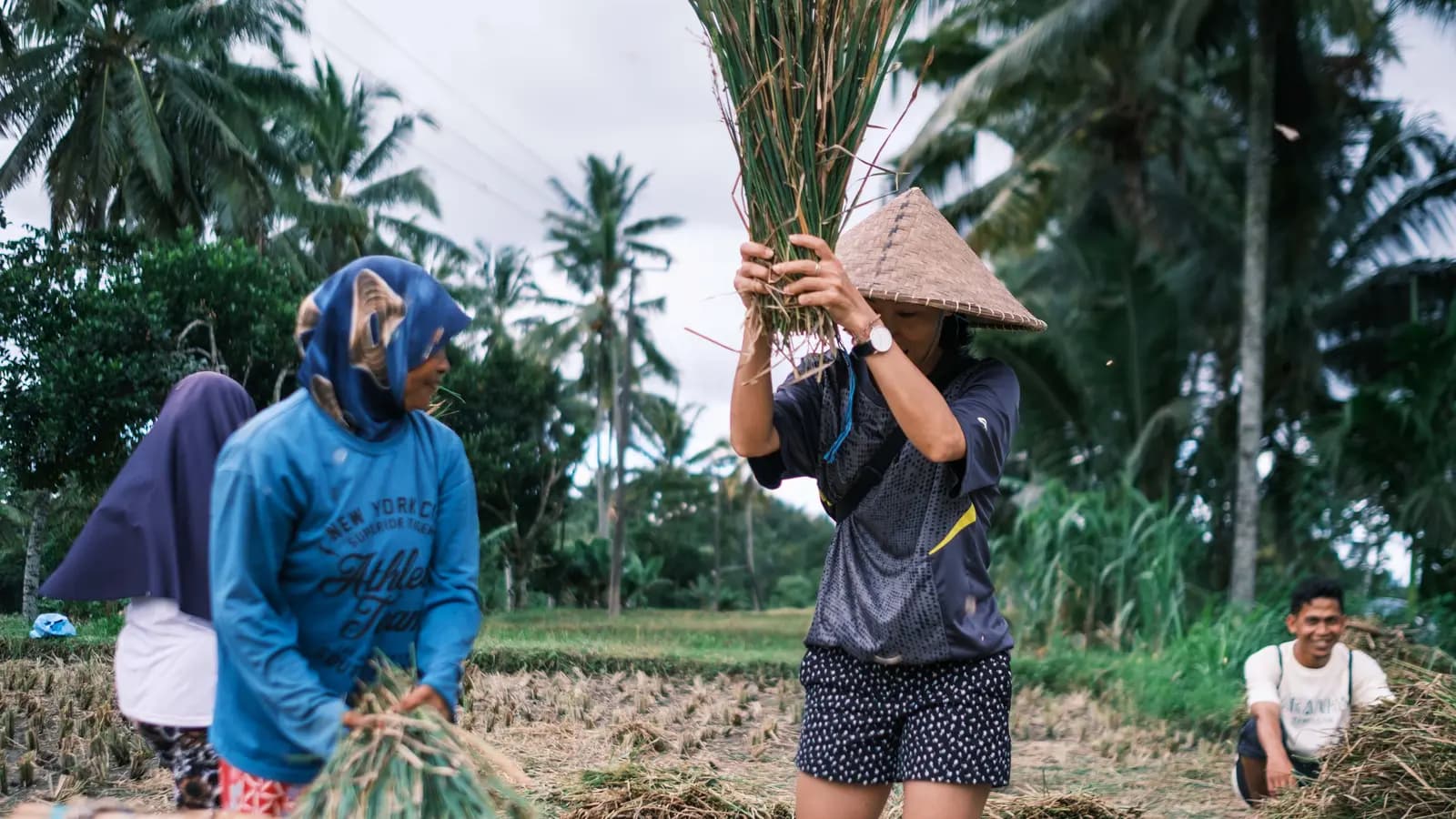
Almost every Indonesia tour spends time in Bali, and most of it around Ubud, among the rice terraces in the hills. The terraces are watered by subak, a system run through the island’s water temples for about a thousand years. Many tours start one morning before dawn with the walk up Mount Batur, an active volcano, for sunrise over the crater lake.
- 2
Take a boat through Komodo National Park
From Labuan Bajo on Flores, boats go out among the dry, steep islands of the national park: Padar for the view from the ridge, Komodo or Rinca to see the dragons with a ranger, and stops to swim and snorkel on the way. Some trips spend a night on board. It is a separate flight from Bali, so it is usually a trip, or part of one, in its own right.
- 3
Visit Borobudur and Mount Bromo on Java
Yogyakarta is the base for Borobudur, the largest Buddhist monument in the world, built in the ninth century, its terraces lined with more than two thousand carved stone panels, and for the Hindu temples of Prambanan. Further east, Java tours drive up before dawn to watch the sun rise over the crater of Mount Bromo from the rim of the caldera around it.
The cheapest Indonesia holidays right now
Lowest lead-in prices first, from live availability. Open one for its dates, and book directly with its operator.
Indonesia travel questions
- When is the best time to visit Bali?
- May to September, in the dry season. June to August is the sunniest and busiest; May and September are almost as dry and quieter. From November to March it rains most afternoons, though it stays warm and green, and Bali is much less crowded.
- Is Indonesia worth it if I don’t just want a beach holiday in Bali?
- Yes. Most of our Indonesia tours are about the inland side of the islands: rice terraces, temples and villages in Bali, volcanoes and Borobudur on Java, Komodo’s dragons, and orangutans in Sumatra and Borneo. Some finish with a few days by the sea, but it is rarely the point.
- How long do I need in Indonesia?
- A week covers Bali well, or Java, or a loop through Lombok and the Gilis. Two weeks lets you combine two regions, such as Java and Bali, or Bali and Komodo. Most of our Indonesia tours are between six and nine nights, so many people join two back to back or add a few days of their own.
- Can you see Komodo dragons and orangutans on one trip?
- Only with a long trip and several flights: Komodo is in the east, and orangutans live in Sumatra and Borneo, far to the west and north. Most travellers choose one. Our tours go to each separately, to Komodo from Flores, and to the orangutans at Bukit Lawang in Sumatra or Tanjung Puting in Borneo.
- Is getting up for Mount Bromo or Mount Batur at sunrise worth it?
- Most people think so, though it means a start in the small hours. Bromo is mostly reached by jeep, with a short climb to the rim; Batur is a walk of a couple of hours uphill in the dark, on loose volcanic ground. It is cold at the top before sunrise, so take a warm layer.
- How fit do I need to be for an Indonesia tour?
- Many of the tours are active: early starts, volcano walks, jungle trails and stepping in and out of boats, in heat and humidity. None of it needs special fitness, but you should be happy walking for a few hours on uneven ground. Tour pages describe how active each trip is.
- Is Indonesia safe for tourists?
- Most visits are trouble-free, but read the UK government’s advice before you book and again before you go. It covers volcanoes and earthquakes, which can happen without warning, the risk of methanol in spirits, boat safety, and Indonesia’s strict drug laws.
- Does Indonesia’s new criminal code affect unmarried couples?
- The code penalises sex outside marriage and living together unmarried, but only if certain close family members make a complaint. The UK government’s advice explains it; read it before you travel. Same-sex activity is illegal in the province of Aceh, and discretion is advised everywhere else.
- Is Indonesia good for solo travellers?
- Yes. Many people travel there alone on a group tour, which takes care of the flights and ferries between islands. One of our tours, Solo-ish Bali, is designed for people travelling alone, and other group tours take single travellers too.
- What should I wear in Indonesia?
- Light, loose clothes for the heat. At temples, in Bali and on Java, cover your shoulders and knees; Balinese temples usually ask you to wear a sarong and sash, often lent at the gate. Java is mostly Muslim and more conservative away from the tourist areas, so dress modestly there.
- Do I need cash in Indonesia?
- Yes, for markets, small warungs, tips and anywhere outside the towns. Hotels, larger restaurants and shops in Bali take cards, and there are cash machines in towns. The currency is the Indonesian Rupiah.
- Do I need malaria tablets or vaccinations for Indonesia?
- It depends on where you are going. Malaria risk varies between islands and between towns and the countryside, and the advice on rabies and other vaccines depends on your trip. See your GP or a travel clinic at least eight weeks before you go; TravelHealthPro publishes the current advice for Indonesia. If an animal bites or scratches you, get medical help straight away.
- Can I take my prescription medicines to Indonesia?
- Indonesia’s drug laws are among the strictest anywhere, and some medicines that are legal in the UK, including some strong painkillers and cannabis-based products, are controlled or banned there. Check the UK government’s advice, and ask the Indonesian embassy in London about anything stronger than everyday medicines. Carry them in their original packaging with a copy of your prescription.
- Is it safe to drink in Indonesia?
- Be careful with spirits and cocktails: there have been cases of methanol poisoning from drinks made with illicit spirits, and methanol cannot be tasted or smelled. Stick to sealed bottles and beer from reputable bars, and do not drink tap water.
Related travel guides
Thailand
Bangkok’s temples and canals, the old capitals, the hills around Chiang Mai and two coasts with opposite seasons: a practical guide to Thailand holidays and tours, with the best time to visit Thailand month by month.
Vietnam
Hanoi and Halong Bay, the imperial city of Hue, the old port of Hoi An and the Mekong Delta: a practical guide to Vietnam holidays and tours. Vietnam has three climates in one long country, so the guide also gives the best time to visit, region by region and month by month.