Journeys
Wrocław and Lower Silesia, the Poland that used to be German
Until 1945, Wrocław was the German city of Breslau. In a few months its whole population was replaced, and the new arrivals rebuilt it as a Polish city. Its streets, and the castles of the countryside around it, still carry both stories.
By Walter Pellow2 November 20264 min read
There are few cities in Europe whose history changed as abruptly as Wrocław's. For centuries it was Breslau, a largely German-speaking city, at various times part of the kingdoms of Bohemia, Habsburg Austria, Prussia and then Germany. At the end of the Second World War it was besieged for months by the Soviet army and badly damaged. Then the borders moved. At the Potsdam conference in 1945, the Allies shifted Poland westwards, giving it most of Silesia and other German territory in return for the eastern lands taken by the Soviet Union. Breslau became Wrocław.
Almost the whole German population left or was expelled in the following years, and in their place came Poles, many of them from the city of Lwów, now Lviv in Ukraine, which Poland had lost in the east. They brought with them the city's university staff, its library collections and even its famous panorama painting, and set about making a Polish city out of a German one.
The city on the islands
Wrocław sits on the river Odra, which divides here into several channels around a dozen islands, crossed by more than a hundred bridges. The oldest part of the city is Ostrów Tumski, Cathedral Island, where the first settlement grew up a thousand years ago. Its cathedral and churches, the gas lamps still lit by hand each evening and the quiet streets make it feel like a separate town.
The main market square, the Rynek, is one of the largest in Poland, with a magnificent Gothic town hall at its centre, its gables and astronomical clock carefully restored after the war. The tall merchants' houses around the square, painted in bright colours, were largely rebuilt in the 1950s from the ruins, and the work was so careful that few visitors would guess.
Wrocław also has one of the landmarks of modern architecture. The Centennial Hall, completed in 1913 by the city architect Max Berg, has a vast reinforced concrete dome that was, when it was built, the largest of its kind in the world, and its interior, lit by tiers of windows, still impresses. It is a UNESCO World Heritage Site, a rare honour for a building of the twentieth century.
Wrocław has two more recent quirks. All over the old town, in doorways, on window sills and at the foot of lamp posts, are small bronze dwarfs, several hundred of them, each with its own character. They began as a reference to the Orange Alternative, a movement that mocked the communist authorities in the 1980s by painting dwarfs on walls where anti-government slogans had been painted over. And the Racławice Panorama, the vast circular painting of a Polish victory over the Russians in 1794 that came from Lwów, is displayed in its own round building.
In a few months its whole population was replaced, and the new arrivals rebuilt it as a Polish city.
The castles of Lower Silesia
Lower Silesia, the region around Wrocław, has an unusual number of castles and palaces, built by the German nobility who owned its estates. Many were left abandoned after 1945 and have been restored only in recent decades.
The largest is Książ Castle, near Wałbrzych, a huge pile on a wooded hill above a river gorge, rebuilt over the centuries by the Hochberg family, one of the richest in Germany. In the Second World War the Nazis took it over and began digging an enormous network of tunnels beneath it and in the mountains nearby, for purposes that are still not entirely clear. Żagań, in the north-west of the region, has a grand baroque palace and, nearby, the site of Stalag Luft III, the prisoner-of-war camp from which Allied airmen made the Great Escape in 1944; there is a museum there now.
The tours
Explore Worldwide's Highlights of Poland, seven nights, starts in Warsaw and travels west to Wrocław, Żagań and Książ Castle before finishing in Kraków, with the Wieliczka salt mine and the Kazimierz district. Its departures run from March to September.
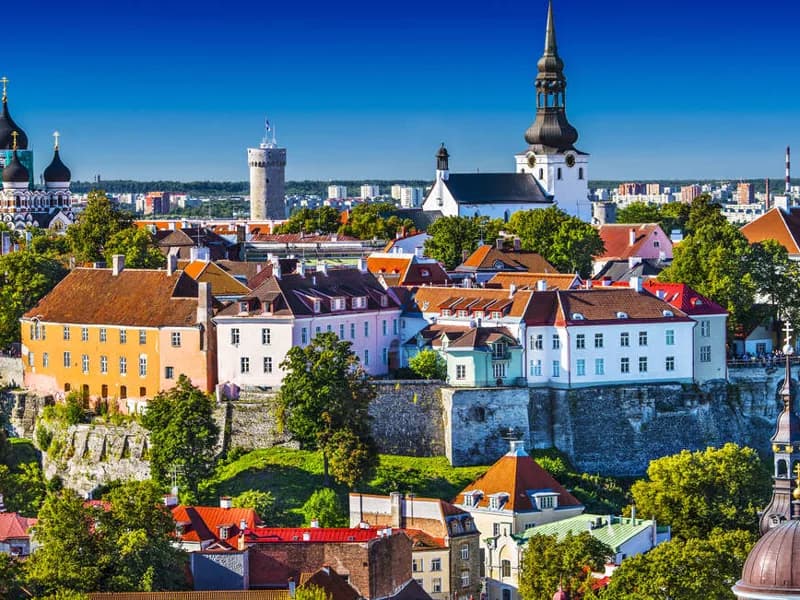
Explore's Upgraded: The Baltic States and Poland, eleven nights, takes a northern route, from Tallinn and Riga to Vilnius and the Hill of Crosses, through the Masurian lakes and Hitler's wartime headquarters at the Wolf's Lair, to Warsaw and Kraków. It does not go to Wrocław, but it covers the other side of Poland's twentieth century.
Wrocław rewards a couple of days. Spring and early autumn are pleasant for walking the islands and the old town, and in December the market square is filled with one of the best Christmas markets in Poland.
By Walter Pellow, the name Atlas & Passage’s editorial team writes under. Prices and dates in the trips below come from the operators and can change.