Travel guide
Cambodia holidays: a travel guide for UK visitors
The temples of Angkor, the riverside capital of Phnom Penh and the great lake of the Tonle Sap: a practical guide to Cambodia holidays and tours, including Vietnam and Cambodia together, with the best time to visit Cambodia month by month.
Why visit Cambodia
Most people come to Cambodia for Angkor, and it does not disappoint: the capital of the Khmer empire, spread over miles of forest outside Siem Reap, with Angkor Wat itself, the carved faces of the Bayon and the roots of fig trees prising apart the walls of Ta Prohm. But the country is more than its temples. Phnom Penh, on the Mekong, has a royal palace, French colonial boulevards and a busy riverfront, and it also has the museums and memorials that tell, plainly, the story of the Khmer Rouge years in the late 1970s. In between lies the Tonle Sap, a lake that swells to several times its size in the rainy season, with villages built on stilts and on the water. Further south there are pepper farms around Kampot, the islands off the coast and the forests of the Cardamom Mountains. Many visitors combine Cambodia with Vietnam, Thailand or Laos, and most of our tours do. A guide matters here more than in most places: for the history, and for knowing which temples to see at which hour.
Best time to visit Cambodia
The best time to visit Cambodia is November to February, the cool dry season, when skies are clear, the humidity is low and the countryside is still green after the rains. It is also the busiest time at Angkor. March and April are dry but very hot, and April is the hottest month, often close to forty degrees; Khmer New Year falls in mid-April. The rainy season runs from about May to October. Rain usually comes as a heavy afternoon downpour rather than all day, mornings are often clear, the temples are quieter and the landscape is at its greenest, so it is a good time for travellers who don’t mind the heat. September and October are usually the wettest months, and the Tonle Sap is at its fullest from about September to November. For Vietnam and Cambodia together, November to March suits both Cambodia and southern Vietnam, though northern Vietnam is cool and often grey in those months.
Cambodia month by month
- JanuaryBest
- Dry, warm and comfortable, with low humidity; one of the most reliable months to visit Angkor.
- FebruaryBest
- Still dry and pleasant, though daytime heat begins to build towards the hotter months ahead.
- MarchGood
- Dry but increasingly hot, especially around Angkor and Phnom Penh, before the wet season arrives.
- AprilQuiet
- The hottest month of the year, still dry; the Khmer New Year falls in mid-April.
- MayQuiet
- The wet season usually begins; heavy afternoon downpours, though mornings are often clear.
- JuneQuiet
- Wet season rains continue, and the countryside turns a deep green around the temples.
- JulyQuiet
- Regular monsoon rain, usually in short, heavy bursts rather than all day.
- AugustQuiet
- Among the wetter months, with Tonle Sap Lake continuing to expand as the rains feed it.
- SeptemberAvoid
- Typically the wettest month, with Tonle Sap Lake near its largest extent and some roads affected.
- OctoberQuiet
- Rain begins to ease; Tonle Sap Lake is at or near its fullest, a good month to see the flooded forest.
- NovemberBest
- The dry season returns, with cooler air, green countryside and the lake still high.
- DecemberBest
- Dry, cool by Cambodian standards, and one of the most popular months to travel.
Top things to do in Cambodia
- 1
Explore the temples of Angkor
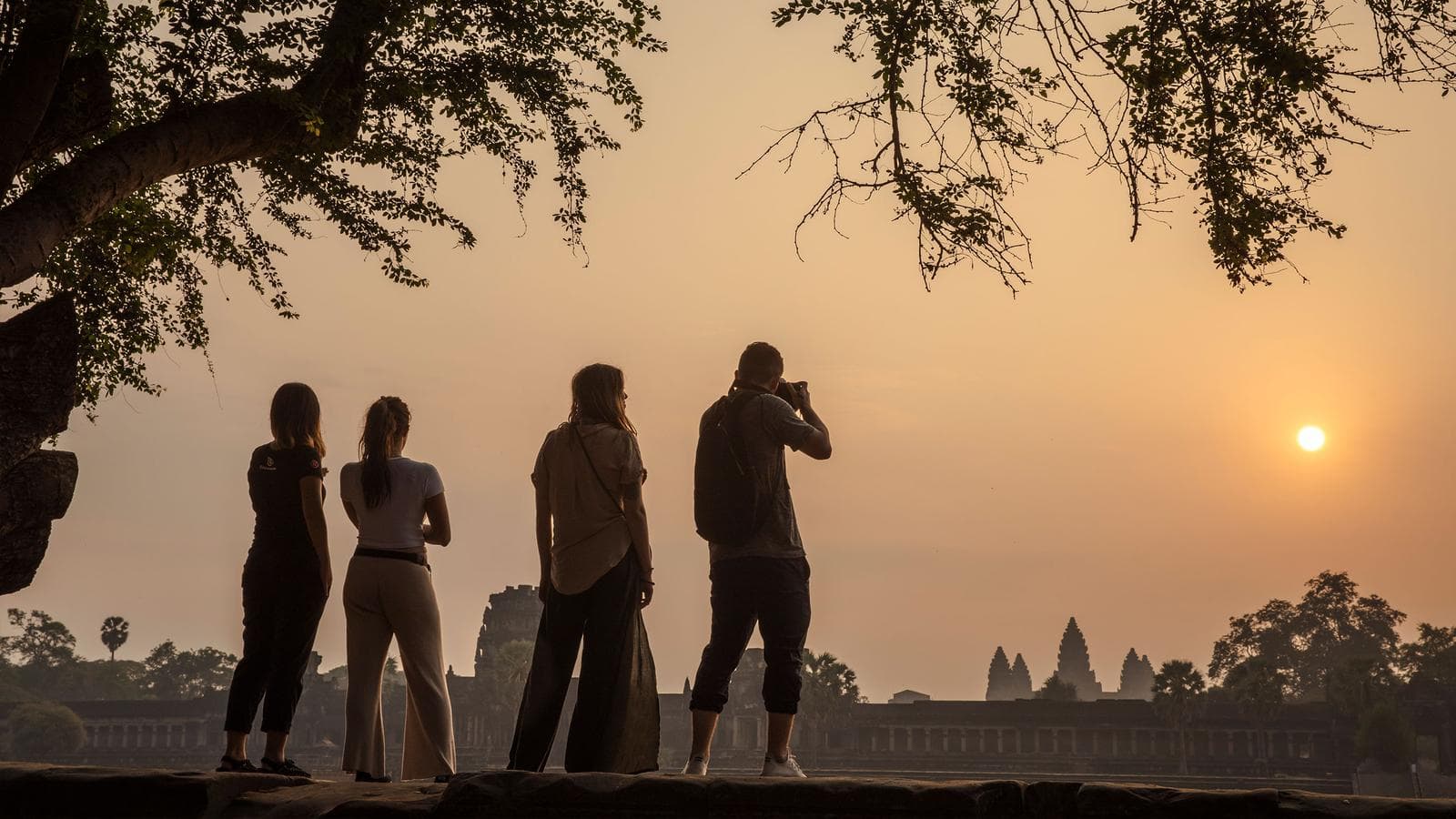
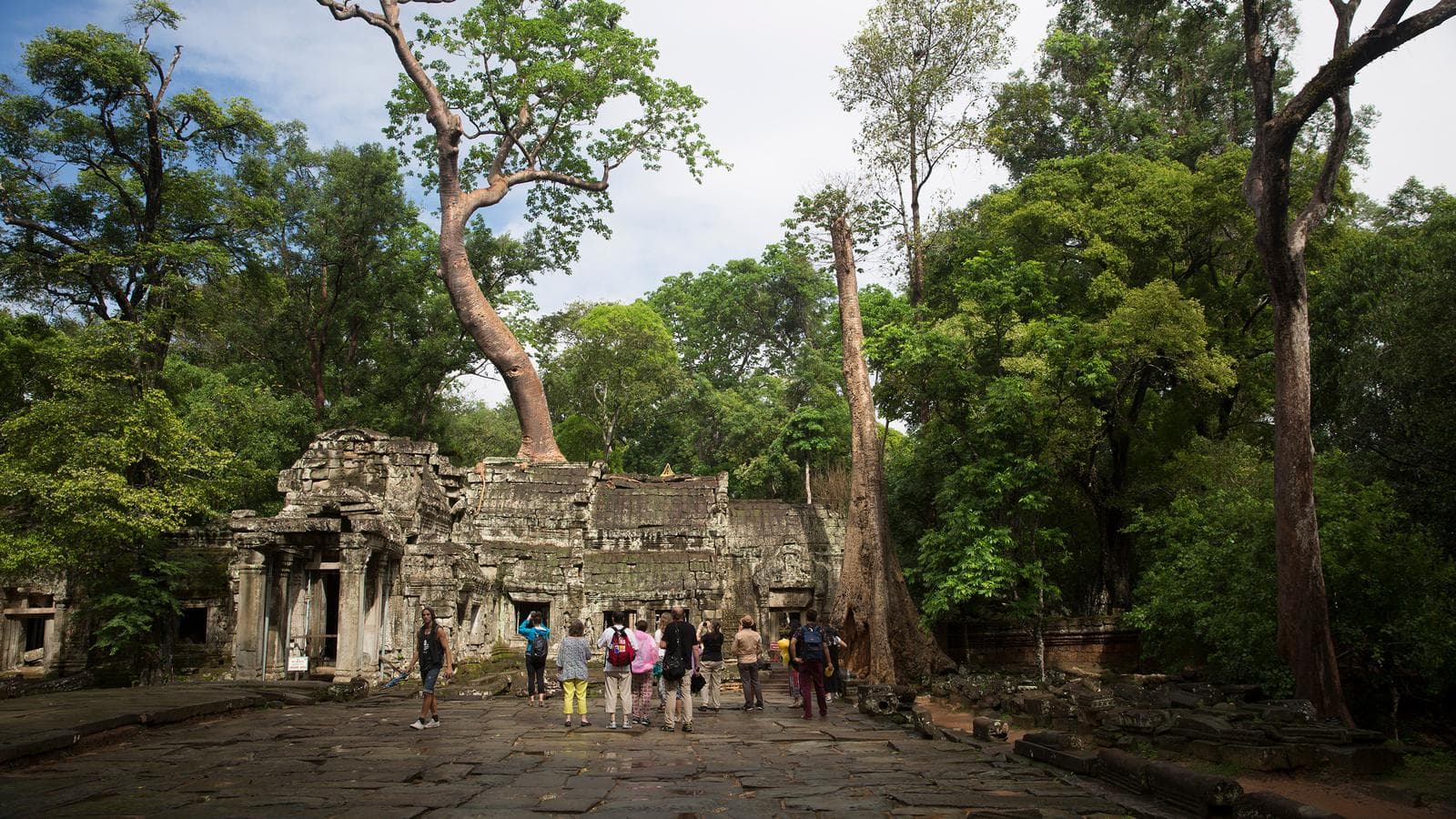
Nearly all our Cambodia tours spend two or three days at Angkor, near Siem Reap. Angkor Wat, built in the twelfth century, is the largest of the temples; the Bayon, in the walled city of Angkor Thom, is covered in great stone faces; and Ta Prohm has been left in the grip of the forest. Tours often go at sunrise and in the late afternoon to avoid the midday heat. You need a temple pass, and shoulders and knees must be covered.
- 2
Learn the history of Phnom Penh
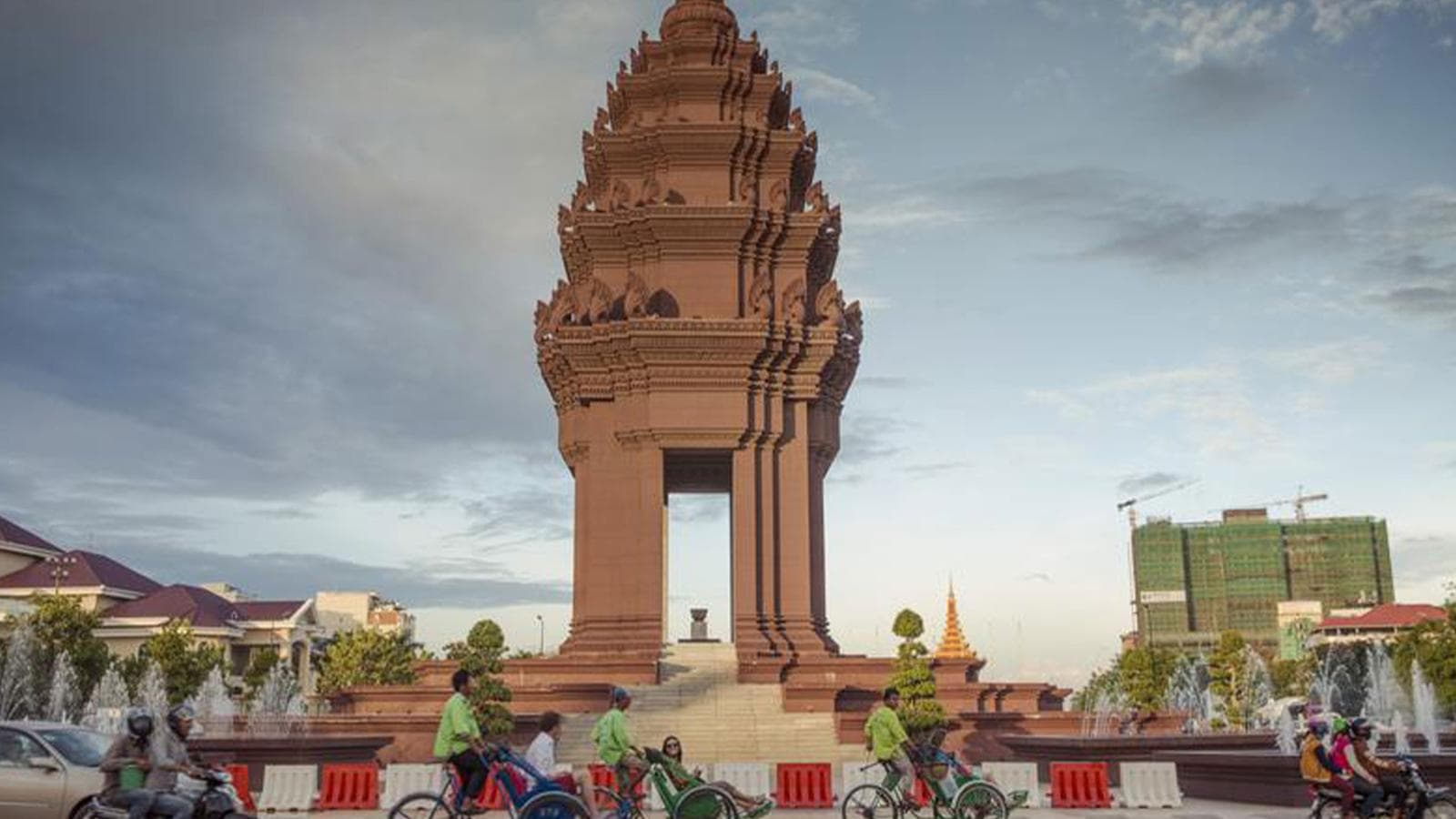
Most of our tours include Phnom Penh: the Royal Palace and Silver Pagoda, the National Museum, the markets and the riverfront where the Tonle Sap meets the Mekong. Many also visit the Tuol Sleng Genocide Museum and the killing fields of Choeung Ek, which tell the story of the Khmer Rouge years without softening it. It is a sobering day, and an important one.
- 3
Visit the Tonle Sap lake
In the rainy season the Mekong backs up into the Tonle Sap river and the lake swells to several times its dry-season size, flooding the forest around it. Boat trips from Siem Reap visit the floating and stilted villages on its edge, where life follows the rise and fall of the water. Several of our tours include it, and it is at its fullest from about September to November.
The cheapest Cambodia holidays right now
Lowest lead-in prices first, from live availability. Open one for its dates, and book directly with its operator.
Cambodia travel questions
- When is the best time to visit Cambodia?
- November to February, the cool dry season, is the most comfortable time, with clear skies and lower humidity. March and April are very hot. The rainy season runs from about May to October; it brings short heavy downpours, greener scenery and fewer visitors.
- When is the best time to visit Vietnam and Cambodia together?
- November to March works best for Cambodia and southern Vietnam, including Ho Chi Minh City and the Mekong Delta. Central Vietnam can be wet in October and November, and northern Vietnam, around Hanoi and Halong Bay, is cool and often cloudy from December to February. A route from south to north in February or March suits most of the trip.
- Does it rain all day in the rainy season?
- Usually not. Rain tends to fall in a heavy burst in the afternoon or evening, and mornings are often clear, which is when tours visit the temples. The temples are quieter, the moats are full and the countryside is green. September and October are usually the wettest months.
- How long do I need at Angkor?
- Two full days is enough to see the main temples, Angkor Wat, the Bayon and Ta Prohm, without rushing, and three lets you add Banteay Srei and the outlying sites. Most of our tours allow two or three days in Siem Reap.
- How long should a Cambodia itinerary be?
- A week covers Siem Reap, Angkor and Phnom Penh. Ten days to two weeks adds the Tonle Sap, Battambang, Kampot or the islands. Many of our tours combine Cambodia with Vietnam over about two weeks, or with Thailand or Laos.
- Will children get bored of the temples?
- Some do, after a day or two. Ta Prohm’s tree roots and the faces of the Bayon tend to hold attention better than lectures. Family tours mix the temples with boat trips, cycling, cooking and time on the coast, which keeps the pace varied.
- Do UK citizens need a visa for Cambodia?
- Yes. Apply online for an e-visa at least four days before you go, or get a visa on arrival, paid in US dollars, with a passport photo. Your passport needs six months’ validity from arrival. If you fly in, you must also complete an e-Arrival card in the seven days before you land. Check the UK government’s travel advice before you travel.
- Should I take US dollars or Cambodian riel?
- Both are used. Prices for most things are given in dollars, and cash machines usually give dollars, while small change comes in riel. Take clean, undamaged dollar notes, as torn ones are often refused.
- What should I wear to visit the temples?
- Cover your shoulders and knees at Angkor and at active temples, or you may be turned away, and take your hat off in temples. Light, loose clothing helps in the heat. Wear shoes with grip, as temple steps are steep and uneven.
- How do I avoid getting ill from food and water?
- Drink bottled or filtered water and check the seal. Eat food that is freshly cooked and served hot, and peel fruit yourself. Be wary of ice away from hotels and busy restaurants, and of salads and food left standing. Carry hand gel.
- What vaccinations do I need for Cambodia?
- See your GP or a travel clinic at least six weeks before you go. They will check your routine vaccinations and advise on others, and on malaria and dengue, which depend on where and when you are travelling. TravelHealthPro publishes the current advice for Cambodia.
- Is Cambodia safe for tourists?
- Most visits are trouble-free. Bag snatching by thieves on motorbikes is the most common crime, especially in Phnom Penh, so keep bags on the side away from the road. In rural areas, stay on main routes and paths, as landmines and unexploded weapons remain in places. Read the UK government’s travel advice before you go.
- Can I take my prescription medicines to Cambodia?
- Usually, but carry them in their original packaging with a copy of your prescription, and take enough for the whole trip, as some medicines are hard to find. Check the UK government’s travel advice, and ask the Cambodian Embassy in London about anything strong or unusual.
Related travel guides
Indonesia
Bali’s rice terraces and temples, the volcanoes and Borobudur on Java, and the dragons of Komodo: a practical guide to Indonesia holidays and tours, with the best time to visit Bali and the islands month by month.
Malaysia
Orangutans in the Borneo rainforest, the tea hills of the Cameron Highlands and the old trading towns of Penang and Malacca: a practical guide to Malaysia holidays and tours, with the best time to visit Malaysia month by month.
Thailand
Bangkok’s temples and canals, the old capitals, the hills around Chiang Mai and two coasts with opposite seasons: a practical guide to Thailand holidays and tours, with the best time to visit Thailand month by month.
Vietnam
Hanoi and Halong Bay, the imperial city of Hue, the old port of Hoi An and the Mekong Delta: a practical guide to Vietnam holidays and tours. Vietnam has three climates in one long country, so the guide also gives the best time to visit, region by region and month by month.