Travel guide
Jordan holidays: a travel guide for UK visitors
Petra, the desert of Wadi Rum, Roman Jerash and a float in the Dead Sea: a practical guide to Jordan holidays and tours, with the best time to visit month by month.
Why visit Jordan
Most people come for Petra, and Petra deserves it: a city cut into rose-coloured rock, reached on foot down a narrow gorge, and far larger than the one famous facade suggests. But Jordan rewards the rest of the week too. Jerash, north of Amman, is one of the best-kept Roman cities anywhere, with its colonnaded streets and theatres still standing. Madaba has a sixth-century mosaic map of the Holy Land on a church floor, and Mount Nebo looks out over the Jordan valley. In the south, Wadi Rum is red sand and sandstone mountains, usually seen from the back of a four-by-four and often with a night in a desert camp. And the Dead Sea, the lowest point on land, holds you up whether you can swim or not. The distances are short, so a week covers most of it, and a guided tour takes care of the driving, the tickets and the desert transfers.
Best time to visit Jordan
The best time to visit Jordan is spring, from March to May, or autumn, from September to November. April and October are the most comfortable months for walking at Petra and in Wadi Rum, and the busiest. March brings green hills in the north but can still be cold at night, and November is cooler and quieter, with the first winter rain towards the end of the month. Summer, from June to August, is hot and dry everywhere, and very hot at the Dead Sea and in Aqaba, so sightseeing happens early in the day. Winter, from December to February, is cold and wet on the high ground: Petra and Amman can see frost and, now and then, snow, desert nights fall below freezing, and from November to March heavy rain can bring flash floods in the valleys. The Dead Sea and Aqaba stay mild all winter.
Jordan month by month
- JanuaryQuiet
- The coldest, wettest month in the highlands, with frosty nights at Petra and the odd snowfall; the Dead Sea stays mild.
- FebruaryQuiet
- Still cold in Amman and Petra, though the rain begins to ease and the sites are at their emptiest.
- MarchGood
- Spring arrives: green hills in the north and comfortable walking days, with cold desert nights and the chance of a late shower.
- AprilBest
- Warm days and cool evenings across the whole country; the most popular month, and Petra is at its busiest.
- MayGood
- Dry and warming fast, especially in the south; early starts at Petra and Wadi Rum keep the walking comfortable.
- JuneQuiet
- Hot and dry everywhere, and very hot at the Dead Sea and in Aqaba; sightseeing is best done in the early morning.
- JulyAvoid
- The height of the summer heat; long days on foot at Petra and in the desert are hard going.
- AugustAvoid
- As hot as July, with clear desert skies at night but little relief by day.
- SeptemberGood
- The heat eases through the month, and the Red Sea at Aqaba is at its warmest.
- OctoberBest
- Settled, clear and warm without the summer heat; a favourite month for Petra and the desert, and a busy one.
- NovemberGood
- Cooler and quieter, with pleasant walking days; the first winter rain can arrive later in the month.
- DecemberQuiet
- Winter sets in on the high ground, with cold nights in the desert; Christmas departures run, and the Dead Sea is mild.
Top things to do in Jordan
- 1
Walk into Petra
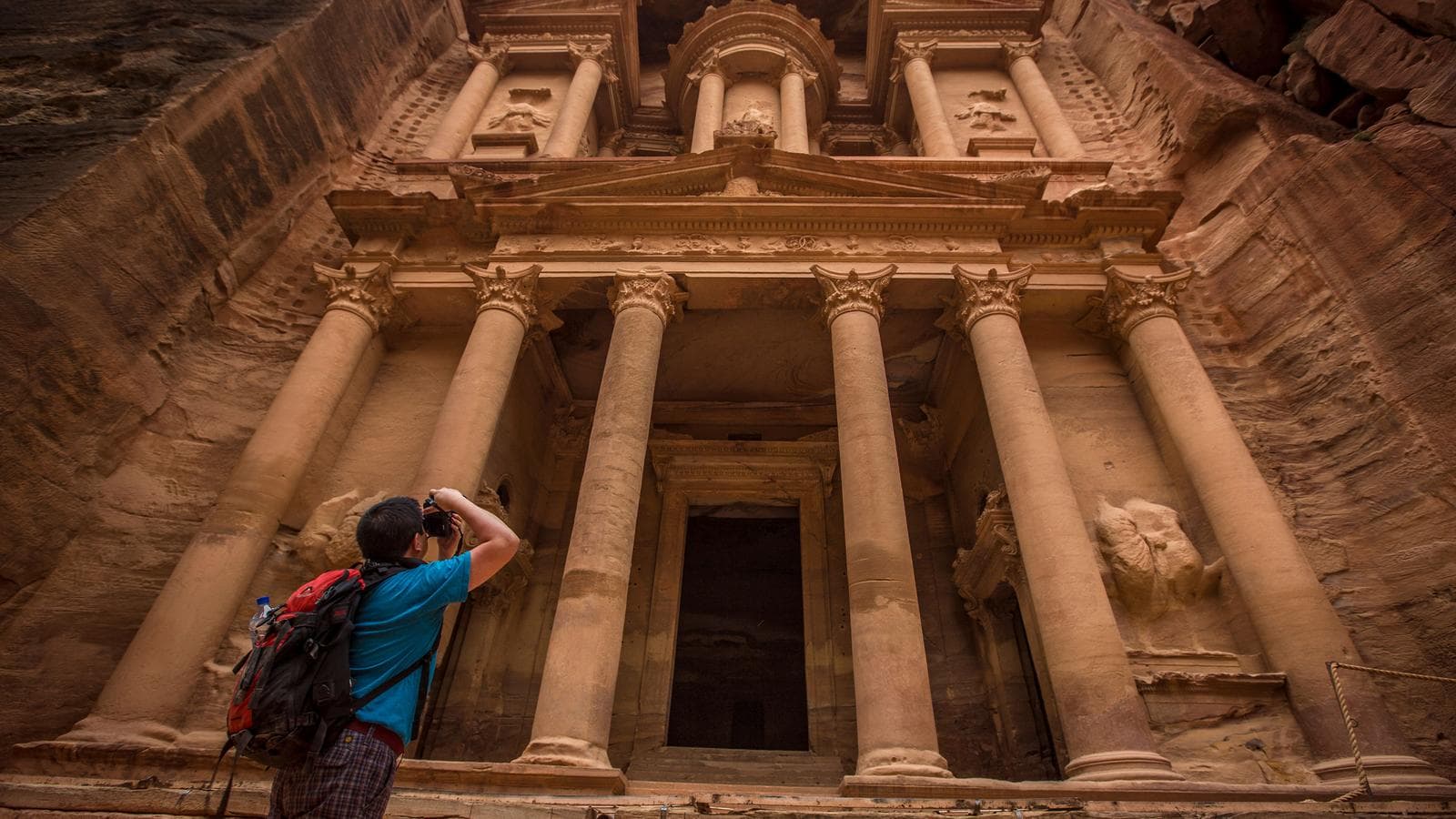
The way in is on foot, down the Siq, a narrow gorge that opens onto the carved front of the Treasury. Beyond it are tombs, a theatre and a long colonnaded street, and a climb of several hundred rock-cut steps to the Monastery. A day at Petra means hours of walking on sand and uneven stone, so good shoes and an early start make a difference.
- 2
Cross the desert at Wadi Rum
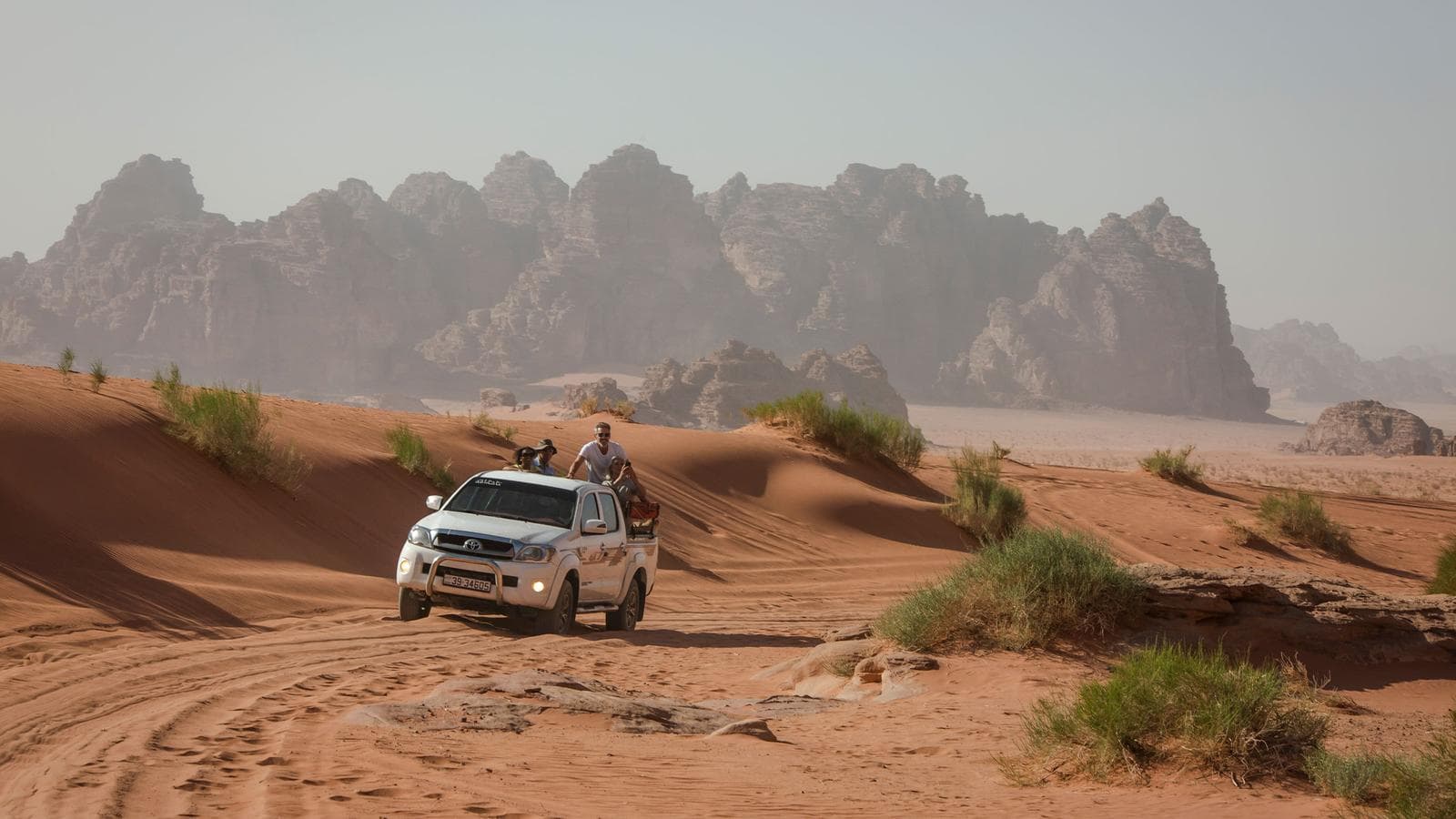
A protected valley of red sand and sandstone mountains in the far south, usually explored by four-by-four with a Bedouin driver. Many tours spend a night in a desert camp. The days are warm, but the nights are cold for much of the year, so pack a warm layer.
- 3
Float in the Dead Sea
The shore of the Dead Sea is the lowest point on land, and the water is so salty that you float without trying. Most tours give it an afternoon or a night at a resort hotel. Keep the water away from your eyes, and do not shave beforehand.
The cheapest Jordan holidays right now
Lowest lead-in prices first, from live availability. Open one for its dates, and book directly with its operator.
Jordan travel questions
- When is the best time to visit Jordan?
- Spring (March to May) and autumn (September to November). April and October are the most comfortable months for walking at Petra and in Wadi Rum, and the busiest. Summer is very hot, and winter is cold and wet on the high ground, though the Dead Sea stays mild.
- Is Jordan safe to visit right now?
- The UK government advises against all travel to within three kilometres of the Syrian border, far from the usual tour route. Wider tension in the region has also brought attacks, airspace closures and flight disruption to Jordan at times. Read the UK government’s latest travel advice for Jordan before you book and again before you go; travelling against that advice can invalidate your travel insurance.
- Is a week enough to see Jordan?
- A week is enough for the main sights: Amman, Jerash, Petra, Wadi Rum and the Dead Sea. Most of our Jordan tours are seven or eight nights. More time lets you spend two days at Petra, or add Aqaba and the Red Sea.
- Can you see Petra in one day?
- You can see the Siq, the Treasury and the main street in a day, and many tours do. Two days, or a day and an evening, leaves time for the climb to the Monastery or the high viewpoints without rushing. Ask your operator how much time the itinerary gives Petra.
- How fit do I need to be for Petra and Wadi Rum?
- Petra is the hardest day of most tours: hours of walking on sand, gravel and uneven stone, a gentle slope back up to the entrance at the end of the day, and steep steps if you climb to the Monastery. Wadi Rum is mostly by four-by-four. If you can walk comfortably for several hours, you will manage; tour pages describe how active each trip is.
- How far is Petra from Amman?
- Petra is about three hours’ drive south of Amman on the Desert Highway, and longer on the slower, more scenic King’s Highway, which passes Madaba and Mount Nebo. Wadi Rum is a further couple of hours south of Petra. On a tour, the transport is arranged for you.
- Do I need a visa for Jordan?
- Yes. UK tourists need a visa. You can buy one on arrival at a Jordanian airport, or buy a Jordan Pass online before you travel, which includes the visa fee and entry to many sites. Your passport must be valid for six months from the day you arrive. Ask your operator what your tour arranges before you buy either.
- Is Jordan a good place to travel solo?
- Many people travel to Jordan alone on a group tour, which takes care of the transport and the desert logistics. Just You’s tours are for solo travellers, and other group tours take single travellers too. Women travelling alone are advised to take care when walking alone and to use ride-hailing apps rather than unlicensed taxis.
- What should I wear in Jordan?
- Light, loose clothing that covers your shoulders and knees suits both the heat and local custom, especially outside hotels and away from Amman. Bring sturdy walking shoes for Petra, a hat and sun cream, and a warm layer for desert evenings, which are cold for much of the year.
- Can you drink alcohol in Jordan?
- Yes, in hotels, bars, restaurants and private homes, but it is illegal to drink in the street. Some desert camps do not serve it. During Ramadan, eating and drinking in public in daylight is best avoided out of respect.
- Can you float in the Dead Sea if you can’t swim?
- Yes. The water is so salty that almost everyone floats with no effort. Lie back rather than swimming face-down, keep the water out of your eyes and mouth, and rinse off in the showers afterwards.
- What currency does Jordan use, and should I take cash?
- Jordan uses the Jordanian Dinar (JOD). Hotels and larger shops take cards, and there are cash machines in towns, but you will want cash for tips, small purchases and the desert, where card machines are rare.
- Is tipping expected in Jordan?
- Yes. Tips are customary for guides, drivers, hotel porters and restaurant staff. Many tours suggest an amount or collect a shared tip for the group, so ask your operator what is usual before you travel.
- Do I need vaccinations for Jordan?
- See your GP or a travel clinic at least eight weeks before you go. They will check your routine vaccinations and advise on any others. TravelHealthPro publishes the current advice for Jordan.
- Can I take my prescription medicines to Jordan?
- Some medicines that are legal in the UK are controlled in other countries. Check the UK government’s advice for Jordan, and ask the Jordanian embassy in London if you take anything stronger than everyday medicines. Carry them in their original packaging with a copy of your prescription.