Travel guide
Maldives holidays: a travel guide for UK visitors
Coral reefs, sandbanks and the small islands where Maldivians live, seen from a traditional dhoni: a practical guide to Maldives holidays beyond the resort, including Sri Lanka and Maldives trips, with the best time to visit the Maldives month by month.
Why visit Maldives
The Maldives is usually sold as a honeymoon: one resort, one island, a villa over the water. People often ask what else there is to do, and whether it suits anyone travelling alone or wanting more than a beach. The answer is to see it by boat. A week on a dhoni, the traditional wooden boat of the islands, moves through several atolls south of Malé, stopping to snorkel over reefs where turtles, rays and reef sharks are common, to swim from sandbanks that disappear at high tide, and to walk around the inhabited islands, with their mosques, harbours, schools and football pitches, where most visitors never set foot. It is sociable, it changes every day, and it costs far less than a resort for one. Malé, the capital, is a crowded island city of narrow streets, a fish market and a seventeenth-century coral-stone mosque. Many people add a cruise to a tour of Sri Lanka or India, a short flight away, and finish a busy trip with a week at sea.
Best time to visit Maldives
The best time to visit the Maldives is from about December to April, during the dry north-east monsoon, and the best months are usually January to March: sunny, with low humidity, calm seas for sailing between atolls and very clear water for snorkelling. February is often the driest month. April is hot and still as the season turns. From about May to November the south-west monsoon brings more wind and rain and rougher seas, which matters more on a small boat than in a resort; June is often one of the wettest months. Rain usually comes in heavy bursts rather than all day, the sea stays warm all year, and between about July and October plankton in the water draws manta rays and whale sharks to some atolls. November and December are good months as the weather settles, though the change of monsoon can bring a few unsettled days. Temperatures hardly change through the year, around thirty degrees by day.
Maldives month by month
- JanuaryBest
- The dry north-east monsoon: sunny, low humidity and calm water, with very clear seas for snorkelling.
- FebruaryBest
- Usually the driest month of the year, with calm seas and long sunny days; the peak of the season.
- MarchBest
- Still dry and settled, with the calmest seas of the year for sailing between atolls.
- AprilGood
- Hot and often still as the season turns, with the first showers towards the end of the month.
- MayQuiet
- The south-west monsoon usually arrives in May, bringing wind, heavier rain and rougher crossings.
- JuneAvoid
- One of the wetter, windier months, with rough seas between atolls and cloudier water for snorkelling.
- JulyQuiet
- Monsoon weather, though rain often comes in short heavy bursts between sunny spells; manta rays gather to feed.
- AugustQuiet
- Changeable: some weeks clear, others stormy; plankton in the water brings mantas and whale sharks.
- SeptemberQuiet
- Still in the south-west monsoon, with showers and some rough days at sea.
- OctoberQuiet
- The monsoon begins to wind down, though heavy showers remain likely.
- NovemberGood
- The weather turns as the rains ease and seas calm, the start of the main sailing season.
- DecemberGood
- Dry, sunny weather returns, though the turn of the monsoon can bring a few unsettled days; busy over Christmas.
Top things to do in Maldives
- 1
Sail the atolls on a dhoni
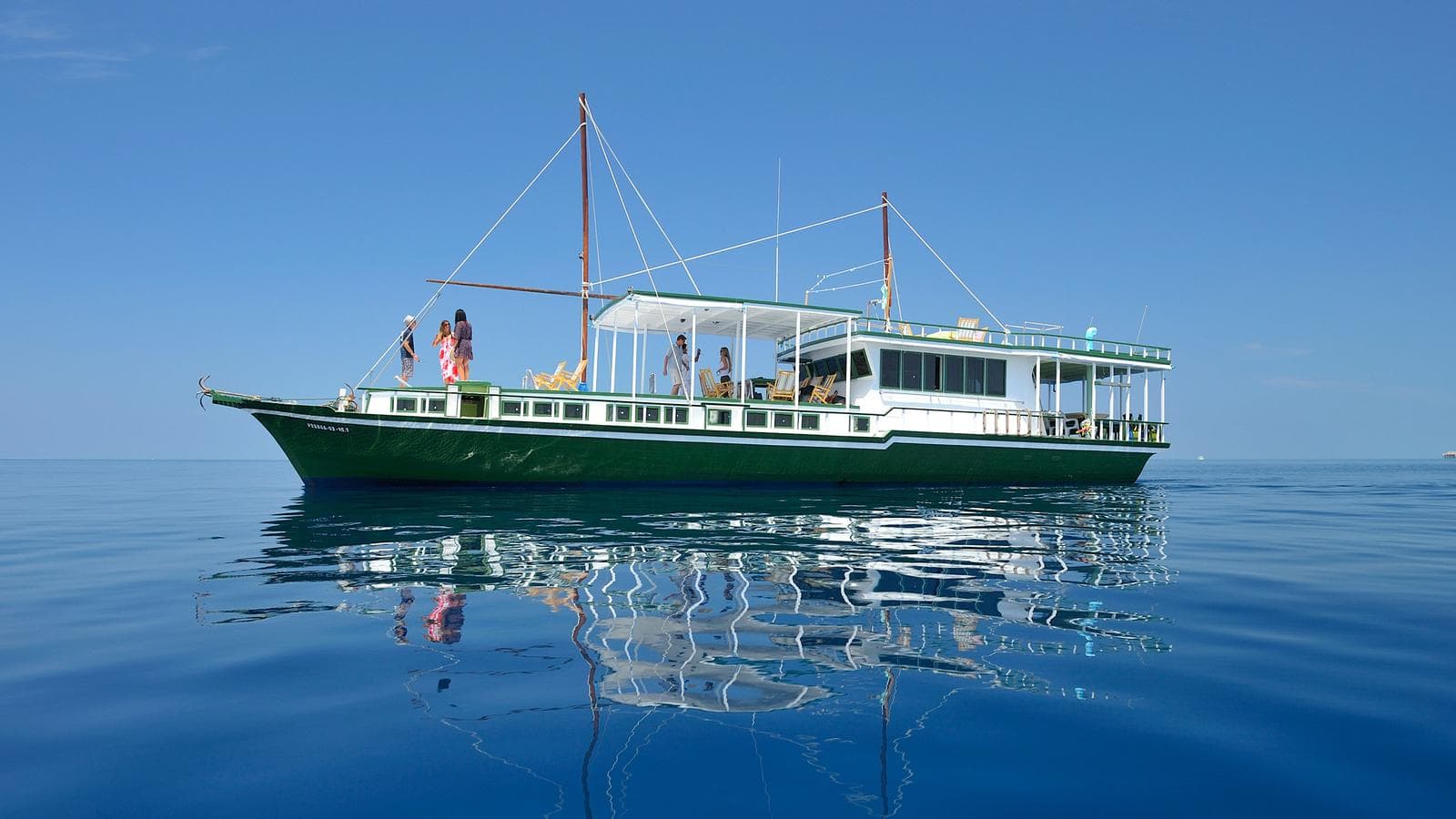
Our Maldives holidays are built around about a week on a dhoni, a traditional wooden boat, sailing from Malé through the atolls to the south, such as South Malé, Vaavu and Meemu. You sleep on board or in island guesthouses, depending on the trip, and the route changes with the weather and the sea. Crossings between atolls can be choppy; within the lagoons the water is usually calm.
- 2
Snorkel the reefs
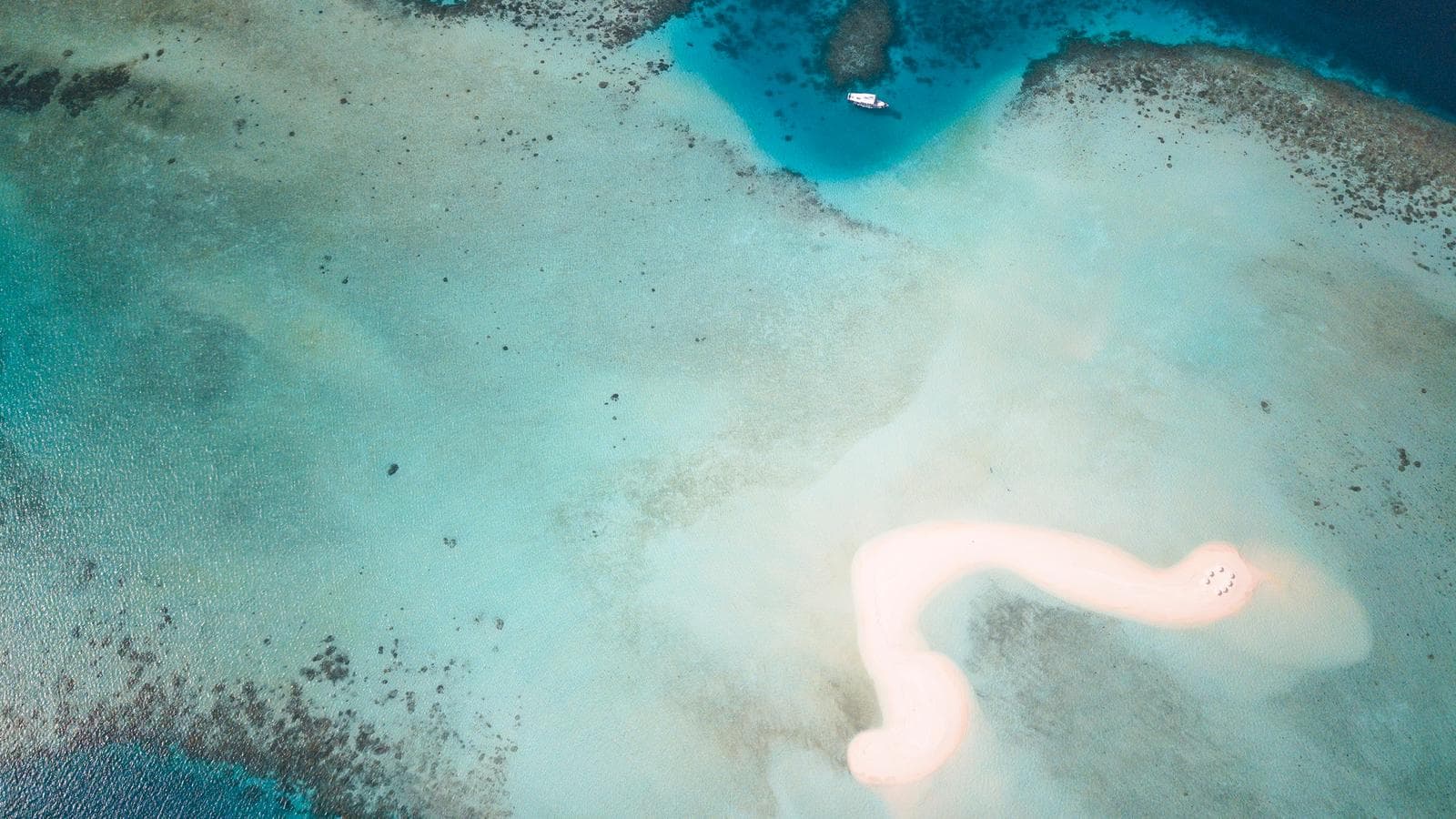
Snorkelling is the heart of a Maldives cruise, often two or three times a day, straight off the boat or from a sandbank. The reefs hold huge numbers of fish, and turtles, rays and reef sharks are common sights; at some sites nurse sharks gather in the shallows. Manta rays and whale sharks come to feed in some atolls in the south-west monsoon. Nothing is guaranteed, but very little is unusual.
- 3
Visit the inhabited islands
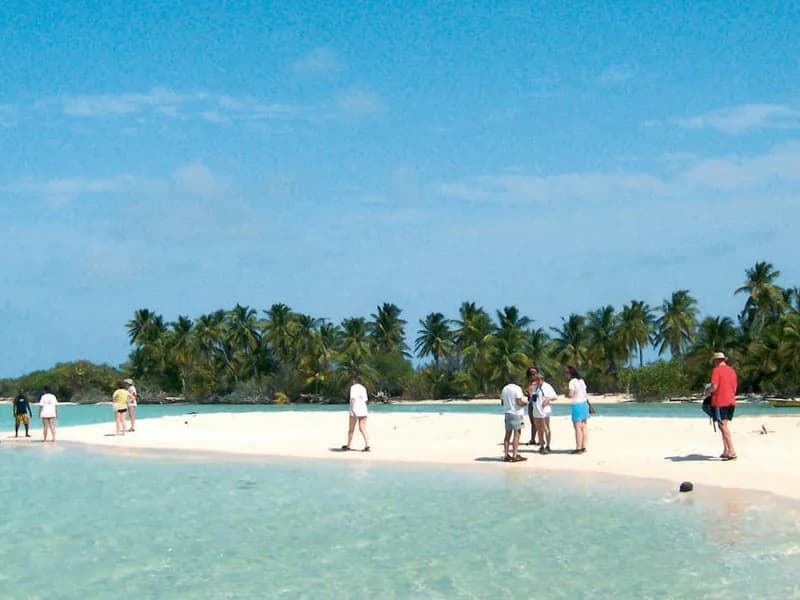
Most visitors to the Maldives see only a resort. A dhoni cruise stops at small local islands such as Fulidhoo and Felidhoo, where you can walk among the houses, the mosque and the harbour, eat in a local café and see how islanders live. Cover your shoulders and upper legs away from the beaches set aside for visitors, and remember that alcohol is not allowed on inhabited islands.
The cheapest Maldives holidays right now
Lowest lead-in prices first, from live availability. Open one for its dates, and book directly with its operator.
Maldives travel questions
- When is the best time to visit the Maldives?
- December to April, in the dry north-east monsoon, with January to March the most settled months. February is often the driest. From May to November the south-west monsoon brings more wind, rain and rougher seas, though rain usually comes in short bursts and it is warm all year.
- What is the best month to visit the Maldives?
- February or March: dry, sunny, with the calmest seas of the year and the clearest water for snorkelling. January is just as good but busier. For a small-boat cruise, calm seas matter more than in a resort, so these months suit it best.
- Is there more to the Maldives than a beach resort?
- Yes. A dhoni cruise moves between atolls, with snorkelling every day, stops on sandbanks and visits to inhabited islands, where you see everyday Maldivian life. Malé, the capital, is a busy island city with markets and old mosques. It is a more active and sociable way to see the islands than a single resort.
- Is the Maldives good for solo travellers?
- On a small-boat cruise, yes. You travel with a group, so there is company at meals and on the reefs, and many operators can pair you with another solo traveller of the same sex to share a cabin or room. Resorts are mostly designed for couples, and paying for a villa alone is expensive.
- Can I combine Sri Lanka and the Maldives?
- Yes, and several of our holidays do: a tour of Sri Lanka’s temples, tea country and wildlife, then a short flight from Colombo to Malé and a week on a dhoni. Others combine the Maldives with India’s Golden Triangle. Both pairings work best from December to March, when both places are dry.
- Will I get seasick on a dhoni cruise?
- Inside the atoll lagoons the water is usually calm, but crossings between atolls in open sea can be choppy, especially in the south-west monsoon from May to November. If you are prone to seasickness, take remedies with you and choose the dry season, when seas are calmest.
- How do I get from the airport to the boat?
- The international airport is on its own island beside Malé, and dhoni cruises usually start from Malé or the marina at nearby Hulhumalé, a short transfer away, so there is no seaplane to arrange. Your operator will confirm the details.
- Do UK citizens need a visa for the Maldives?
- No visa is needed in advance: UK tourists get a free 30-day visa on arrival. Your passport must be valid for at least a month after you arrive, and you must complete the online IMUGA traveller declaration in the 96 hours before you land. Check the UK government’s travel advice before you go.
- Can I drink alcohol in the Maldives?
- Only on resort islands. You must not bring alcohol into the country, and drinking or carrying it outside resorts, including on inhabited islands, is illegal. On a dhoni cruise that visits local islands, assume it will not be available.
- What should I wear on the local islands?
- The Maldives is a Muslim country. On inhabited islands, cover your shoulders and upper legs, avoid short or tight shorts, and swim with arms and legs covered except on the beaches set aside for tourists, sometimes called bikini beaches. Topless sunbathing is banned everywhere. On the boat and on sandbanks, swimwear is fine.
- Should I take US dollars or rufiyaa?
- US dollars are widely accepted on boats, in resorts and in many shops, and are useful for tips. Rufiyaa is handy for small purchases on local islands. Cards are taken in larger places but not everywhere.
- What vaccinations do I need for the Maldives?
- See your GP or a travel clinic at least six weeks before you go. They will check your routine vaccinations and advise on dengue and anything else. You need a yellow fever certificate only if you are arriving from a country with a risk of yellow fever. TravelHealthPro publishes the current advice.
- Can I take my prescription medicines to the Maldives?
- Usually, but if a medicine contains a controlled substance, carry your doctor’s prescription and check the Maldivian rules before you go. Keep medicines in their original packaging, declare them if you are unsure, and ask the Maldives High Commission in London about anything strong. The UK government’s travel advice has more.
Related travel guides
India
Mughal tombs, Rajput forts, tiger reserves and the palm-lined backwaters of Kerala: a practical guide to a first trip to India, with the best time to visit month by month.
Sri Lanka
The rock fortress at Sigiriya, the Temple of the Tooth in Kandy, tea country and leopards at Yala: a practical guide to Sri Lanka holidays and tours, with the best time to visit Sri Lanka month by month.