Travel guide
Montenegro holidays: a travel guide for UK visitors
A fjord-like bay, walled medieval towns and mountains plunging into the Adriatic — tiny Montenegro punches far above its weight on Mediterranean cruises.
Why visit Montenegro
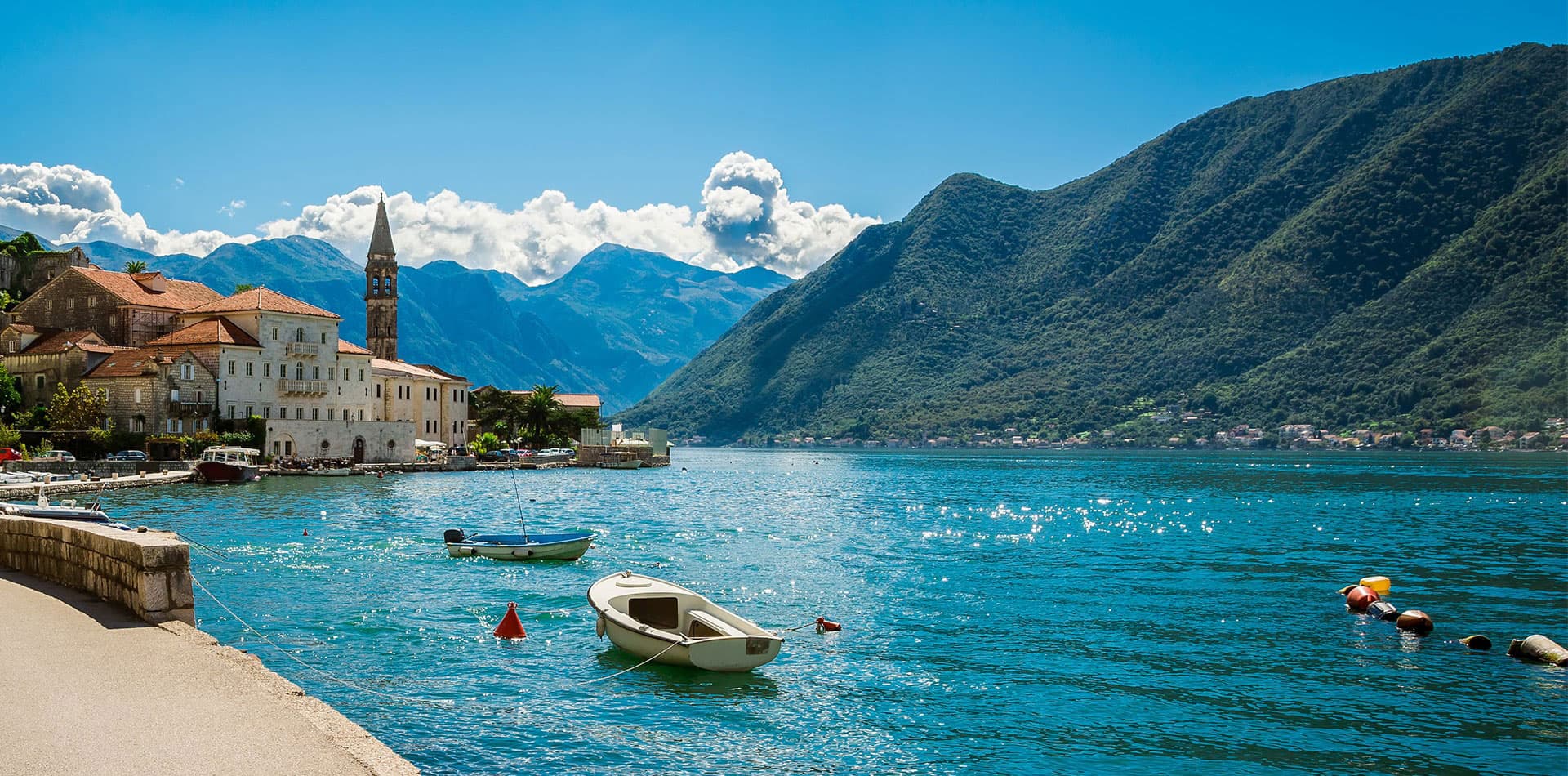
Montenegro squeezes an astonishing amount of drama into a small space. Its showpiece is the Bay of Kotor, a deep, winding inlet ringed by sheer mountains that looks for all the world like a Mediterranean fjord. The walled town of Kotor climbs the hillside in a tangle of stone lanes and Venetian squares, its fortifications switchbacking up to a viewpoint over the bay. Beyond lie the chic Adriatic resorts of Budva and Sveti Stefan, olive-clad coast and rugged national parks inland. It is one of the Mediterranean’s most photogenic cruise calls, and still feels refreshingly uncrowded.
Best time to visit
May, June and September bring warm, sunny days well suited to walking Kotor’s walls and the coast, before and after the peak heat and crowds of July and August. Spring and early autumn are quieter and very pleasant, while winter is mild on the coast but cold in the mountains.
Top things to do in Montenegro
- 1
Sail and explore the Bay of Kotor
The deep, mountain-ringed Bay of Kotor is one of the Mediterranean’s most spectacular waterways, and arriving by ship is unforgettable. The walled old town of Kotor, with its Venetian squares, sits right at the water’s edge.
- 2
Climb Kotor’s fortress walls
A steep, switchbacking path leads up the ancient fortifications above Kotor to the Castle of San Giovanni, rewarding the climb with sweeping views over the red roofs, the bay and the surrounding peaks.
- 3
Discover Budva and the Adriatic coast
A short drive from Kotor, the lively resort town of Budva pairs a walled old town with beaches and nightlife, while the islet hotel of Sveti Stefan provides Montenegro’s most iconic coastal view.
The cheapest Montenegro holidays right now
Lowest lead-in prices first, from live availability. Open one for its dates, and book directly with its operator.
Montenegro travel questions
- When is the best time to visit Montenegro?
- May, June and September are ideal — warm and sunny without the peak heat and crowds of July and August. These shoulder months suit walking Kotor’s walls and exploring the coast in comfort.
- Do UK citizens need a visa for Montenegro?
- No. UK passport holders can visit Montenegro without a visa for tourism and stay for up to 90 days within a 180-day period. As Montenegro is outside the Schengen Area, this is a separate allowance.
- What currency does Montenegro use?
- Montenegro uses the Euro (EUR), which it adopted unilaterally despite not being an EU member. Cards are accepted in larger venues, but carry some cash for smaller shops, cafés and markets.
- Is Montenegro expensive to visit?
- Montenegro offers good value compared with much of the Mediterranean, particularly for food and drink. The most popular coastal resorts cost more in high summer, but everyday spending stays reasonable.
- Does time in Montenegro count towards the Schengen 90-day limit?
- No. Montenegro is not part of the Schengen Area, so a visit here does not use up any of your 90-days-in-180 Schengen allowance — useful to know when combining it with EU countries on one trip.
- How many hours ahead is Montenegro compared with the UK?
- Montenegro is one hour ahead of the UK on Central European Time, and changes its clocks for daylight saving on the same dates, so the one-hour difference applies all year.
- Is Montenegro safe for tourists?
- Montenegro is a safe and welcoming destination with low crime. The usual care with valuables in busy tourist spots is all that is needed, and roads in the mountains call for careful driving.
- Do I need a travel adaptor for Montenegro?
- Yes. Montenegro uses Type F sockets at 230V, so a standard European travel adaptor will fit your UK three-pin plugs. UK devices run happily on the local voltage.
- Why do cruises stop at Kotor?
- Kotor is one of the Adriatic’s most dramatic ports: ships sail deep into the fjord-like Bay of Kotor to dock beside a beautifully preserved walled town, with mountains rising on every side.
- Is the Bay of Kotor really a fjord?
- Not technically — it is a submerged river canyon, or ria, rather than a glacial fjord. But its steep walls and deep, winding shape give it a fjord-like appearance that makes it one of the Mediterranean’s most striking inlets.
Related travel guides
Croatia
A jagged Adriatic coast studded with walled cities and pine-clad islands — Croatia is one of the Mediterranean’s most photogenic cruising grounds.
Greece
Whitewashed islands, ancient ruins and impossibly blue seas — Greece is the quintessential Mediterranean cruise destination, where every port has a story.
Turkey
Where Europe meets Asia — Istanbul’s minarets, ancient Ephesus and the turquoise coast make Turkey a richly rewarding cruise and tour destination.