Culture
Eswatini, a kingdom between South Africa and Mozambique
Eswatini, the country once called Swaziland, is one of the smallest in Africa and one of the last absolute monarchies in the world. Its mountains, game reserves and royal ceremonies make it a rewarding detour between Kruger and the coast.
By Walter Pellow2 November 20264 min read
Eswatini is a small, mountainous country, almost surrounded by South Africa, with a short border with Mozambique to the east. Until 2018 it was known in English as Swaziland; that year, on the fiftieth anniversary of independence from Britain, King Mswati III announced that it would be known officially by its name in the siSwati language, which means the land of the Swazi. It is a kingdom in more than name. Its king rules as an absolute monarch, one of the last in the world, and Swazi traditions, rituals and dress remain a strong part of everyday life.
For visitors, it is an easy and welcoming country, a contrast to its large neighbour, and a natural stop on the way between Kruger National Park and the coast of KwaZulu-Natal.
The kingdom
The Swazi nation was forged in the nineteenth century by a series of strong kings, who held their own against the Zulu kingdom to the south and against the Boers and the British. It became a British protectorate in the early twentieth century and independent in 1968. The monarchy has remained at the centre of national life: the king, the Ngwenyama or lion, rules together with the queen mother, the Ndlovukati or she-elephant, in a dual system.
Two great annual ceremonies draw the nation together. The Umhlanga, or Reed Dance, held in late August or early September, brings tens of thousands of young women to the royal residence at Ludzidzini to cut reeds and present them to the queen mother, in a vast procession of song and dance. The Incwala, the Kingship ceremony, held around the summer solstice in December and January, is a sacred ceremony of renewal and the first fruits. Both can be watched by visitors, though photography is restricted at parts of the Incwala.
A kingdom in more than name.
The reserves
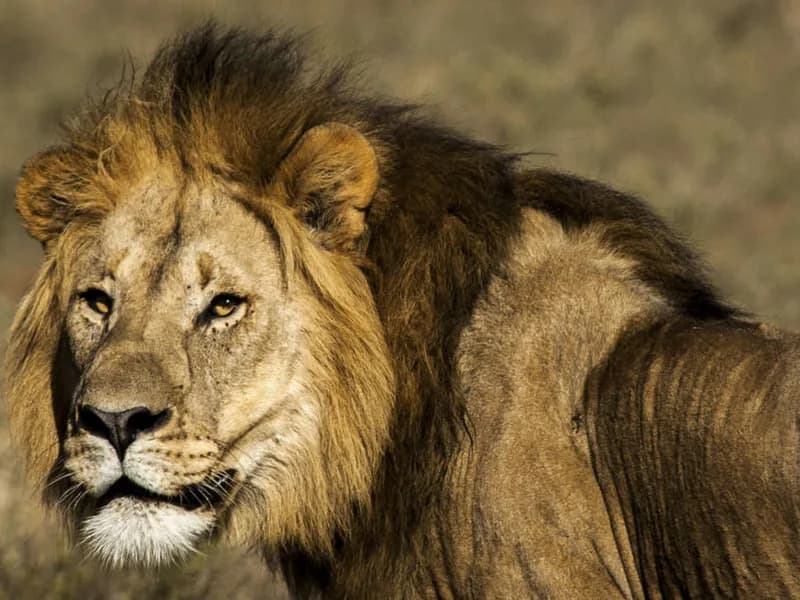
Eswatini has a small but well-run network of wildlife reserves. Mlilwane Wildlife Sanctuary, in the Ezulwini valley near the capital, was the country's first protected area, created in the 1960s by a conservationist family, Ted and Liz Reilly, on their own farm. It is a peaceful place, with zebra, wildebeest, antelope, warthogs and crocodiles, and it can be explored on foot, by mountain bike or on horseback, since it has no dangerous predators. Hlane Royal National Park, in the north-east, has lions, elephants and rhinos, and is a royal hunting ground turned reserve.
The landscapes are varied: green highlands in the west, with forests and waterfalls, and a hot, dry lowveld in the east, like the bush of Kruger.
Near the capital, Sibebe Rock is one of the largest exposed granite domes in the world, a vast bald hump of rock that can be climbed for views across the highveld. In the Ezulwini valley, the Mantenga Cultural Village recreates a traditional Swazi homestead of beehive huts, with performances of song and dance, and a short walk away the Mantenga Falls drop through the forest.
Crafts and the valley
Eswatini is known for its crafts, and the Ezulwini valley, between the capital Mbabane and the royal town of Lobamba, is lined with craft markets and workshops. Swazi Candles, near Mlilwane, makes brightly coloured candles shaped like animals and decorated with patterns, a business that began in the 1980s and now sells around the world. Glassblowers, weavers and basket makers work nearby, and Swazi baskets, woven from grass in intricate patterns, are especially fine.
The tours
Explore Worldwide's South Africa & Eswatini, nine nights, travels from Johannesburg to the Drakensberg Mountains and the battlefield of Rorke's Drift, the wetlands of St Lucia on the coast, and into Eswatini for the Swazi Candles craft market and Mlilwane Wildlife Sanctuary, with Kruger National Park, Graskop and the Blyde River Canyon in Mpumalanga. It runs through most of the year.
Explore's Kruger, Eswatini and South Africa's Garden Route, twenty nights, follows a similar route through the Drakensberg, Rorke's Drift, St Lucia, Eswatini, Mlilwane and Kruger, and continues to Cape Town, the Cape Peninsula and Stellenbosch. Explore's Family South Africa Safari and Beach Adventure, twelve nights, combines Kruger, the Blyde River Canyon, Mlilwane, Kosi Bay, St Lucia and the beaches near Durban.
Eswatini can be visited at any time of year. The dry winter months, from May to September, are best for game viewing, and the Umhlanga at the end of the season is a remarkable thing to see if your dates allow.
By Walter Pellow, the name Atlas & Passage’s editorial team writes under. Prices and dates in the trips below come from the operators and can change.