Wildlife
Hluhluwe-iMfolozi, the park that saved the white rhino
In the hills of KwaZulu-Natal, between the Black and White Umfolozi rivers, a handful of white rhino survived when they had gone almost everywhere else. The reserve set aside for them in 1895 is where the species was brought back.
By Walter Pellow2 November 20265 min read
There is a particular kind of quiet in a game reserve in the early morning, and Hluhluwe-iMfolozi has a particular reason for it. This is the place where, at the end of the nineteenth century, the southern white rhino was very nearly gone. Hunting had cleared it from almost all of its old range, and what was left was a small remnant population in the country where the two Umfolozi rivers, the Black and the White, come together. Estimates of how few remained vary from source to source, but all of them are small numbers.
That remnant is the reason the park exists. In 1895 game reserves were proclaimed at Hluhluwe and at the junction of the Umfolozi rivers, and the protection of the rhino was a large part of the case for doing so. The conservationist Ian Player, who spent much of his life here, later wrote that the surviving pocket of white rhino was the final push for the proclamation. Most accounts call it the oldest proclaimed game reserve in Africa; one or two give a slightly later date, but none dispute that it was among the very first.
A royal hunting ground before a reserve
Long before the reserves, this country was Zulu land. It is widely said to have been a royal hunting ground in the time of Shaka, and one account describes how the young warriors drove game into the funnel of land where the Black and White Umfolozi meet. The details are traditional rather than documented, and the park's own history treats them that way, but the shape of the land makes the story easy to believe: rolling hills, thick bush on the slopes, and two rivers drawing the animals down to water.
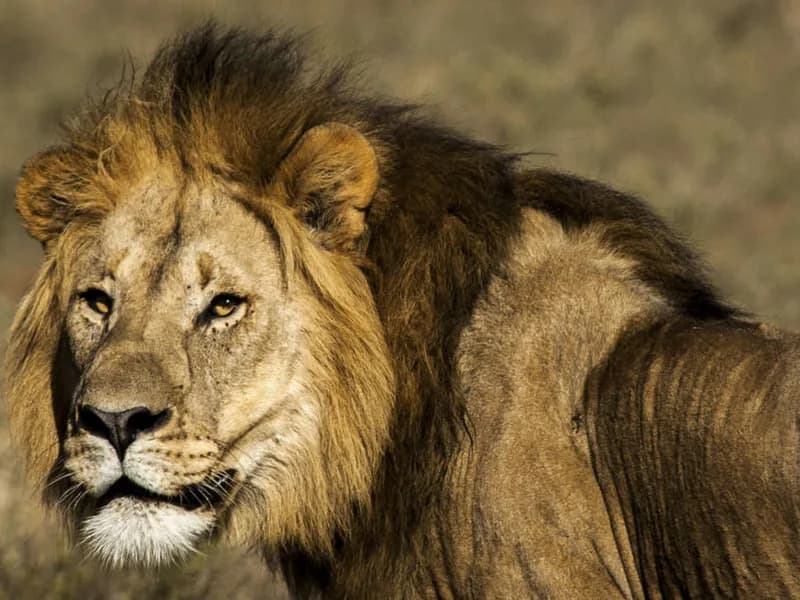
For most of the twentieth century Hluhluwe and iMfolozi were separate reserves with a strip of land between them. That corridor was given conservation status in 1989, joining the two into the single park of today, of about 96,000 hectares. It is home to all of the so-called Big Five, lion, leopard, elephant, buffalo and rhino, with Hluhluwe in the north and iMfolozi in the south.
Operation Rhino
Protection worked, slowly. By the middle of the twentieth century the rhino here had recovered enough that the reserve had a new problem: it was running out of room, and having all of a species in one place is a risk in itself. The answer, in the 1960s, was Operation Rhino. Led by Ian Player, warden of the iMfolozi reserve for the Natal Parks Board, it began in 1961, when his team darted four white rhino with tranquillising drugs and moved them to Kruger National Park. Over the following years rhino went to reserves elsewhere in South Africa and across Africa, and to zoos abroad.
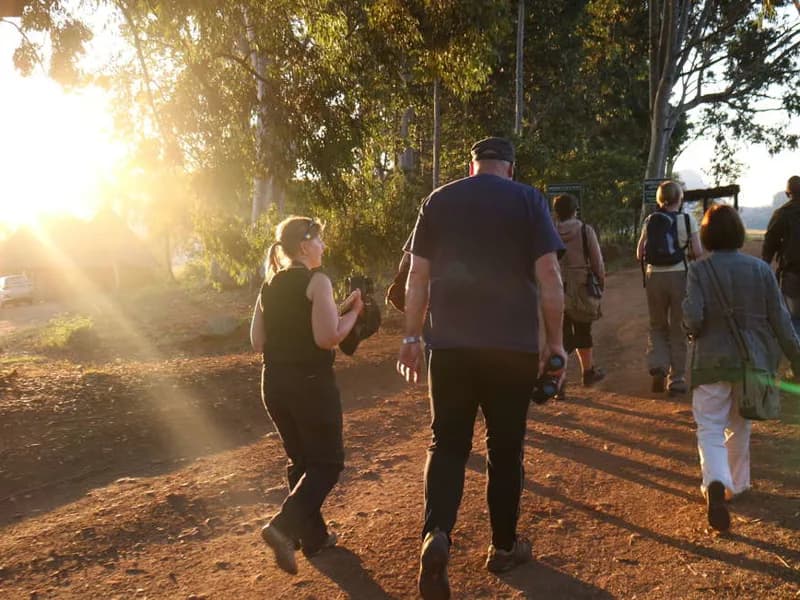
It is hard now to imagine how new this was: Player's team is credited with developing the modern practice of darting and relocating large animals, and the dangerous part, by their own account, was giving the antidote. Player's partner in much of his work was Magqubu Ntombela, a Zulu game guard with whom he walked these hills; in the late 1950s parts of iMfolozi became one of the first wilderness areas declared in an African game reserve, and the Wilderness Leadership School that Player founded in 1957 still runs walking trails here.
The work is widely credited with pulling the southern white rhino back from the edge, and that is the sense in which the park is said to have saved it. Many of the white rhino in parks and reserves elsewhere descend from animals moved out of here. The story did not end there: poaching for horn has returned as the great threat to rhino across southern Africa, and Hluhluwe-iMfolozi remains on the front line of that, with conservation charities supporting its protection work.
Which tours include the park
The park lies in northern KwaZulu-Natal, inland from St Lucia and the coast, and tours of South Africa and Eswatini tend to pass through this corner of the country. Not every one that comes this way goes into the park itself, so it is worth checking the places listed.
Of the three Explore Worldwide tours below, one includes Hluhluwe-iMfolozi Park among its places: South Africa & Eswatini, a nine-night tour whose places also include Johannesburg, the Drakensberg Mountains, Rorke's Drift, St Lucia, Eswatini, the Mlilwane Wildlife Sanctuary, Kruger National Park, Graskop and the Blyde River Canyon.
The other two come close but do not list the park. Family South Africa Safari and Beach Adventure, twelve nights, has Kruger National Park, the Mlilwane Wildlife Sanctuary, Kosi Bay, St Lucia, Durban and Umhlanga Beach among its places. Kruger, Eswatini and South Africa's Garden Route, twenty nights, includes St Lucia, Eswatini, Kruger National Park and the Drakensberg Mountains, and goes on to Cape Town, the Cape Peninsula and Stellenbosch.
Whichever way you come, the thing to look for in Hluhluwe-iMfolozi is the animal that made it. A white rhino grazing on an open slope looks entirely untroubled, which, given its history here, is the whole point.
By Walter Pellow, the name Atlas & Passage’s editorial team writes under. Prices and dates in the trips below come from the operators and can change.