Wildlife
Madagascar's lemurs, and the forests at Andasibe and Ranomafana
Lemurs live wild in only one place on earth, and two rainforests on Madagascar's eastern escarpment are the places to see them: Andasibe, home of the singing indri, and Ranomafana, where a new species was found in 1986.
By Walter Pellow2 November 20264 min read
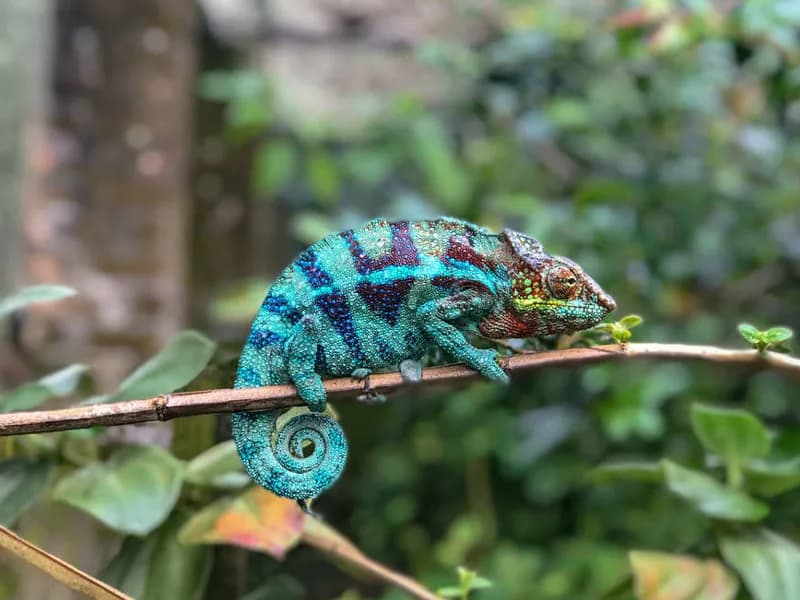
Madagascar broke away from the rest of the world's land a very long time ago, and its animals have been evolving on their own ever since. The result is a country where almost everything is unfamiliar: chameleons the size of a fingernail and the length of a forearm, birds found nowhere else, trees that look as if they have been planted upside down. And, above all, lemurs: a whole branch of the primate family that exists in the wild only here.
There are around a hundred species and subspecies of lemur, from mouse lemurs small enough to sit in a cupped hand to the indri, the largest of the living lemurs, and they have filled almost every niche in the island's forests. Seeing them is the reason most people come to Madagascar, and two rainforests on the island's eastern side are the best places to start.
Andasibe and the indri
A few hours' drive east of the capital, Antananarivo, on the road to the coast, Andasibe is a small town at the edge of a block of mountain rainforest: tall, damp and green, hung with mosses and orchids, and often wrapped in mist. The forest here is protected in the Andasibe-Mantadia National Park and the smaller reserves around it, including the Analamazoatra Reserve close to the town.
Andasibe is above all the home of the indri. The largest living lemur, black and white, with a teddy-bear face and almost no tail, it lives in small family groups high in the trees, and it sings. In the mornings, each family calls to its neighbours with a long, rising and falling wail that carries for a great distance through the forest, and is answered by the next family, and the next. It is one of the strangest and most moving sounds in the natural world, and it is the reason to be in the forest early.
Some indri groups at Andasibe are used to people, which makes them easier to see, and the same forests hold the diademed sifaka, with its golden limbs, and several smaller species. At night, a walk along the edge of the forest with a torch turns up mouse lemurs, frogs and sleeping chameleons on the branches.
Each family calls to its neighbours with a long, rising and falling wail, and is answered by the next.
Ranomafana and the bamboo lemurs
Further south, on the same eastern escarpment, Ranomafana is a steeper, wetter rainforest, cut by a fast river and full of waterfalls. Its modern history begins with a discovery. In 1986 the American primatologist Patricia Wright came here looking for the greater bamboo lemur, a species thought by some to be extinct. She found it, and, with a German researcher working in the area at the same time, she also found a species no scientist had described before, the golden bamboo lemur, which lives on young bamboo shoots that contain enough cyanide to kill most other animals.
The forest was then threatened by logging, and the discovery helped to save it. Ranomafana National Park was created in 1991, and in 2007 it became part of a UNESCO World Heritage Site, the Rainforests of the Atsinanana. Its walks are steep and often muddy, and its lemurs, among them the golden bamboo lemur, are found by patient tracking with local guides who know where each group was the day before.
The journey south
Both forests lie along the route that most journeys through Madagascar take, south from the capital through the highlands, and the holidays here follow it.
Explore's fourteen-night Madagascar: The Lost Continent begins in Antananarivo and goes first east to Andasibe and the Analamazoatra Reserve, then south through the highlands to Antsirabe, Lake Tritriva and Ambositra, to Ranomafana National Park, Fianarantsoa and the Anja Community Reserve, and on to Ranohira, the sandstone canyons of Isalo National Park and Zombitse National Park. It departs from April to November.
Explore's fourteen-night Madagascar Wilderness Trek takes the same road south from Antananarivo, by way of Antsirabe and Ambositra to Ranomafana National Park and Fianarantsoa, then Ambalavao, the Anja Reserve, the mountains of Andringitra National Park and Isalo National Park, before reaching Toliara and Ifaty on the south-west coast, with Zombitse National Park in its list. It departs in April, September, October and November.
When to go
Madagascar's rainy season runs roughly from December to March, when the eastern forests are at their wettest and some roads are difficult. The months from April to November are drier and easier for travel, and the trips here run then. Spring, from about September, is a good time for the lemurs, when many species have young. Whatever the month, take waterproofs to the eastern forests. They are rainforests, and they earn the name.
Above all, go slowly in the forest. Lemurs are not hard to see once you know how, but the forest gives up its animals to people who stand still and listen. And at Andasibe, be up before the sun. The indri sing early.
By Walter Pellow, the name Atlas & Passage’s editorial team writes under. Prices and dates in the trips below come from the operators and can change.