Food & drink
Oaxaca, and the moles that take three days to make
Oaxaca is often called the land of the seven moles, the rich, dark sauces that can take days to make and use dozens of ingredients. They are a good way into one of the most rewarding regions of Mexico.
By Walter Pellow2 November 20264 min read
Mole is one of those words that does a great deal of work. In Mexico it covers a whole family of sauces, some thin and bright, some thick and almost black, made from chillies, seeds, nuts, spices, fruit, bread and, in some of the most famous, chocolate. The word comes from an old Nahuatl word for a sauce or mixture. Making the more elaborate ones is a serious undertaking: the chillies are toasted and soaked, the seeds and spices roasted separately, everything ground and then cooked down slowly for hours. In family kitchens, a mole for a wedding or a festival can occupy several days and a good number of people.
The southern state of Oaxaca is the place most associated with them. It is often called the land of the seven moles, after seven classic varieties made there, though the number is more a tradition than a rule and every family has its own recipe.
The seven, and the one everybody knows
The best known is mole negro, the black mole, the darkest and most complex of the seven. Its colour comes from chillies toasted until nearly black, and its depth from a long list of ingredients that can include several kinds of chilli, sesame, almonds, raisins, plantain, spices and a little chocolate. It is usually served over chicken or turkey, and it is a dish for celebrations.
The others range widely. Mole rojo is red and slightly sweet. Mole amarillo is a thinner yellow sauce, often with vegetables or beef. Mole verde is green with herbs and fresh chillies. Coloradito, chichilo and manchamanteles complete the usual list, the last of them named, cheerfully, for its habit of staining tablecloths.
Oaxaca's kitchen does not stop at mole. The city's markets sell tlayudas, large thin tortillas toasted over charcoal and spread with beans and cheese; quesillo, the region's stringy cheese wound into balls; chapulines, grasshoppers toasted with lime and chilli, which are better than they sound; and chocolate, ground with sugar and cinnamon and drunk hot with water or milk. And there is mezcal, the agave spirit, much of which is made in Oaxaca's villages, where the agave hearts are roasted in earth pits before being crushed and distilled, which gives the drink its smoky taste.
The city and the valleys
Oaxaca city sits in a high valley in the mountains of southern Mexico. Its centre is a grid of low colonial buildings in pale green stone around a shady main square, with the church of Santo Domingo, one of the most richly decorated in the country, at its northern end. Its markets are the best place to understand the food: the big covered market near the centre has stalls of chillies, chocolate and mole paste sold by weight, and smoke from grills where you pick your meat and have it cooked on the spot.
The valleys around the city were the heartland of the Zapotec civilisation, and their ruins are some of the most impressive in Mexico. Monte Albán stands on a flattened mountaintop above the city, its plazas, pyramids and ball court laid out with a view across three valleys. It was the Zapotec capital for over a thousand years. Mitla, further out, is famous for something different: its walls are covered in intricate geometric mosaics made from thousands of small cut stones, without mortar.
On the road to Mitla are two more sights worth stopping for. Santa María del Tule has a Montezuma cypress with one of the thickest trunks of any tree in the world, said to be well over a thousand years old. Teotitlán del Valle is a weaving village, where rugs are still dyed with natural colours, including red from cochineal, an insect that lives on cactus.
The tours that eat their way through
Explore Worldwide's A Taste of Mexico: Markets and Mayan Sites, thirteen nights, is built around food. It starts in Mexico City with its markets and the Coyoacán district, visits the pyramids of Teotihuacan and the city of Puebla, home of another famous mole, and spends time in Oaxaca with Monte Albán, El Tule, Teotitlán del Valle and Mitla, before heading south through Tehuantepec to the Sumidero Canyon. Its departures are in October and November.
Just You's A Mexican Adventure, fifteen nights, for solo travellers, covers a wider arc, from Mexico City, Teotihuacan, Puebla and Oaxaca with Monte Albán, through Chiapas and San Cristóbal de las Casas, to Palenque, Campeche, Mérida and Chichén Itzá.
Explore's Contrasts of Mexico, fourteen nights, takes a similar route through Oaxaca, its valleys and Chiapas, with the highland villages of San Juan Chamula and Zinacantán, and continues into Guatemala and Belize.
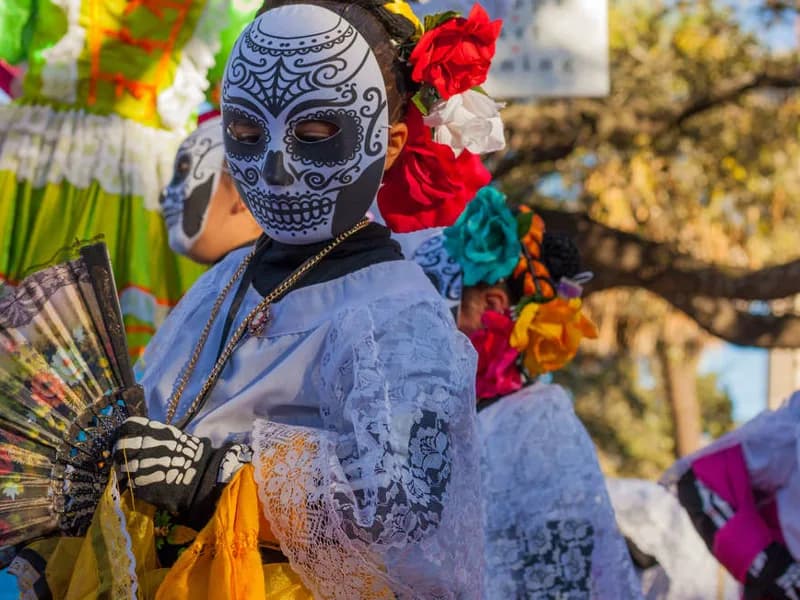
The best time to taste Oaxaca at full strength is around the Day of the Dead at the start of November, when families build altars to their dead and fill them with the foods they loved, mole among them. It is a busy time, and an extraordinary one.
By Walter Pellow, the name Atlas & Passage’s editorial team writes under. Prices and dates in the trips below come from the operators and can change.