Journeys
The Yucatán's cenotes, and the water under the limestone
The Yucatán Peninsula has almost no rivers on its surface. Its water runs underground, through the limestone, and it comes into the light in thousands of sinkholes, the cenotes, which the Maya treated as doors to the underworld.
By Walter Pellow2 November 20264 min read
Fly over the northern Yucatán and the land below looks oddly unfinished: flat, scrubby forest stretching to the horizon, with no rivers, few lakes and no hills to speak of. The reason is the rock. The peninsula is a vast shelf of limestone, and rain soaks straight into it rather than running off. Over a very long time, the water has dissolved channels and caves through the stone, so that the Yucatán's rivers flow underground, in one of the largest flooded cave systems known.
Where the roof of a cave has collapsed, the water is exposed. These openings are the cenotes, from a Maya word for a well, and there are thousands of them across the peninsula. Some are wide open pools with sheer sides; some are caverns with a small hole in the roof through which a shaft of light falls onto the water; some are little more than a cave entrance at the foot of a tree.
A ring around a crater
The cenotes are not scattered at random. In the north-west of the peninsula, around the city of Mérida, many of them lie along a great arc, sometimes called the ring of cenotes. Geologists link it to the Chicxulub crater, the buried scar of the asteroid impact about sixty-six million years ago that is widely thought to have ended the age of the dinosaurs. The crater lies beneath the peninsula and its coast, long since filled and covered, and the fractured rock around its rim seems to have guided the water and the collapses that formed the cenotes.
It is a strange thought, swimming in one: that the pool you are floating in may owe its position to the event that cleared the way for mammals.
The pool you are floating in may owe its position to the event that cleared the way for mammals.
Water, and the way down
For the Maya, the cenotes were a necessity. In a land without rivers, they were often the only reliable source of fresh water, and many Maya towns grew up beside one. Chichén Itzá's very name is usually read as the mouth of the well of the Itzá.
They were also sacred. The Maya saw them as entrances to Xibalba, the underworld, and as places where the rain god Chaac lived. The great Sacred Cenote at Chichén Itzá received offerings of jade, gold, pottery and incense, and human remains have been recovered from it too, evidence that people were sometimes sacrificed there. Divers and archaeologists working in other cenotes have found pottery, bones and, in the deepest caves, the remains of animals and of some of the earliest people in the Americas, preserved in the dark water since the end of the last ice age, when sea levels were lower and the caves were dry.
Swimming in them
Today many cenotes are open for swimming, and it is one of the great pleasures of the Yucatán, especially after a hot morning at a ruin. The water is fresh, cool and often astonishingly clear, with a steady temperature through the year. Some have steps and platforms; others are reached by ladders or wooden stairs down through the rock. The rules are simple and sensible: shower first, and leave sunscreen and insect repellent off, since the water is part of the region's drinking supply and is easily polluted.
Ik Kil, near Chichén Itzá, is one of the most photographed: a round, open cenote with walls hung with vines and roots trailing down to the water far below. Because it is so close to the ruins, it is busy at midday. Smaller cenotes in the countryside, such as Yokdzonot, which is run by its local community, are quieter.
The tours that stop for a swim
Explore Worldwide's Cycle Mexico: The Yucatán Peninsula, eight nights, rides across the flat north of the peninsula from Cancún and Isla Mujeres to Chichén Itzá and the Yokdzonot cenote, then on to Mérida, the coast at Progreso and Telchac, Izamal, Valladolid and the flamingo lagoons of Río Lagartos. The cenotes are as welcome on a bicycle as anywhere.
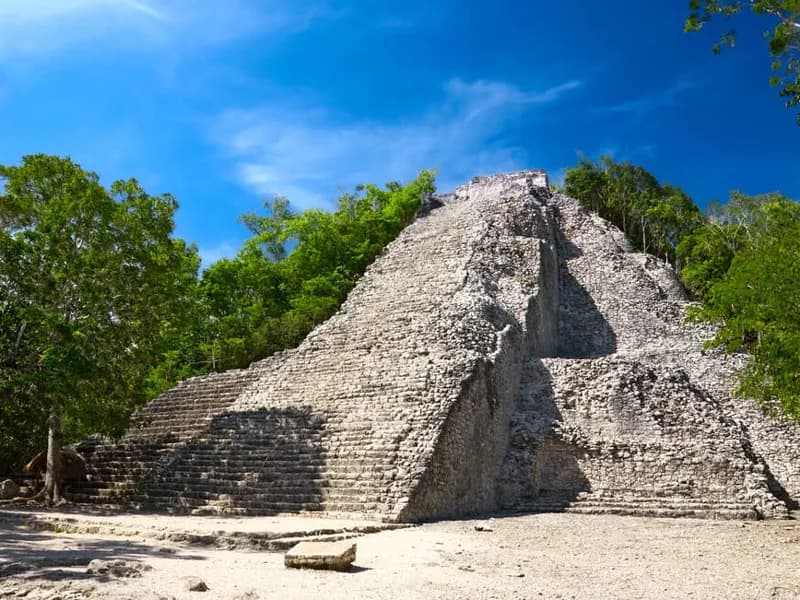
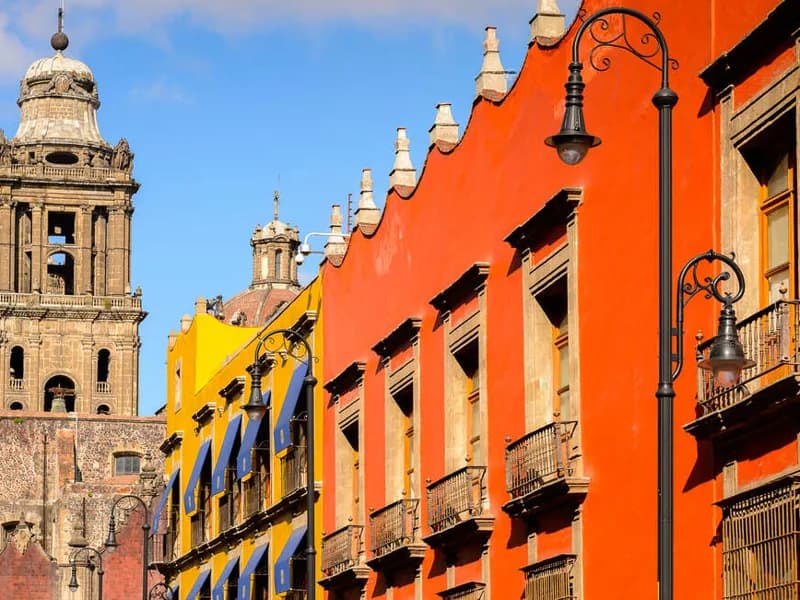
Explore's Best of Mexico's Yucatán Peninsula, seven nights, starts from Playa del Carmen and visits Cobá, Valladolid, Chichén Itzá and the Ik Kil cenote, Izamal, Celestún, Mérida and Uxmal. Explore's Upgraded Highlights of Mexico, eleven nights, adds Mexico City, Puebla and Oaxaca to Chichén Itzá, Ik Kil, Valladolid, Cobá and the Caribbean coast.
The dry season, from about November to April, is the most comfortable time to travel in the Yucatán. The cenotes are worth it in any month. There are few better ways to cool down than climbing down into the rock, out of the glare, to water lit from above.
By Walter Pellow, the name Atlas & Passage’s editorial team writes under. Prices and dates in the trips below come from the operators and can change.