Culture
Piran, the Venetian town on Slovenia's short coast
Slovenia has only a sliver of the Adriatic, squeezed between Italy and Croatia, and at the end of it, on a narrow point of land, is Piran. For five centuries it was Venetian, and it still looks it, down to a bell tower copied from St Mark's.
By Walter Pellow2 November 20265 min read
Slovenia is a country of mountains, lakes and forests, and it is easy to forget that it has a coast at all. It does, just: a short stretch of the Adriatic at the head of the Gulf of Trieste, wedged between Italy to the north and Croatia to the south. Piran sits at the tip of a narrow peninsula at the end of it, a tight huddle of red roofs and pale stone houses almost entirely surrounded by sea, with a church on the ridge above and a bell tower that anybody who has been to Venice will recognise at once.
Five hundred years of Venice
From 1283 until the fall of the Venetian Republic in 1797, Piran belonged to Venice, and those five centuries made the town. Venice wanted the Istrian coast for its harbours, its stone, its timber and above all its salt, and Piran's salt pans were among the things that made the town worth having. In return the town took on Venice's look: Gothic windows, loggias, carved lions of St Mark over doorways, and a life turned towards the sea.
After Venice came the Austrians, then Italy, then Yugoslavia, and now independent Slovenia. The layers show. Signs and street names are in Slovene and Italian, the Italian name of the town, Pirano, is used beside the Slovene, and the Italian community here has deep roots. It is a small place with a long memory.
The church of St George stands on the ridge above the harbour, its terrace looking out over the roofs to the sea. Beside it, free-standing in the Venetian way, is the bell tower, built in the early seventeenth century and modelled on the campanile of St Mark's in Venice. It is about forty-six metres tall, and the climb up its wooden stairs to the bells is short, steep and well rewarded: from the top Piran lies at your feet, and on a clear day you can see along the coast to Italy and Croatia, and across the gulf to Trieste.
Tartini Square
The heart of the town is an oval square that was once water. It began as a small inner harbour for fishing boats, and in the late nineteenth century the basin was filled in and paved, which is why the square has its odd, rounded shape and why the town crowds so tightly about it. It is named after Giuseppe Tartini, the violinist and composer, born in Piran in 1692, who became one of the best-known musicians of his day in Italy; his most famous piece, the sonata nicknamed the Devil's Trill, he said came to him in a dream. A bronze statue of him by the Venetian sculptor Antonio Dal Zotto stands in the middle of the square, violin bow in hand, and his family house is on the square too.
The building everybody photographs is the Venetian House, a narrow, rose-red Gothic palazzo of the fifteenth century with a corner balcony, on the side of the square nearest the sea. On its front is a stone carved with a lion and the words "Lassa pur dir", "let them talk". The story told in Piran is that a Venetian merchant built the house for a local woman he loved, and that the inscription was his answer to the town's gossip. It is a legend, and a good one. The ground floor is now a shop selling the salt of the pans on the coast south of the town, so the old trade that brought Venice here is still being sold on its square.
A day in Piran
Piran is a town for walking, and there is not much choice: cars are kept out of the centre, and the lanes are too narrow for them anyway. Beyond the square, the streets run in a tangle across the peninsula to the point, where a lighthouse and a church face the open sea, and along the waterfront where the fish restaurants put their tables out on the rocks. Above the town, the old walls climb the hill, and walking a stretch of them gives a view back over the roofs to the bell tower. The town is small enough to cross in a quarter of an hour, and pretty enough to take all day over.
In high summer it is busy, especially at weekends, when Slovenes from Ljubljana come down to the sea. Late spring and early autumn are kinder, and the evenings, when the day visitors have gone and the light goes gold on the stone, are the time to be here.
Holidays that go there
Explore's seven-night Alpine Lakes of Slovenia is the one that reaches Piran. It is mostly a mountain trip, with Ljubljana, Škofja Loka, Lake Bled, Lake Bohinj, Triglav National Park and Bohinjska Bistrica, then Nova Gorica, the Škocjan Caves and Predjama Castle, the castle built into a cliff. On the coast it takes in Izola, Piran and the Strunjan Landscape Park between them. It departs in May, June, July, August and September.
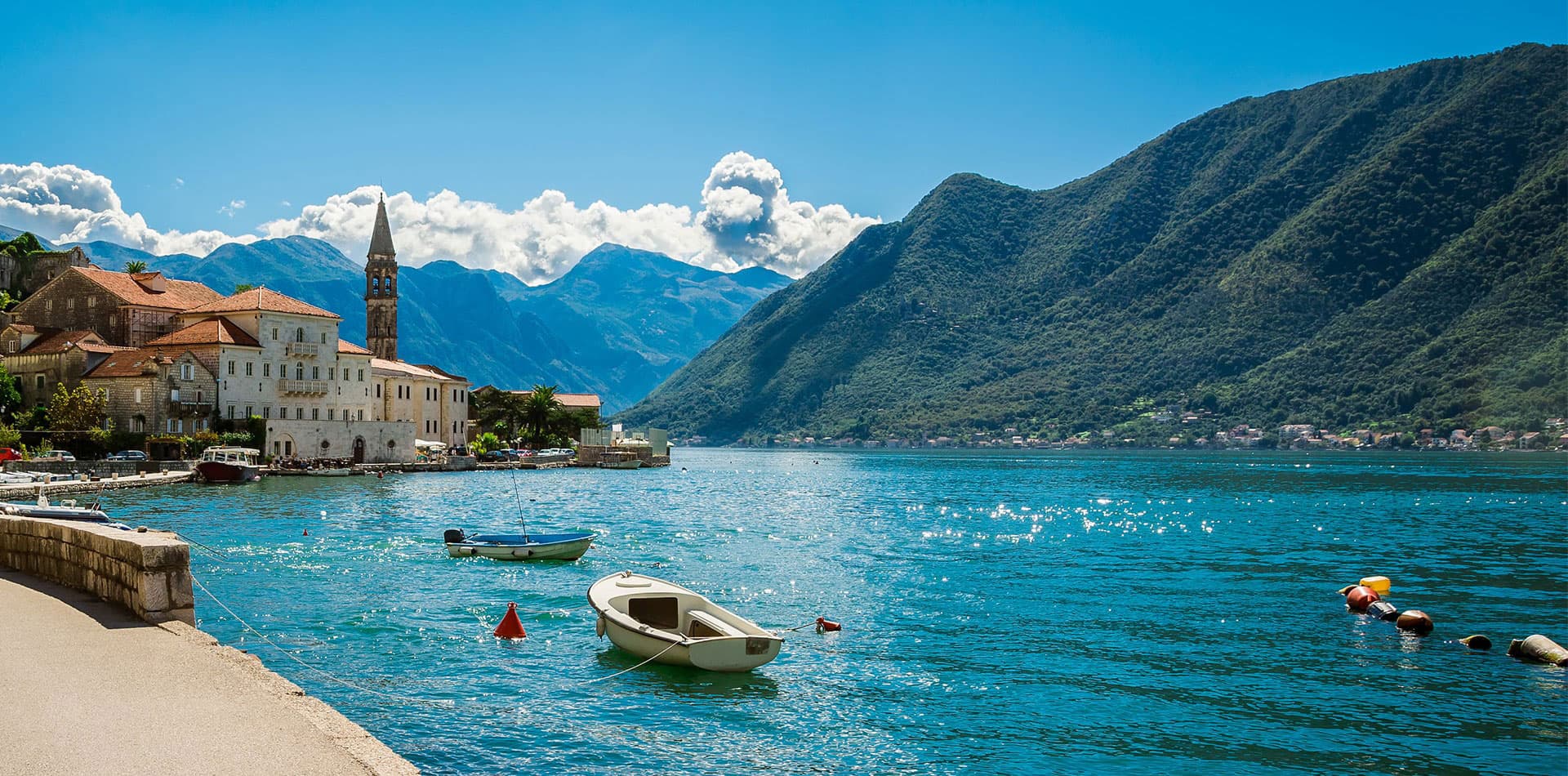
Two Fred. Olsen cruises from Piraeus, the port for Athens, call at Koper, Slovenia's cargo and cruise port a little way up the same short coast. Piran is not on either listed itinerary, so from the ship it would be a trip of your own. The twelve-night Adriatic Coastlines & Cultures sails in November, with Sarandë in Albania, Koper, Ancona, Šibenik, Dubrovnik and the Bay of Kotor among its calls.
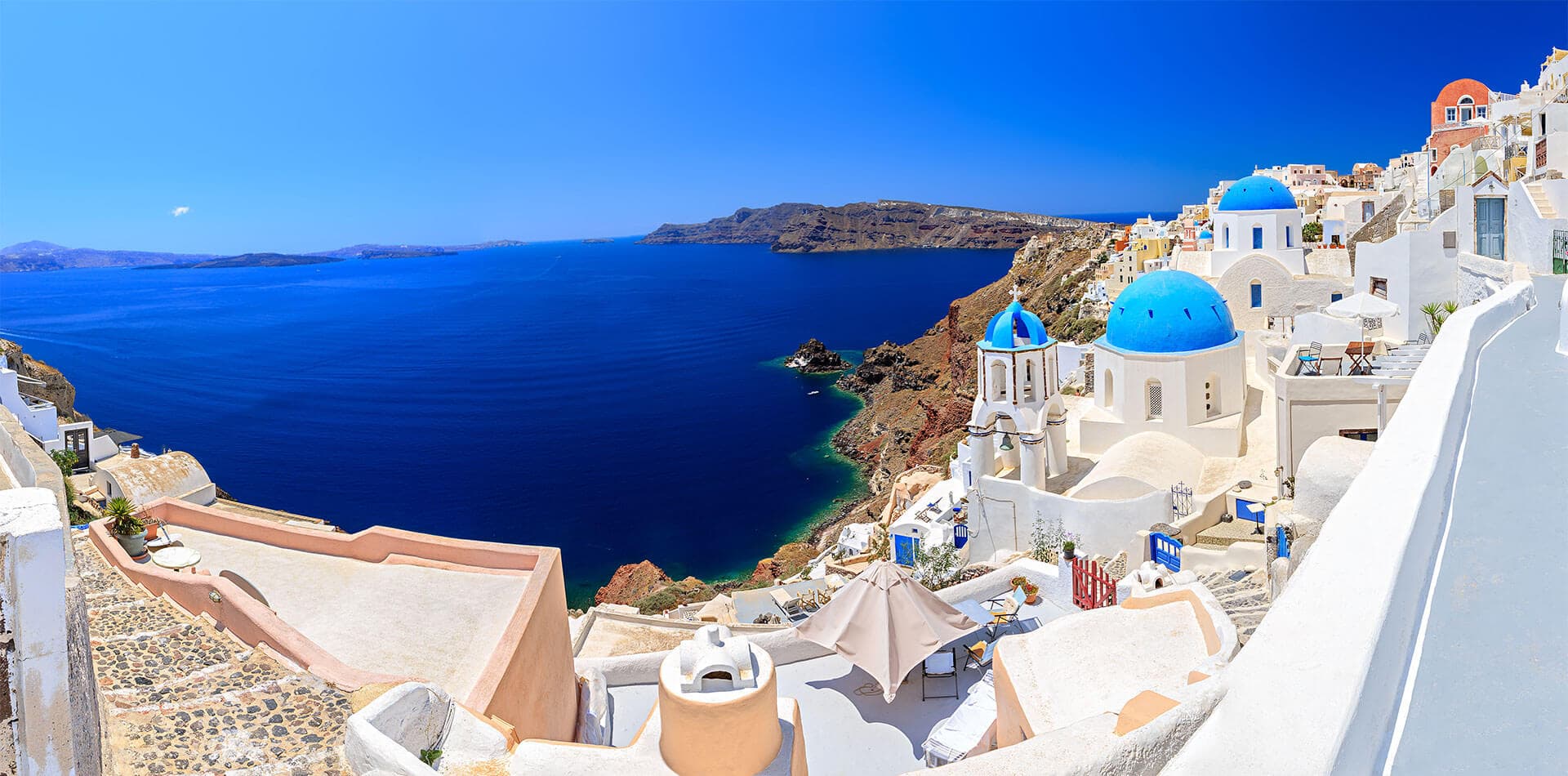
The nineteen-night Greek Islands & Adriatic Coastlines sails in October, starting among the Greek islands with Ermoupoli on Syros, Kos, Agios Nikolaos in Crete and Santorini before Sarandë, Koper, Ancona, Šibenik, Dubrovnik and Kotor.
Koper is itself a Venetian town, with its own fine square, and is worth a walk. But for the bell tower, the oval square and the lion that says "let them talk", it is Piran you want.
By Walter Pellow, the name Atlas & Passage’s editorial team writes under. Prices and dates in the trips below come from the operators and can change.