Walking
Pu Luong, walking the terraces south-west of Hanoi
A few hours from Hanoi, in a fold of limestone mountains, Pu Luong has rice terraces, stilt-house villages and bamboo water wheels, and far fewer visitors than Sapa. It is one of the best places in northern Vietnam to walk.
By Walter Pellow20 October 20264 min read
For many years, the place to walk among rice terraces in northern Vietnam was Sapa, in the high mountains near the Chinese border. Sapa is still spectacular, but it has grown into a busy resort town. Many walkers now look elsewhere for the same kind of landscape with fewer people in it, and one of the places they have found is Pu Luong.
Pu Luong Nature Reserve lies in the mountains of Thanh Hóa province, roughly four hours' drive south-west of Hanoi. It was established at the end of the 1990s to protect a long ridge of limestone mountains and the forests on their upper slopes. Below the forest, in the valleys, are villages of the Thai and Muong peoples, two of Vietnam's many ethnic minorities, and around them the rice terraces they have built and tended for generations.
The landscape
The setting is what makes Pu Luong. Steep, forested limestone peaks rise on either side of narrow valleys, and in the valleys and on the lower slopes, terraces of rice step down the hillsides in curving bands. A river winds along the valley floor. Mist often lies in the valleys in the early morning and lifts slowly as the sun climbs. It is a smaller, gentler landscape than Sapa's, at a lower altitude, and the walking is correspondingly easier: paths between villages, along the edges of paddy fields and over low passes, rather than long climbs.
The colour of the terraces changes through the year. In late spring they are flooded and planted, and through the summer they are a bright, vivid green. In September and early October, before the harvest, they turn gold, the most famous time to see them. After the harvest, the fields lie brown and stubbled until they are flooded again.
The villages
The villages are the other reason to come. The Thai and Muong peoples traditionally build their houses on stilts, of timber and bamboo, with livestock and tools kept in the shaded space underneath and the family living in the airy rooms above. Many villagers still farm rice, raise pigs and chickens, weave and fish, and life follows the agricultural year.
On the rivers, great wheels of bamboo turn in the current. They lift water in bamboo tubes and tip it into channels that run to the fields, a simple and ingenious technique still in use in the area, and the creak of the wheels is one of the sounds of the valley.
Several villages now offer homestays in stilt houses, and a growing number of small eco-lodges have opened in the reserve. Spending a night in a village, eating a dinner of local rice, vegetables and river fish, and waking to the sounds of the farm is one of the most rewarding parts of walking here. Facilities are simple. Comfort is basic, and so is the plumbing, which is part of the point.
Pu Luong's people have their own crafts as well as their own houses. The Thai women of the area are known for weaving brocade on wooden looms set up under the stilt houses, producing the bright skirts and scarves worn on festive days. Local markets, held on fixed days in the larger villages, draw people from across the valleys to buy and sell vegetables, livestock, cloth and tools. Market days rotate between villages, and it is worth asking a guide whether one falls during your visit.
Walking tours that include it
Explore Worldwide's Walking in Vietnam, thirteen nights in the cool season from October to January, includes Pu Luong Nature Reserve, and covers much of the length of the country: Halong Bay, the old imperial capital of Hue, Hoi An and the Cham ruins of My Son, Cai Be in the Mekong Delta, Ho Chi Minh City and the Cu Chi tunnels.
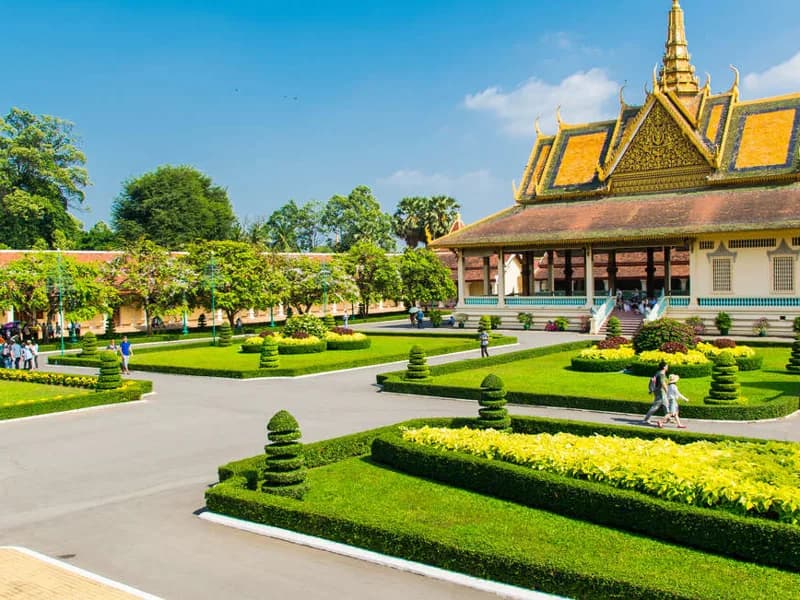
Explore Worldwide's Walking in Vietnam and Cambodia Highlights, twenty nights, takes the same route through Vietnam, including Pu Luong. It also includes Cambodia: Phnom Penh, Siem Reap and the Tonle Sap lake.
The cooler months are the most comfortable for walking. Summer in northern Vietnam is hot, humid and wet, though the terraces are at their greenest. Whenever you go, Pu Luong offers the kind of rural Vietnam that busier places have begun to lose.
By Walter Pellow, the name Atlas & Passage’s editorial team writes under. Prices and dates in the trips below come from the operators and can change.