History
Salvador, the first capital of Brazil and its African heart
Salvador da Bahia was the capital of Portuguese Brazil for more than two centuries and its greatest slave port. Its colonial old town of painted houses and gilded churches is one of the finest in the Americas, and its culture, from its religion to its food and music, is the most African in Brazil.
By Walter Pellow20 October 20264 min read
Salvador stands on a peninsula at the mouth of the Bay of All Saints, on the north-east coast of Brazil. It was founded by the Portuguese in 1549 as the capital of their colony, and it remained the capital until 1763, when the seat of government moved to Rio de Janeiro. For much of that time it was one of the largest and richest cities in the Americas, built on the wealth of the sugar plantations of the surrounding region.
That wealth was built on slavery. Over more than three centuries, millions of enslaved Africans were transported to Brazil, more than to any other country in the Americas, and Salvador was one of the main ports through which they arrived. Many came from West Africa, from the regions of present-day Nigeria, Benin, Ghana and Angola. Brazil was the last country in the Americas to abolish slavery, in 1888. Today the great majority of Salvador's people are of African descent, and the city's culture reflects that heritage more than anywhere else in Brazil.
The upper and lower city
Salvador is built on two levels. The lower city, along the waterfront, holds the port and the old commercial district, with the Mercado Modelo, a market of crafts in a former customs house. The upper city, on top of a steep escarpment, holds the old town. Since 1873, the two have been linked by the Elevador Lacerda, a public lift in a tall art deco tower, rebuilt in the 1930s, that carries passengers up and down in less than a minute, with views across the bay.
The Pelourinho
The historic centre of the upper city, known as the Pelourinho, after the whipping post that once stood in its main square, is a World Heritage Site. Its steep cobbled streets are lined with colonial houses painted in pinks, yellows, blues and greens, and with churches and convents. The church and convent of São Francisco, from the early eighteenth century, has one of the most lavish interiors in Brazil, its walls and ceiling covered with carved and gilded woodwork, and its cloister lined with blue and white Portuguese tiles. The church of Nossa Senhora do Rosário dos Pretos, painted blue, was built by and for enslaved and free Black people.
In the late twentieth century, the Pelourinho was restored after years of decay, and it is now full of shops, restaurants, galleries and music.
Across the bay, the island of Itaparica and the coast to the north of the city have long beaches of palm-fringed sand, and boats cross the bay to the islands from the lower city. In the city itself, the beaches and lighthouse of Barra, at the tip of the peninsula, are a favourite place to watch the sun set over the water. The Barra lighthouse stands within the Santo Antônio fort, one of the oldest forts in Brazil, which now holds a nautical museum.
Faith, music and food
Candomblé, an Afro-Brazilian religion that blends the beliefs of West Africa, especially those of the Yoruba, with elements of Catholicism, has deep roots in Salvador. Its deities, the orixás, are honoured with music, dance and offerings. Capoeira, a martial art disguised as a dance, accompanied by music played on the berimbau, a single-stringed instrument, was developed by enslaved Africans in Brazil, and it is practised in the squares and schools of the city.
Bahian food is the most distinctive in Brazil, rich with palm oil, coconut milk, peppers and seafood. Moqueca is a stew of fish or shrimp. Acarajé, a fritter of black-eyed peas fried in palm oil and filled with shrimp and spicy pastes, is sold on street corners by women in the traditional white dress and headwraps of Bahia.
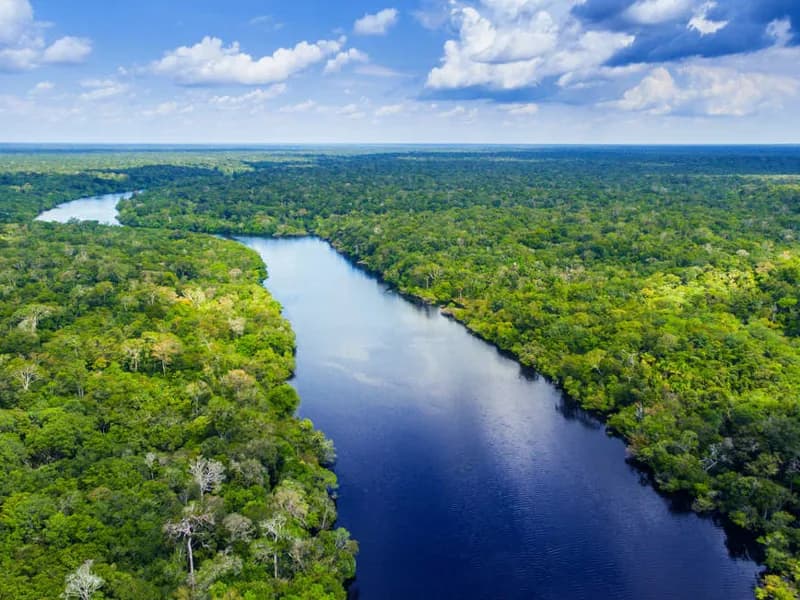
Explore Worldwide's Pure Brazil, thirteen nights, includes Salvador, along with Manaus and the Amazon around the Rio Juma, the Pantanal, Iguazu, and Rio de Janeiro with Santa Teresa, Sugarloaf Mountain and Corcovado.
Travelsphere's Chile, Argentina and Brazil with Rio de Janeiro Add-on, fifteen nights, includes Santiago, Mendoza, Buenos Aires, Iguaçu Falls and Rio de Janeiro. It does not visit Salvador, but its time in Rio, the city that succeeded Salvador as Brazil's capital, picks up the next chapter of the story.
Salvador is warm all year. The driest and sunniest months are from about September to March, while the heaviest rains fall from about April to July.
By Walter Pellow, the name Atlas & Passage’s editorial team writes under. Prices and dates in the trips below come from the operators and can change.