Wildlife
The Pantanal, the world's largest tropical wetland, and its jaguars
In the heart of South America, a vast plain floods every year and dries out again, and the wildlife it supports is easier to see than almost anywhere on the continent. It is one of the best places in the world to see a jaguar.
By Walter Pellow20 October 20264 min read
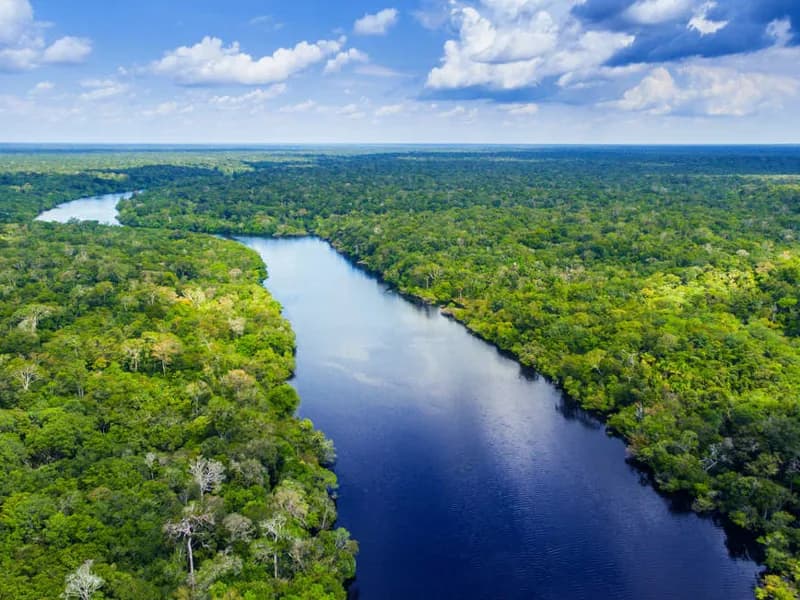
The Pantanal lies in the centre of South America, mostly in Brazil, with smaller parts in Bolivia and Paraguay. It is a great low basin, crossed by the Paraguay river and its tributaries, and it is usually described as the largest tropical wetland in the world, covering an area of well over a hundred thousand square kilometres, larger than England.
Its life is governed by water. In the rainy season, from about November to March, the rivers overflow, and much of the plain disappears under a shallow sheet of water. In the dry season, from about May to October, the water slowly drains away, leaving lagoons, pools and channels in which fish are trapped, and the animals and birds gather around the remaining water to feed. That is when the wildlife is easiest to see.
The wildlife
The Pantanal is one of the richest places for wildlife in the Americas, and because its landscape is open, with grassland, scattered woodland and water, the animals are much easier to see than in the dense Amazon rainforest.
Caimans, a kind of crocodilian, are everywhere, lying in great numbers along the banks of the rivers and lagoons. Capybaras, the largest rodents in the world, graze in family groups at the water's edge. Giant otters, which can grow to well over a metre and a half long, hunt in family groups along the rivers, calling noisily to each other. Marsh deer, anteaters, tapirs and howler monkeys live here too.
The birdlife is spectacular. The jabiru, a huge black and white stork with a red band on its neck, is the symbol of the Pantanal, and its great nests sit on top of trees. The hyacinth macaw, the largest parrot in the world, deep blue with a yellow ring around its eyes, is found here, once rare and now protected. Herons, egrets, spoonbills, kingfishers and toucans add to the variety.
The jaguars
The jaguar is the largest cat in the Americas, and those of the Pantanal are among the biggest of all, powerful animals that swim well and hunt caimans and capybaras along the rivers. For a long time, they were rarely seen. In recent decades, as hunting has stopped and tourism has given local people a reason to protect the cats, sightings have become much more frequent in parts of the northern Pantanal.
The best known area is around the Cuiabá river and its tributaries, in the north of the Pantanal, near the small town of Porto Jofre, at the end of a long dirt road called the Transpantaneira. Here, in the dry season, boats patrol the rivers looking for jaguars resting on the banks or hunting along the water's edge, and sightings are frequent. Seeing a jaguar is never guaranteed, but in the right place and season, the chances are good.
The ranches
Much of the Pantanal is private land, used for cattle ranching for more than two centuries, and the cowboys of the region, the pantaneiros, still drive their herds across the plain. Many ranches, called fazendas, now also take in visitors, offering lodges from which to explore the area on foot, on horseback, by boat or by vehicle, often at dawn and dusk when the animals are most active.
Explore Worldwide's Pure Brazil, thirteen nights, includes the Pantanal Wildlife Reserve, along with Salvador, Manaus and the Amazon around the Rio Juma, Iguazu, and Rio de Janeiro with Santa Teresa, Sugarloaf Mountain and Corcovado. The tour's listing does not say which part of the Pantanal the reserve lies in, so if jaguars are your main aim, check how much time the tour spends on the rivers of the north.
For a very different South American journey, Explore Worldwide's Adventures in Patagonia with an Iguazu extension, sixteen nights from October to December, includes Buenos Aires, Ushuaia, Torres del Paine, El Calafate, El Chaltén and Iguazu Falls. It does not visit the Pantanal, but its Iguazu extension shares something of the subtropical forest and its wildlife.
The dry season, from about July to October, is the best time to visit the Pantanal and to look for jaguars. It is hot, and the dust can be thick. Bring binoculars, a hat and insect repellent.
By Walter Pellow, the name Atlas & Passage’s editorial team writes under. Prices and dates in the trips below come from the operators and can change.