Wildlife
The Danube Delta, where the river finally reaches the Black Sea
After nearly three thousand kilometres, the Danube splits into three arms and spreads into a maze of channels, lakes and reed beds before it reaches the sea. It is the largest wetland in Europe, and one of the best places on the continent for birds.
By Walter Pellow2 November 20264 min read
The Danube is a working river for most of its course, lined with cities, ports and industry. At its end it becomes something quite different. In south-eastern Romania, near the border with Ukraine, the river divides into three main branches, the Chilia, the Sulina and the Sfântu Gheorghe, and fans out into a vast delta before it flows into the Black Sea. Between the branches lies a world of water: winding channels, shallow lakes, floating islands of reed, willow woods and sand dunes, covering several thousand square kilometres.
It is the largest wetland in Europe and the best preserved of the great European river deltas. Since 1991 it has been a UNESCO World Heritage Site, and most of it lies within a biosphere reserve.
Reeds, water and very little else
The delta is mostly reed. The reed beds here are among the largest in the world, and for much of the year they stretch to the horizon in a sea of green or gold. The land is new: the delta grows every year, built from the sediment the Danube carries down from the heart of Europe, and its shape is always changing.
There are very few roads. Most of the delta can be reached only by boat, and the small fishing villages scattered through it, with their reed-thatched houses painted blue and white, depend on the water for everything. Many of the people here are Lipovans, descendants of Russian Old Believers who fled religious persecution in the eighteenth century and settled in the delta, where they kept their own church, customs and language.
The best way to see the delta is slowly, in a small boat, along the narrow channels where larger ships cannot go, with the reeds closing in on either side and the birds rising from the water ahead.
The gateway to the delta is Tulcea, a port town where the river divides, and the boats that serve the delta's villages leave from its waterfront. At the far end of the central channel lies Sulina, a small, faded town on the Black Sea, which in the nineteenth century was the seat of the European Commission of the Danube, an international body set up to keep the river's mouth open to shipping. Its old lighthouse and the cemetery of sailors from many nations are reminders of that time.
The birds
The delta is one of the most important places for birds in Europe. More than three hundred species have been recorded, and its position makes it a crossroads for migrants travelling between Europe, Africa and Asia.
The great white pelican is the delta's signature bird. Large colonies nest in the reed beds, and the sight of a group of them fishing together, or wheeling high overhead, is one of the delta's great spectacles. The rarer Dalmatian pelican also breeds here. There are also herons and egrets of several kinds, spoonbills, glossy ibises, cormorants, including the pygmy cormorant, and white-tailed eagles. In winter, huge flocks of geese arrive, among them the rare red-breasted goose, much of whose world population winters on this stretch of the Black Sea coast.
The waters are full of fish, among them the sturgeon that migrate up the river from the sea, once the source of caviar, though their numbers have fallen sharply and fishing for them is now banned.
The trips
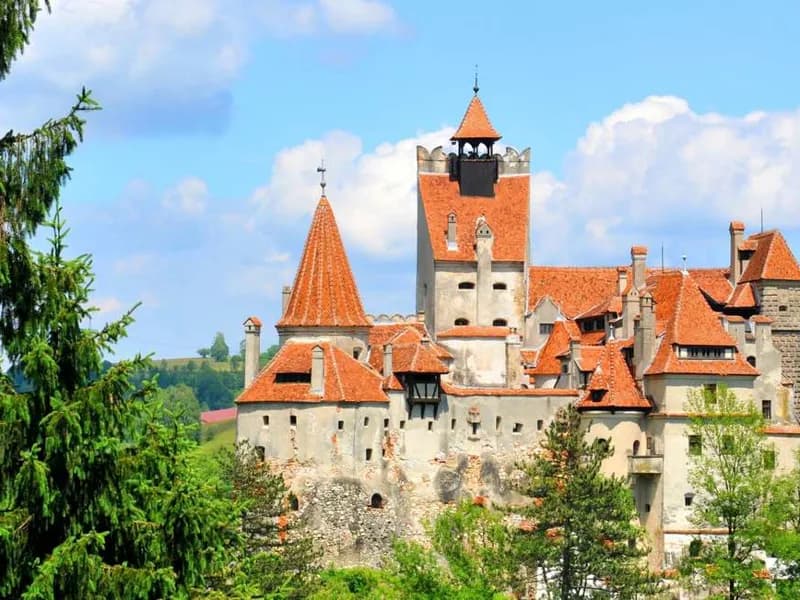
Explore Worldwide's Best of Romania and the Danube Delta, eleven nights, combines Transylvania and Maramureş with the delta. Its Romanian route runs from Bucharest to Sinaia, Bran Castle, Braşov and Sighişoara, then north to Bistriţa and Maramureş, with Săpânţa, Bârsana and Vişeu de Sus. Its departures run from May to September.
Explore's Cycle Romania, eight nights, is a cycling holiday through the Transylvanian countryside, from Bucharest and Bran through the villages of the Făgăraş foothills to Sibiu and the Hârtibaciu valley. It does not go to the delta, but it is a good way to see rural Romania at a slow pace.
The best time to visit the delta is from late April to June, when the birds are breeding and the migrants passing through, and in September, when the autumn migration begins. Midsummer is hot, and the mosquitoes are notorious. Whatever the month, bring binoculars and patience: the delta does not reveal itself in a hurry.
By Walter Pellow, the name Atlas & Passage’s editorial team writes under. Prices and dates in the trips below come from the operators and can change.