Journeys
The Gobi, and a night in a ger
The Gobi is not the sea of sand most people imagine. It is a high, cold desert of gravel plains, mountains, ice-filled gorges and, here and there, great dunes that sing in the wind. The way to see it is slowly, by four-wheel drive, sleeping in felt tents on the way.
By Walter Pellow2 November 20264 min read
Mongolia is a big country with very few people in it, and the Gobi, which covers much of its south, is its emptiest part. The name is simply the Mongolian word for a kind of desert landscape, dry and stony with sparse grass, and that is a good description. The Gobi is mostly gravel and scrub, stretching flat to the horizon between ranges of bare hills, with herds of camels, goats and horses grazing on whatever grows. Only a small part of it is sand.
It is also a desert of extremes. It lies high, on a plateau far from any sea, and its climate is sharply continental: hot in summer, bitterly cold in winter, with a wide swing between day and night in every season. It is one of the great deserts of the world, and one of the least visited.
A night in a ger
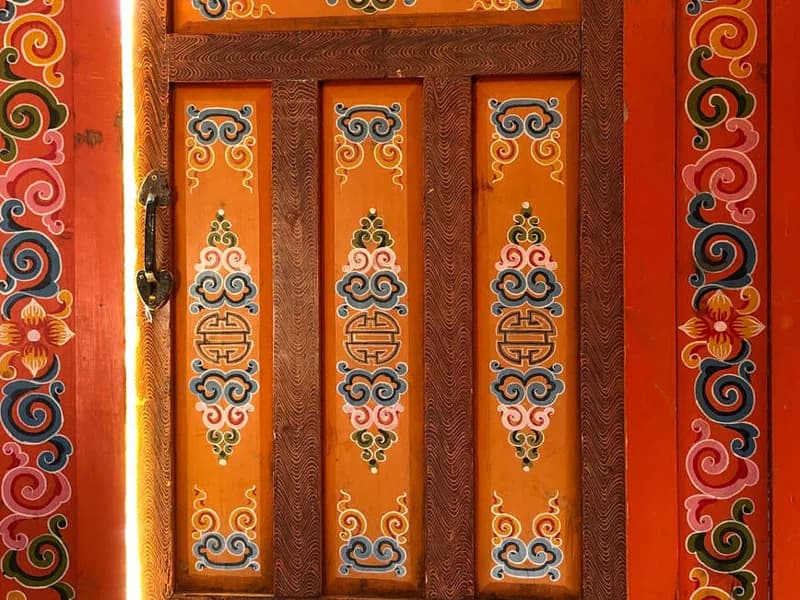
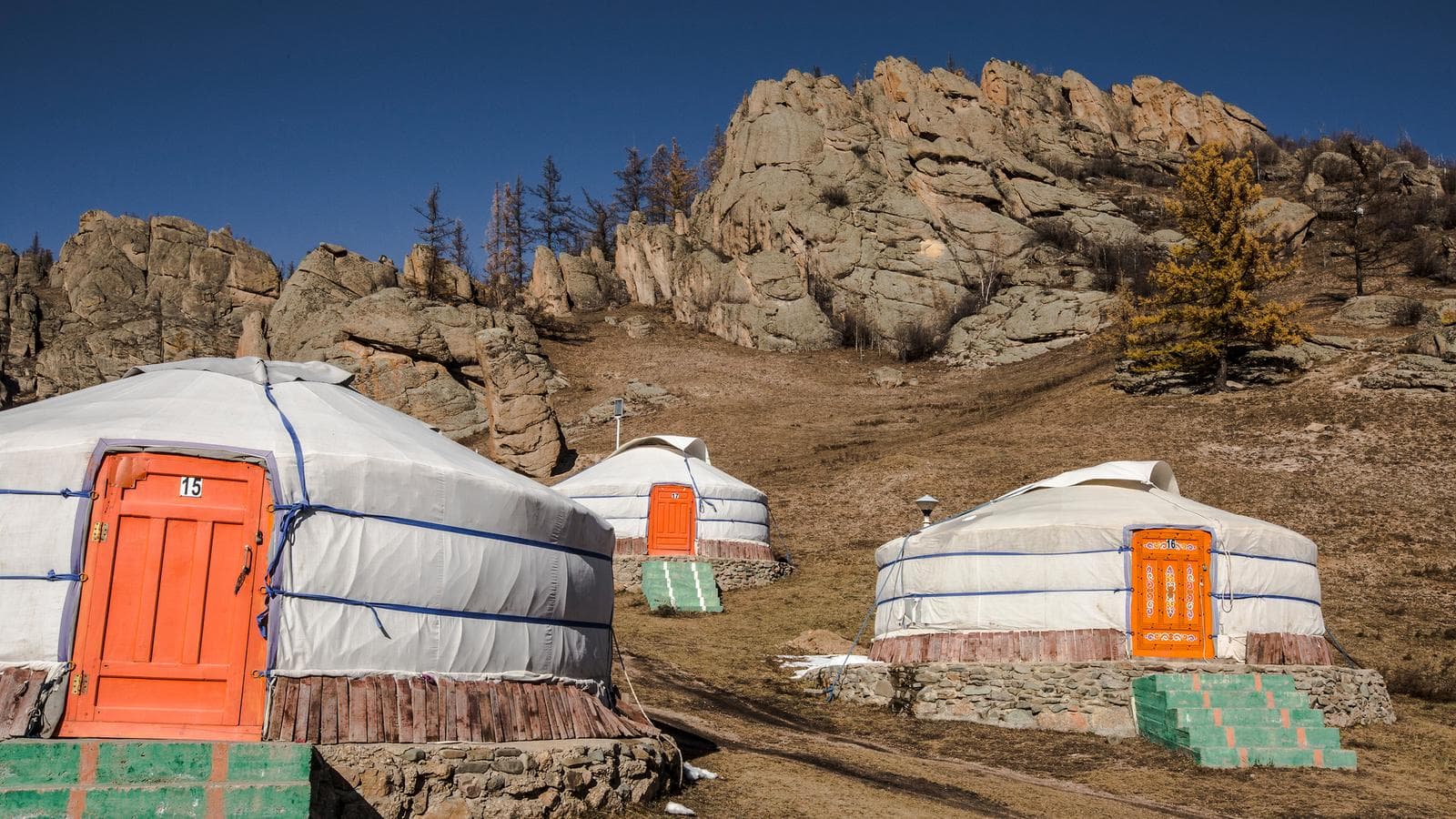
Travelling through the Gobi means staying in gers, the round felt tents of Mongolia's herders. The traditional ger is a lattice of wooden walls covered with layers of felt and canvas, with a roof of wooden poles meeting at a crown open to the sky, and a stove in the middle whose chimney rises through it. It can be taken down and put up in an hour or two, and loaded onto camels, yaks or a truck when the family moves to new pasture with the seasons.
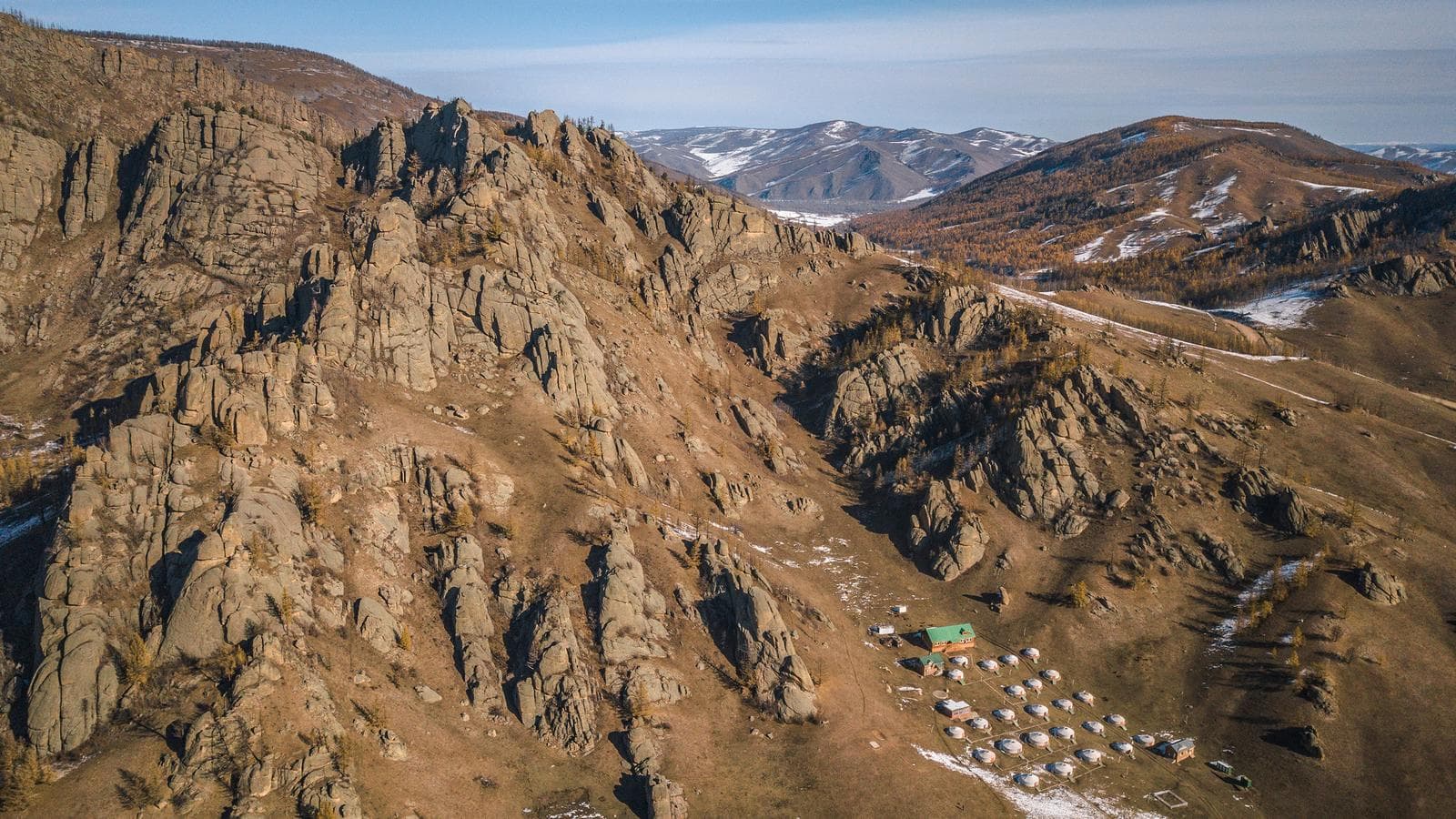
Many of the camps used by travellers are clusters of gers kept for guests, with beds and a stove inside and shared washing blocks outside. Visits to herding families are often part of the journey, and the custom of hospitality on the steppe is strong. Guests are typically offered milk tea, salty rather than sweet, and dried curd or other dairy foods. Inside a ger there are conventions worth knowing: the door faces south, guests move clockwise, and the back of the tent, opposite the door, is the place of honour.
The sights of the south
The Gobi's best-known places lie in the south, around the town of Dalanzadgad. Yolyn Am, the Valley of the Lammergeier, is a narrow gorge in the Gurvan Saikhan mountains where the sun barely reaches the floor, and ice often survives in it well into summer, a strange sight in a desert. It takes its name from the bearded vulture that soars above it.
Khongoryn Els are the largest sand dunes in Mongolia, a long ridge of sand that runs for many kilometres along the foot of the mountains, rising in places to a couple of hundred metres. They are sometimes called the singing dunes, after the low humming sound the sand makes when the wind moves it or someone slides down the slope. Camel rides along their edge are a fixture of most visits.
Bayanzag, the Flaming Cliffs, are a line of red sandstone cliffs and gullies that glow at sunset. In the 1920s, an American expedition led by Roy Chapman Andrews found the first scientifically recognised dinosaur eggs here, along with the remains of many other dinosaurs, and the Gobi has been one of the world's great fossil grounds ever since.
Karakorum and the steppe
Most Gobi journeys also cross the central steppe, the classic Mongolian landscape of rolling grassland. Ongiin Khiid is a ruined monastery complex on a river, one of many destroyed in the purges of the 1930s, now partly restored. Karakorum, in the Orkhon Valley, was the capital of the Mongol empire in the thirteenth century, under Genghis Khan's son Ögedei and his successors. Little of the city survives, but the monastery of Erdene Zuu, built in the sixteenth century partly from its ruins, still stands within a long wall topped with white stupas. Hustai National Park, closer to Ulaanbaatar, is where the Przewalski's horse, the last truly wild horse, which had died out in Mongolia, has been successfully reintroduced.
The tours
Explore Worldwide's Mongolia Explorer, thirteen nights, covers both the steppe and the Gobi. From Ulaanbaatar it visits Hustai National Park, Khogno Khan mountain, Karakorum and the Orkhon Valley, Ongiin Gol, the Flaming Cliffs, the Khongor sand dunes, Yolyn Am, Dalanzadgad, the White Stupa formations and Baga Gazriin Chuluu. It runs from May to September.
G Adventures' Nomadic Mongolia, thirteen nights, covers similar ground, from Ulaanbaatar to Yolyn Am, the Khongoryn Els dunes, the Flaming Cliffs, Ongiin Khiid, Karakorum and Khustai National Park, departing in May and from July to September. G Adventures' Journeys: Discover Mongolia, also thirteen nights, adds the Gandan Monastery, the village of Nalaikh, the Moltsog Els dunes and Erdene Zuu, and runs in May and June.
The season is short: from late May to September, when the days are warm and the nights are cool, and July brings Naadam, the summer festival of wrestling, horse racing and archery. Distances are long and many roads are tracks across the grass, so a Gobi journey involves a great deal of driving. It is worth it for the space. Few places on earth feel so open, or so quiet, under such a sky.
By Walter Pellow, the name Atlas & Passage’s editorial team writes under. Prices and dates in the trips below come from the operators and can change.