Wildlife
The Okavango Delta, a river that never reaches the sea
The Okavango River flows out of the highlands of Angola and into the Kalahari Desert, where it spreads into a vast inland delta of channels, lagoons and islands, and simply disappears. In the middle of the dry season, it is one of the greatest wildlife spectacles in Africa.
By Walter Pellow20 October 20264 min read
Most rivers end in the sea. The Okavango does not. It rises in the highlands of Angola, where heavy summer rains feed its headwaters, and flows south-east, through a strip of Namibia, into north-western Botswana. There it reaches the edge of the Kalahari, a vast basin of sand, and spreads out into a great fan of channels, lagoons, floodplains and islands covering thousands of square kilometres. Then, slowly, it disappears. Almost all of its water evaporates in the heat or is drawn up by plants, and only a tiny fraction trickles out at the far end. The result is the Okavango Delta, one of the largest inland deltas in the world, an oasis of water and green in the middle of a desert. It was inscribed as a World Heritage Site in 2014.
The flood in the dry season
The delta's most remarkable feature is its timing. The rains fall in Angola in the southern summer, from about November to March. But the water takes months to travel down the river and spread slowly across the flat delta. So the flood reaches its peak in the middle of the year, from about June to August, during Botswana's dry winter, when the surrounding land is parched and there has been no rain for months.
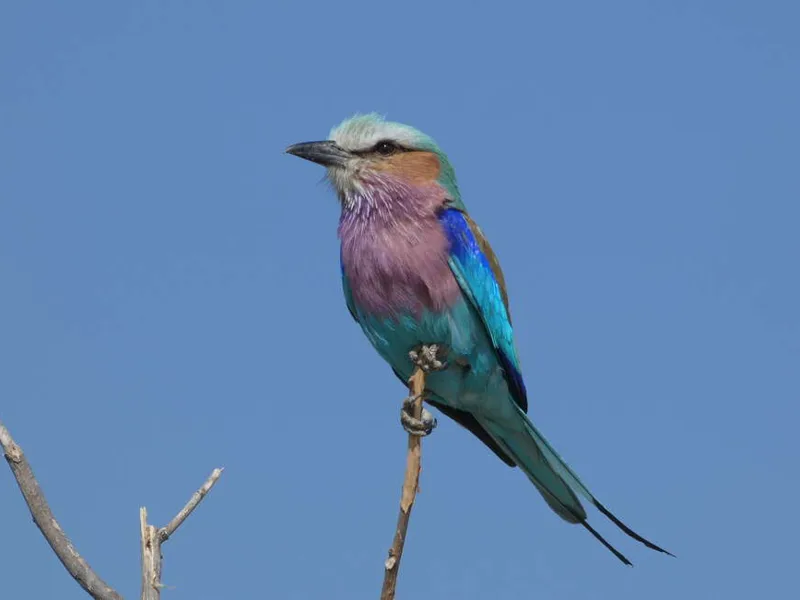
That creates an extraordinary concentration of wildlife. As the land around dries out, the animals of the region move towards the water, and the delta becomes one of the richest wildlife areas in Africa. Elephants, buffalo, lions, leopards, cheetahs, hyenas and the rare African wild dog live here, along with huge numbers of antelope. Some species are especially adapted to the swamps, such as the red lechwe, which bounds through shallow water, and the shy sitatunga, which lives in the papyrus beds. Hippos and crocodiles fill the channels, and the birdlife is astonishing.
By mokoro
The classic way to explore the delta is by mokoro, a traditional dugout canoe, now often made of fibreglass, poled through the shallow channels by a local guide standing at the back. Gliding silently between the reeds and water lilies, at water level, gives a view of the delta quite unlike that from a vehicle. Frogs, kingfishers, jacanas walking on the lily pads and the occasional elephant wading across the channel are all part of it. Walking safaris on the islands, with an armed guide, are another way to experience the wilderness up close.
Moremi Game Reserve, on the eastern side of the delta, was created in the 1960s at the initiative of the local Batawana people, and it protects a large area of the delta and the dry land around it. It is one of the best places in Africa to see wildlife.
The delta's wildlife is varied. Red lechwe, a reddish antelope adapted to the wetlands, bound through the shallow water, and the shy sitatunga, with its long splayed hooves, lives among the reeds. Hippos and crocodiles fill the channels, and the delta is one of the strongholds of the endangered African wild dog. For birdwatchers it is exceptional, home to the African fish eagle, whose ringing cry is the sound of the delta, and the rare Pel's fishing owl. The Okavango Delta was inscribed as a World Heritage Site in 2014.
The Tsodilo Hills
On the western side of the delta, near the panhandle where the river enters Botswana, the Tsodilo Hills rise from the flat Kalahari. They are a small group of rocky hills, sacred to the San people, with thousands of ancient rock paintings on their cliffs and in their shelters. The site is a World Heritage Site, sometimes called the Louvre of the Desert.
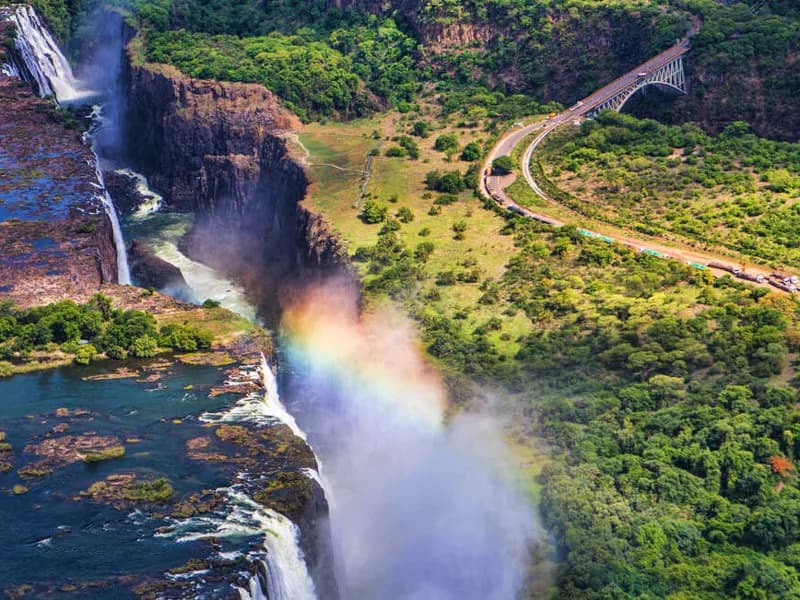
Explore Worldwide's Upgraded Botswana Wildlife Safari, eleven nights from May to October, includes Maun, Moremi Game Reserve, the Okavango Delta and the Tsodilo Hills, with Chobe National Park, Kasane and Victoria Falls.
Explore Worldwide's Botswana Wildlife Safari, thirteen nights, includes Victoria Falls, Chobe National Park, Savuti, Moremi Game Reserve and Maun, the Okavango Delta, Shakawe in the panhandle, the Tsodilo Hills and the Caprivi Strip in Namibia.
The dry season, from about June to October, is the best time to visit, with the flood at its height and the wildlife concentrated around the water. Days are warm and nights can be cold in June and July, so pack layers for early-morning game drives.
By Walter Pellow, the name Atlas & Passage’s editorial team writes under. Prices and dates in the trips below come from the operators and can change.