History
Cusco, the Inca capital the Spanish built on top of
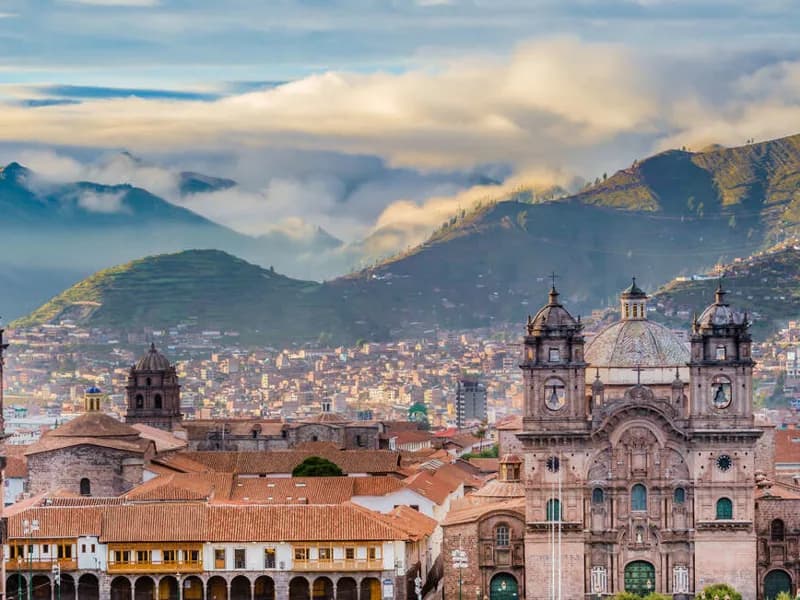
When the Spanish reached Cusco in 1533, it was the capital of the largest empire in the Americas. They tore down its temples and built churches on the foundations, but the Inca walls were too well made to destroy. Today the two cities stand one on top of the other.
By Walter Pellow2 November 20264 min read
Cusco lies in a high valley in the Andes of southern Peru, at nearly three and a half thousand metres. In the fifteenth and early sixteenth centuries, it was the capital of Tawantinsuyu, the Inca empire, which stretched for thousands of kilometres along the Andes, from what is now Ecuador to central Chile. The Incas called Cusco the navel of the world, and it was the centre of a network of roads that ran to every corner of the empire.
The Spanish, under Francisco Pizarro, arrived in 1533. They stripped the city of its gold, killed or deposed its rulers and set about turning it into a Spanish colonial town. Yet much of the Inca city survives, not as ruins but as the base of the Spanish one.
The walls
The most striking thing about Cusco is its stonework. The Incas built their most important buildings of great blocks of andesite and limestone, cut and fitted together without mortar so precisely that it is said a knife blade cannot be slipped between them. The walls lean inwards slightly and their doorways and niches are trapezoidal, wider at the bottom than the top, which helped them to survive the earthquakes that frequently strike the region.
When the Spanish built their churches and mansions, they often demolished the upper parts of the Inca buildings and built on the foundations. Earthquakes later brought down many of the Spanish buildings, while the Inca walls beneath them stood. All over the old centre, you can see colonial walls and balconies resting on Inca stonework. In the street of Hatun Rumiyoc, one great stone in an Inca wall has twelve angles, all fitted perfectly to the stones around it.
The two cities stand one on top of the other.
The Qoricancha
The clearest example of the two cities together is the Qoricancha, the Temple of the Sun, the most important temple of the Inca empire. Its walls were once covered in sheets of gold, and its gardens are said to have held life-size figures of plants and animals made of gold and silver. The Spanish melted it all down and gave the site to the Dominican order, which built a church and monastery on top. Today the colonial church rises above the curved wall of Inca stone at the temple's western end, and within the cloister several of the temple's chambers survive, their stonework as fine as anything in the Inca world.
Squares, churches and San Blas
The heart of the city is the Plaza de Armas, the old Inca ceremonial square, now surrounded by colonial arcades, with the cathedral, built on the site of an Inca palace, and the Jesuit church of La Compañía facing each other across it. The cathedral holds a famous painting of the Last Supper by a local artist, in which the main dish appears to be a roasted guinea pig, a traditional Andean food.
Above the square, the San Blas quarter is a hillside of steep cobbled lanes, whitewashed houses with blue doors and the workshops of artisans. And on the hill above the city stands Sacsayhuamán, a huge Inca fortress and ceremonial centre whose zigzag walls are built of stones weighing many tonnes. Every year on 24 June, the Inti Raymi, the Inca festival of the sun, is re-enacted there.
The tours
Explore Worldwide's Highlights of Peru, eight nights, starts in Cusco, with Sacsayhuamán, San Cristóbal, San Blas and the Qoricancha, then travels through the Sacred Valley to Ollantaytambo, Misminay, Aguas Calientes and Machu Picchu, and on to Andahuaylillas and Raqchi. It runs from March to May and from July to October.
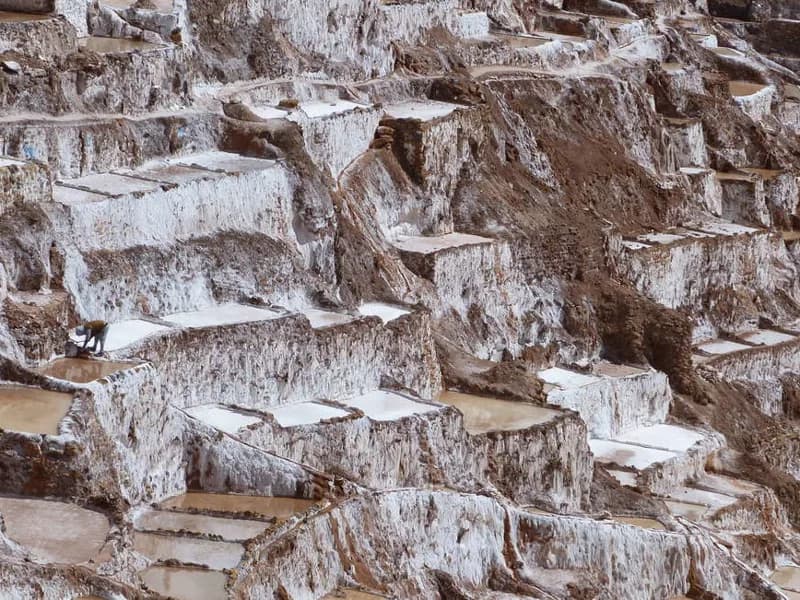
Explore's Machu Picchu and Galápagos, fourteen nights, combines Cusco, the Sacred Valley, Moray, Maras, Ollantaytambo and Machu Picchu with Quito and the Galápagos Islands. Travelsphere's Latin Wonders of the World with Rio Add-on, nineteen nights, includes Lima, Cuzco, Machu Picchu, the Sacred Valley and Lake Titicaca, then La Paz, Buenos Aires, the Iguaçu Falls and Rio de Janeiro.
Cusco's altitude is high enough that most visitors feel it on arrival, with breathlessness and headaches. Take the first day slowly, drink plenty of water and, as the locals do, try coca tea. The dry season, from May to September, brings clear blue skies and cold nights; the wet season, from December to March, is greener and quieter.
By Walter Pellow, the name Atlas & Passage’s editorial team writes under. Prices and dates in the trips below come from the operators and can change.