Journeys
What "small group" actually means
Every brochure claims intimacy these days. The phrase that actually earns it is small group, and it changes more about a tour than the number printed on the itinerary suggests.
By Arthur Penhallow26 September 20264 min read
A fifty-seat coach and a minibus are both, technically, group travel, but they are different holidays wearing the same word. Operators such as Explore Worldwide and G Adventures build their trips around a considerably smaller number of travellers than the grand touring coaches that dominate the package-holiday end of the market, and the difference shows up less in the socialising, though there is plenty of that, than in the places the tour is physically able to reach.
The places a coach cannot go
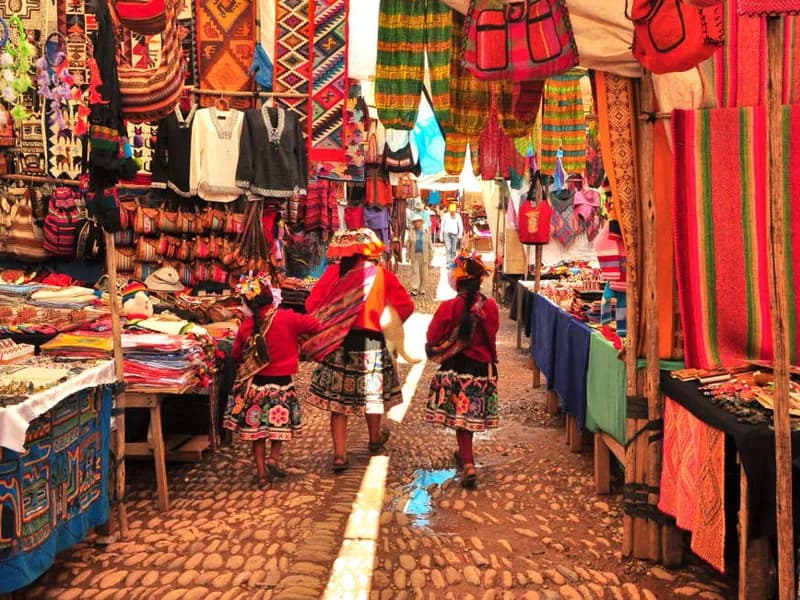
A fifty-seat vehicle needs a road built to take it, somewhere to turn round, and a hotel with the right number of beds waiting at the end of the day. A smaller group is not bound by any of that. A trek through Peru's Sacred Valley to Machu Picchu, taking in Arequipa, Colca Canyon and Lake Titicaca along the way, moves through mountain villages, along the Inca Trail itself and past agricultural terraces that a full-sized coach would never reach, because the road, in the sense a coach needs one, does not really exist.
The same logic applies in the Georgian Caucasus, where a hiking route through Svaneti, calling at Mestia and the medieval tower village of Ushguli, one of the highest continuously inhabited settlements in Europe, depends entirely on the group being small enough to stay in family-run guesthouses along the way rather than requiring the infrastructure a larger tour would need.
The pace, and who sets it
Size also changes the rhythm of a day. A large coach group runs to a schedule built around getting fifty people fed, seated and moving together, which tends to favour set stops and fixed timings. A smaller group can linger at a market that turns out to be good, or leave early because everyone is ready, in a way that simply is not practical at scale. This shows most clearly on the overland routes that cross borders on the ground rather than by air, such as a short run from China's Yunnan province, through the rice terraces of Yuanyang and the hill town of Sapa, into northern Vietnam: the kind of crossing that depends on flexibility a larger operation could not offer.
The border crossing itself is usually the clearest illustration of the difference. A short overland tour like this one moves through immigration on foot, in a group small enough that the formalities take minutes rather than the better part of an afternoon, and reaches Sapa's hill villages, home to several of Vietnam's ethnic minority communities, along roads that a full-sized coach would find genuinely difficult to manage.
What it costs you in return
None of this is free. Smaller groups generally mean less predictable facilities, more early starts, and accommodation that ranges from characterful to genuinely basic, depending on where the road runs out. A small-group tour is also, almost by definition, more physical than a coach tour: more walking between the vehicle and the hotel, more stairs, more days that ask something of your legs. Anyone who wants comfort above all else is better served by a larger operator with a bigger coach and a five-star hotel each night.
The guide, not the driver
A small-group tour also tends to change the relationship between traveller and guide. On a large coach tour, the guide is often working through a fixed script for a fixed number of stops; on a small group, the same person is frequently the one deciding, on the day, whether to linger somewhere or move on, based on what the group actually wants rather than what the timetable demands. This matters more than it sounds, particularly in places like the Georgian Caucasus or the Peruvian Andes, where local knowledge of weather, paths and which guesthouse has a room free is not something a fixed itinerary can fully anticipate.
Who it actually suits
The honest answer is: people who would rather see more and be slightly less comfortable doing it, and who do not mind sharing a table with strangers who quickly stop being strangers. A group of a dozen or so travellers, on transport small enough to stop wherever the guide decides it is worth stopping, tends to produce exactly the kind of trip the brochures for larger tours only claim to offer.
By Arthur Penhallow, the name Atlas & Passage’s editorial team writes under. Prices and dates in the trips below come from the operators and can change.