Slow travel
The Mekong by slow boat, between Laos and Thailand
Between Luang Prabang and the Thai border, the Mekong winds for two days through forested hills, past sandbars, fishing villages and water buffalo. The slow boat takes its time, with a night halfway in a riverside village, and the journey is the point.
By Walter Pellow20 October 20264 min read
The Mekong is the great river of mainland South-east Asia, and in northern Laos it is still a highway as much as a river. There are few roads through the mountains, and for centuries the river carried people, goods and news between the towns and villages along its banks. The journey between the old royal city of Luang Prabang and the Thai border, near the towns of Huay Xai in Laos and Chiang Khong in Thailand, is still made by long, narrow wooden boats over two days. It has become one of the classic journeys of the region.
There is a road now, and buses that are faster. But the slow boat is not about speed.
On board
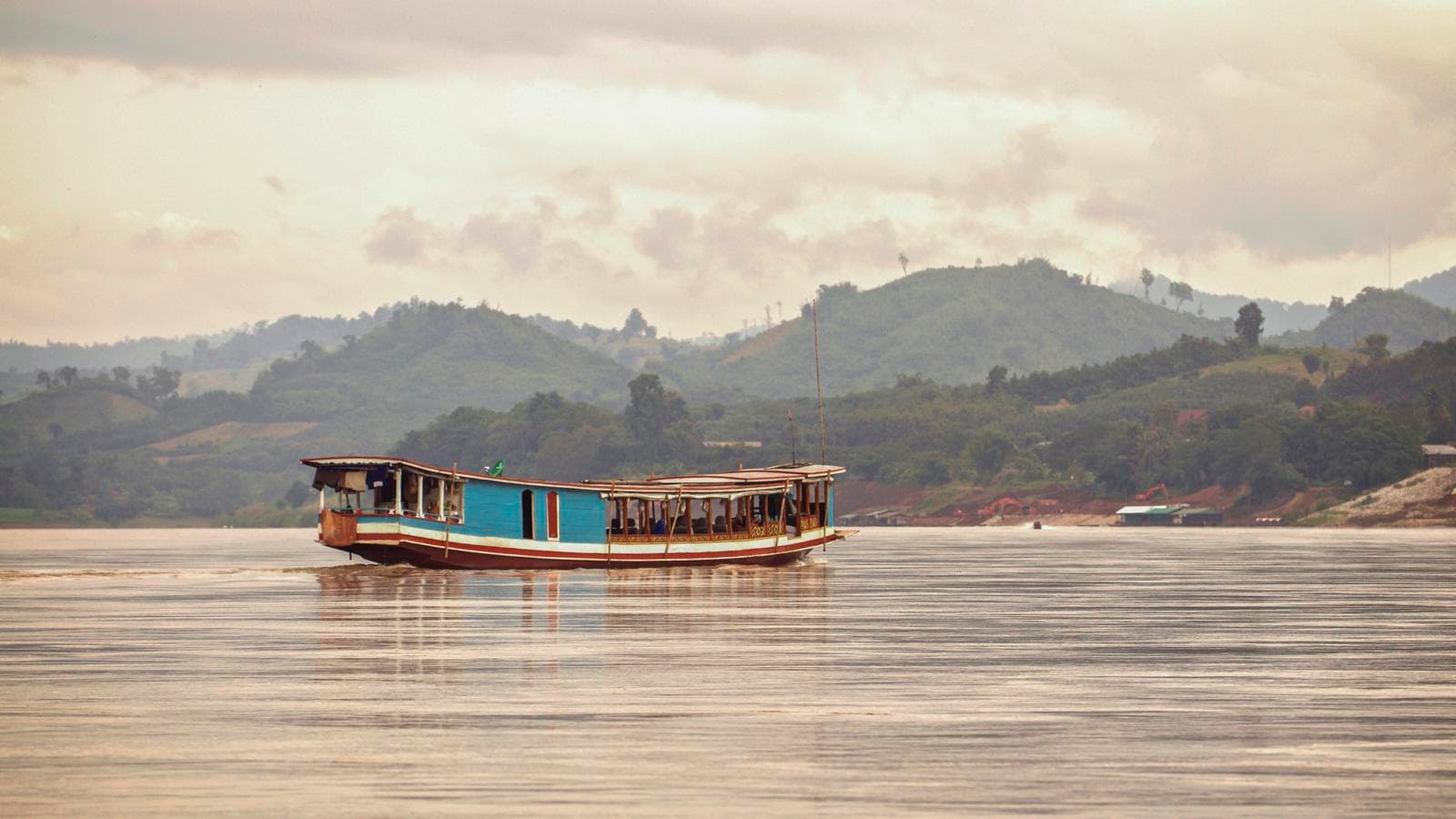
The slow boats are long, low wooden vessels, with a roof against the sun and the rain and rows of seats. Some carry local people and their cargo as well as travellers, and others are reserved for tour groups, with more comfortable seating. Between Luang Prabang and the border, the boat travels against the current, upstream, which takes a little longer than the journey downriver. Each day's journey takes the best part of the daylight hours, with occasional stops at villages to drop off and pick up passengers and goods.
The scenery is the reason to go. The river runs through a landscape of steep, forested hills and limestone outcrops, with no towns and few roads. Small villages of wooden and bamboo houses stand on the banks, and children wave and swim. Water buffalo wallow in the shallows, and fishermen cast nets from small boats. In the dry season, from about November, wide sandbanks and rocks emerge from the water, and the river narrows into rapids and channels that the boatmen navigate with practised skill. There is little to do but watch, read, talk and doze, and that is exactly the pleasure of it.
Pakbeng, and the stop for the night
Halfway, the boats stop for the night at Pakbeng, a small village climbing the hillside above the river. It exists largely to serve the river traffic, with guesthouses, small restaurants and a morning market where people from the surrounding hill villages come to sell their produce. The evening, with the sun setting over the river and the boats moored below, is peaceful.
The slow boat is also a slice of everyday Lao life. Local passengers bring sacks of rice, baskets of vegetables, chickens and motorbikes on board, and get off at villages with no road access, scrambling up the sandy banks to their homes. Monks travel too, and they are given space and respect. Food is simple: sticky rice, grilled fish and bananas bought from vendors at the stops. Watching the river, the villages and the people go by is the best introduction to Laos there is.
Luang Prabang, and the caves on the way
Near Luang Prabang, the boats pass the Pak Ou caves, two caves in a limestone cliff above the river, filled with thousands of Buddha images left there by pilgrims over the centuries. Many boats stop here.
Luang Prabang itself, the old royal capital, is one of the most beautiful towns in South-east Asia, a World Heritage Site of temples, monasteries and French colonial houses on a peninsula between the Mekong and the Nam Khan river. At dawn, saffron-robed monks walk the streets collecting alms from residents kneeling by the roadside.
Tours that include Pakbeng
G Adventures' Laos: Sunrises and Street Food, eight nights in October and November, includes Vientiane, Vang Vieng, Luang Prabang, Muang Pakbèng and Chiang Khong on the Thai side of the river.
G Adventures' Laos to Thailand: Night Markets and Mekong Cruising, ten nights in October, includes Vientiane, Vang Vieng, Luang Prabang and Muang Pakbèng, and then Chiang Mai and Bangkok. G Adventures' Laos to Northern Thailand: Treks and Trails, thirteen nights in October and November, includes Vang Vieng, Muang Pakbèng, Luang Prabang and Chiang Mai.
Bring a cushion, because the wooden seats can be hard, along with a book, snacks and a warm layer for the misty mornings of the cool season. The dry season, from about October to February, is the most comfortable time for the journey.
By Walter Pellow, the name Atlas & Passage’s editorial team writes under. Prices and dates in the trips below come from the operators and can change.