Food & drink
Dublin, by the glass and the page
A city that gave the world a very dark beer and four Nobel laureates in literature tends to get asked, reasonably, which it takes more seriously. It has never had to choose.
By Arthur Penhallow26 September 20264 min read
Arthur Guinness signed a lease on a small, disused brewery at St James's Gate in 1759, reportedly for nine thousand years, a term so implausibly long that it has become part of the company's own folklore regardless of how literally the original paperwork should be read. What is certain is that the dark, roasted stout that eventually took his name became Ireland's best-known export, brewed at the same site for well over two centuries and shipped, at various points, to almost every country with an Irish community large enough to miss it.
A city that reads as seriously as it drinks
Dublin's other claim to international attention is considerably quieter but no less remarkable: the city has produced four Nobel laureates in literature, William Butler Yeats, George Bernard Shaw, Samuel Beckett and Seamus Heaney, a concentration of literary prizewinners that few cities of comparable size can match. UNESCO recognised the pattern formally in 2010, naming Dublin a City of Literature, a title that sits comfortably alongside a much older reputation: Trinity College Dublin holds the Book of Kells, an illuminated gospel manuscript created around the year 800, generally considered one of the finest surviving examples of medieval European book-making, still on public display within the same college walls that have taught the city's writers for centuries.
A concentration of literary prizewinners that few cities of comparable size can match.
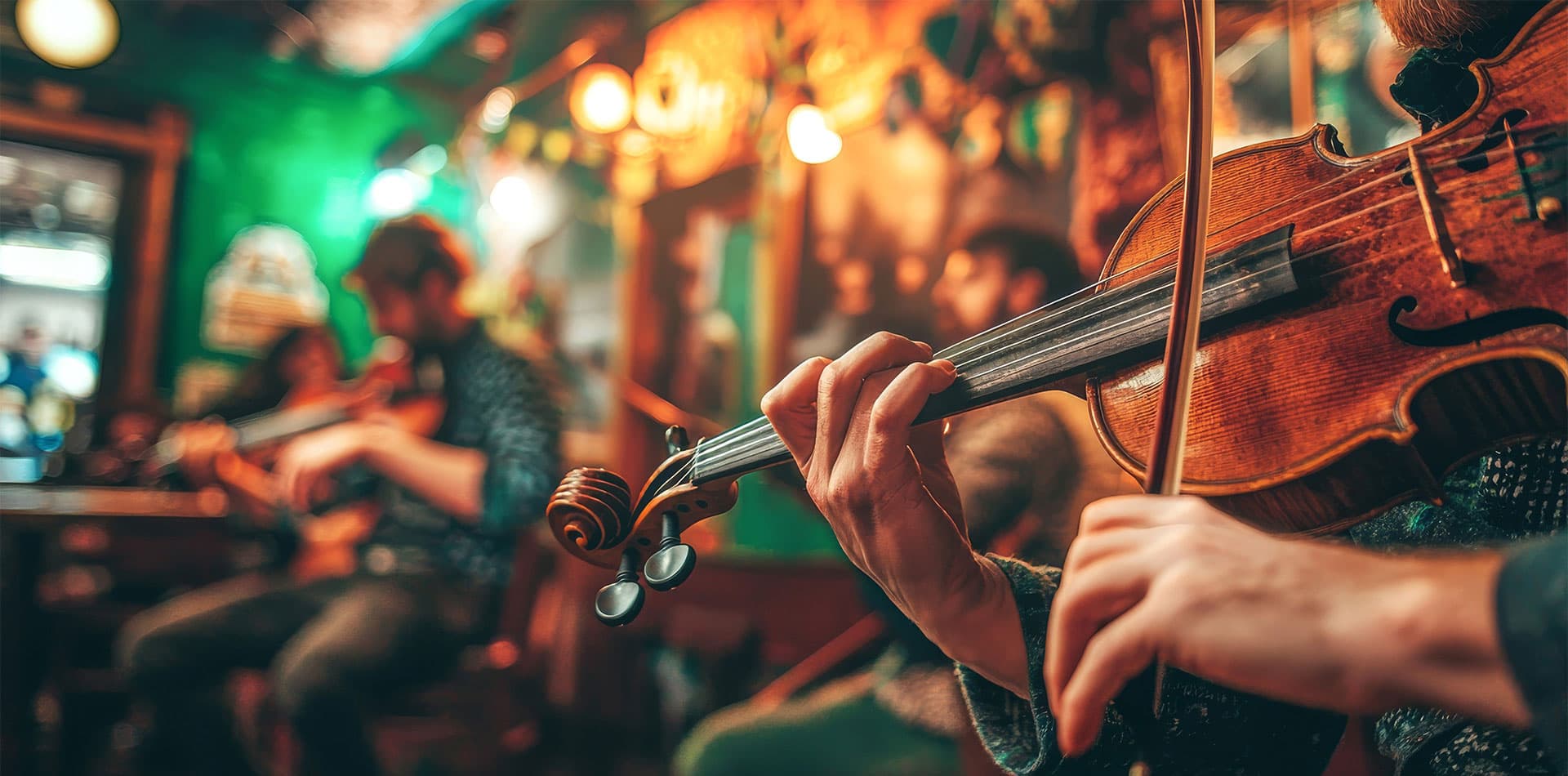
The two reputations, the pint and the page, are not as separate as they might sound. Dublin's pub culture has long doubled as a kind of informal literary infrastructure, the setting for a fair share of Joyce's Ulysses among a great deal else, and the tradition of a pub as a place for conversation, storytelling and the occasional argument about poetry has never entirely gone out of fashion, even as the city around it has modernised considerably.
The brewery itself is now as much a visitor attraction as a working site. The Guinness Storehouse, opened in an old fermentation building at St James's Gate in 2000, has become one of Ireland's most visited attractions in its own right, telling the story of the stout's ingredients, its advertising history and its slow spread around the world from a single Dublin address. Nearby, the wide Georgian squares and terraces around Merrion Square and St Stephen's Green, laid out through the eighteenth century, still carry the brightly painted front doors that have become one of the most photographed small details of any European capital, a piece of civic colour that began, according to local tradition, as a way for residents returning from the pub to tell their own house from their neighbour's.
Dún Laoghaire, and the harbour George IV made famous
Ships calling for Dublin typically dock a little way down the coast at Dún Laoghaire, a substantial harbour town in its own right rather than a mere ferry terminal. It was renamed Kingstown in 1821 to mark a state visit by George IV, the only one an English monarch made to Ireland in the whole of the nineteenth century, and it kept that name until Irish independence restored the older Dún Laoghaire in 1920. The harbour itself, two long granite piers reaching out into Dublin Bay, was built across the middle decades of the nineteenth century as a harbour of refuge for shipping, and its promenades remain a favourite spot for a walk regardless of what the weather in the bay happens to be doing.
A day in the capital
Fred. Olsen's Culture and Craic of Ireland, five nights from Southampton, is built almost entirely around this: a call at Dún Laoghaire for Dublin, followed by Cobh further down the coast, with Blarney Castle offered as an inland excursion from there. It is among the shortest ways to sample Ireland's two best-known ports in a single trip.
Fred. Olsen's Coastal Gems and Culture of Ireland, nine nights from Rosyth, gives Dublin more company on the itinerary, adding Cobh, Cork and a run down past Slieve League and Killybegs before the ship turns for Dún Laoghaire.
A single day ashore rarely stretches to both the brewery and the library, in any serious sense, but it is usually enough for a pint somewhere with a good claim to authenticity and a walk past Trinity's front gates, which between them cover a fair amount of what Dublin has spent the last two and a half centuries best known for.
By Arthur Penhallow, the name Atlas & Passage’s editorial team writes under. Prices and dates in the trips below come from the operators and can change.