Culture
Galway, and the language that came first
Ireland's Atlantic port grew rich under fourteen merchant families and now trades on music and oysters. West of it, the Irish language never really stopped being the first one spoken.
By Arthur Penhallow26 September 20264 min read
Medieval Galway was governed, in practice if not always in law, by fourteen merchant families known collectively as the Tribes of Galway, whose trading networks reached as far as Spain and whose surnames, Lynch, Blake, Bodkin, Athy and the rest, still turn up on street signs and shopfronts around the old town centre. The city's nickname, the City of the Tribes, is a direct inheritance from that period, when Galway operated less like an ordinary Irish town and more like a semi-independent trading republic loosely attached to the English crown, wealthy enough to build its own walls and its own rules.
Just outside those walls, on the far bank of the Corrib, stood the Claddagh, once a separate Irish-speaking fishing village with its own king and its own customs, entirely distinct from the merchant city beside it. The Claddagh ring, its design of two hands clasping a crowned heart now recognised well beyond Galway as a symbol of love and loyalty, takes its name and its origin from this same fishing community, a rare case of a small village's craft outlasting the village itself in the wider world's memory.
What the Spanish Arch remembers
A surviving stretch of those walls, extended in the early seventeenth century and known as the Spanish Arch, still stands where the River Corrib meets Galway Bay, close to where ships from Spain are traditionally said to have unloaded wine and other cargo bound for the city's merchants. Whatever the precise trading arrangements were in practice, the name has stuck, and the arch remains the obvious point from which to look out towards the bay and, on a clear day, the low shape of the Aran Islands sitting in the mouth of it.
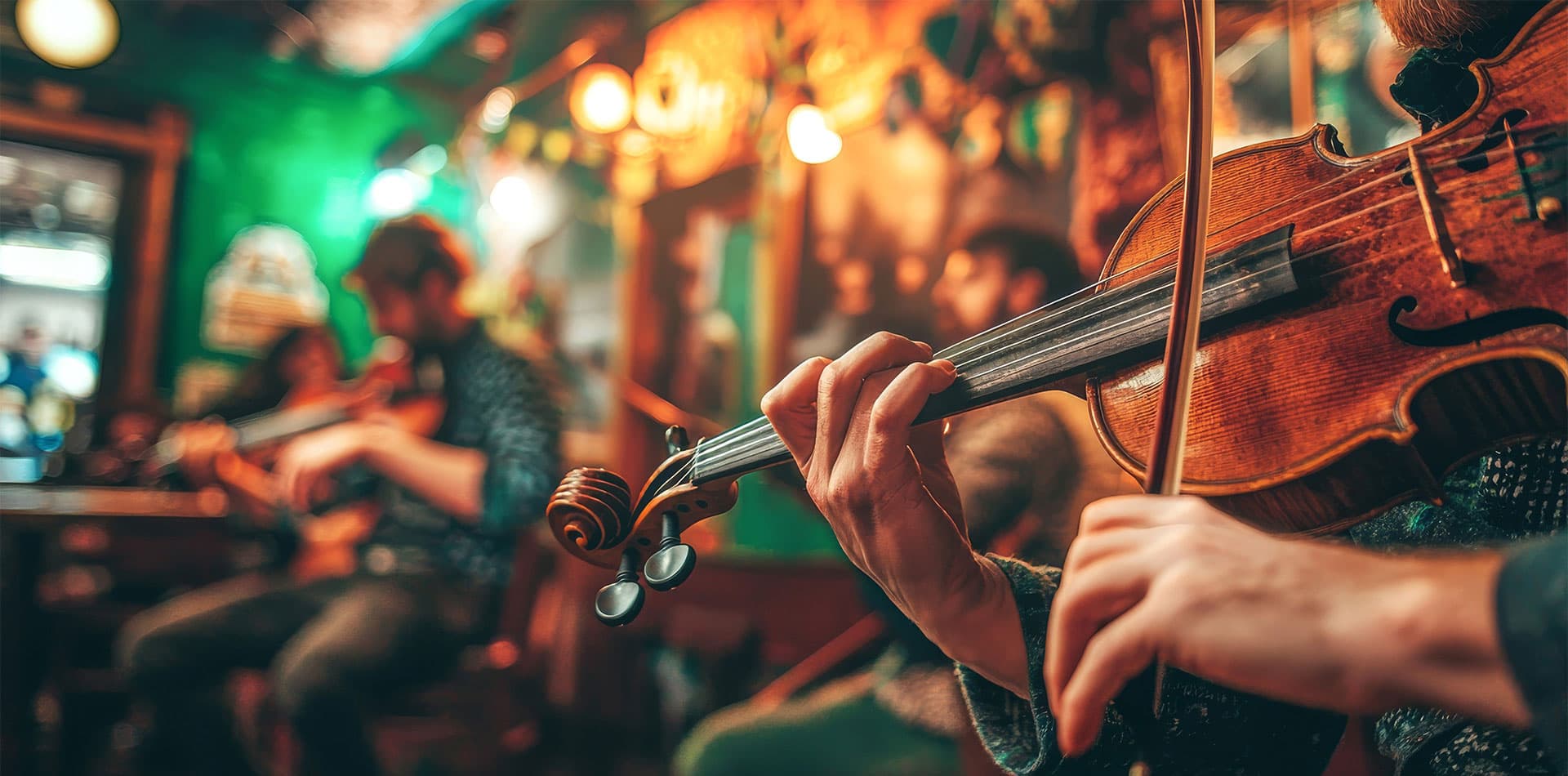
Modern Galway has built a rather different reputation on top of the old trading one: a city known for traditional music sessions in its pubs, a long-running international arts festival, and an oyster festival that has run since the 1950s, timed to the start of the wild oyster season each autumn. The city's cultural standing was formally recognised in 2020, when it held the title of European Capital of Culture, a year the pandemic complicated considerably but did not erase from the record.
West of the city, the language that never left
What sets Galway apart from Ireland's other cities most clearly, though, lies just beyond its western edge. Connemara, the wild, rock-strewn district running out towards the Atlantic, is one of Ireland's largest Gaeltacht regions, areas officially recognised as Irish-speaking communities rather than places where the language is merely taught or displayed for visitors. Irish is the first language of daily life here in a way it is not in Dublin or Cork, heard in shops, at Mass and on local radio, a living continuation of the language rather than a revival project built from scratch. The distinction matters to islanders and mainlanders alike: Galway's Gaeltacht is not a heritage exhibit, it is simply how a significant part of the county goes about its ordinary week.
Calling at Galway
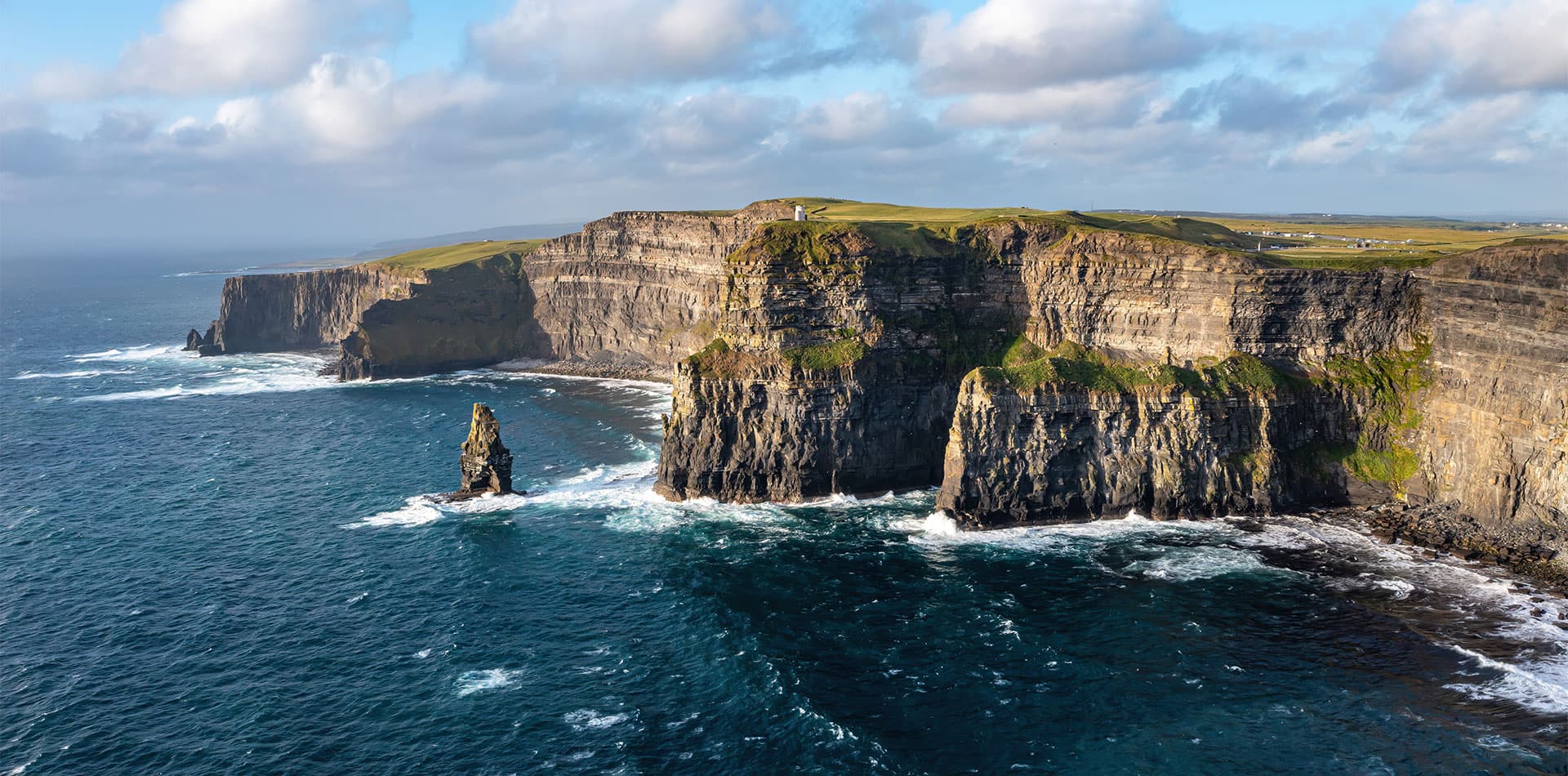
Fred. Olsen's Cultural Charm of Ireland, six nights from Liverpool, spends real time on this stretch of coast, pairing Galway with Cobh and the fishing port of Killybegs further north. Fred. Olsen's Ireland's Coastal Charms, ten nights from Newcastle, adds a cruise along the Wild Atlantic Way in County Mayo before its own call at Galway, on a longer route that also touches Cobh, Douglas on the Isle of Man and Belfast.
Exploring the Scenic British Isles, eleven nights from Southampton, treats Galway as one stop on a wider loop that includes Belfast, Kirkwall in Orkney and the Fingal's Cave sail-by in the Hebrides, a reminder that Galway's Atlantic position puts it within reach of itineraries that range considerably further than Ireland alone.
A day ashore rarely stretches as far as Connemara itself, but even an afternoon around the Spanish Arch and the old tribal streets gives a fair sense of a city that has spent the better part of a thousand years trading with the Atlantic rather than turning its back on it.
By Arthur Penhallow, the name Atlas & Passage’s editorial team writes under. Prices and dates in the trips below come from the operators and can change.