Culture
Goa beyond the beaches, and the churches Portugal left
Goa is known for its beaches, but for four and a half centuries it was a Portuguese colony, and it is still unlike anywhere else in India: a place of whitewashed baroque churches, red-tiled villas, feni and vindaloo, with a capital that was once called the Rome of the East.
By Walter Pellow2 November 20264 min read
Goa is the smallest state in India, a strip of coast on the Arabian Sea between Maharashtra and Karnataka, and for most visitors it means beaches: long stretches of sand fringed with coconut palms, with fishing boats drawn up on the shore. They are fine beaches. But Goa's real distinction lies in its history. It was a Portuguese possession from 1510 until 1961, far longer than any British territory in India, and the Portuguese left a culture that remains distinct from the rest of the country.
The Rome of the East
The Portuguese commander Afonso de Albuquerque captured Goa in 1510, and it became the capital of Portugal's empire in Asia, a chain of trading posts and forts that stretched from East Africa to Japan. The city the Portuguese built on the Mandovi river grew rich on the spice trade, and in the sixteenth century it was filled with churches, convents and palaces, so many that it was called the Rome of the East.
Its splendour did not last. Epidemics of cholera and malaria swept the city in the seventeenth and eighteenth centuries, and the river silted up. The capital was moved downstream, and Old Goa was gradually abandoned, leaving its great churches standing in a landscape of fields and trees. They are now a UNESCO World Heritage Site.
The most famous is the Basilica of Bom Jesus, a late sixteenth-century church of red laterite stone, which contains the tomb of Francis Xavier, the Jesuit missionary who worked in Asia and died in 1552. His body is displayed to the public every ten years or so, in an exposition that draws huge crowds of pilgrims. Across the road stands the vast white Se Cathedral, one of the largest churches in Asia, and around them are the remains of convents and churches in various states of repair.
Panaji and the villas
The present capital, Panaji, sits at the mouth of the Mandovi. Its Latin quarter, Fontainhas, is a neighbourhood of narrow streets and old houses painted in yellow, blue, green and ochre, with balconies, tiled roofs and the names of their owners on blue-and-white tiles, the azulejos. Above it all stands the whitewashed Church of the Immaculate Conception, at the top of a zigzag flight of steps.
In the villages of the interior, the Goan Catholic families built large villas in the nineteenth century, many of them now open to visitors, with long verandas, oyster-shell windows, chandeliers and family chapels. Goa is still largely Catholic in parts, and its villages are dotted with white churches and wayside crosses.
Food and drink
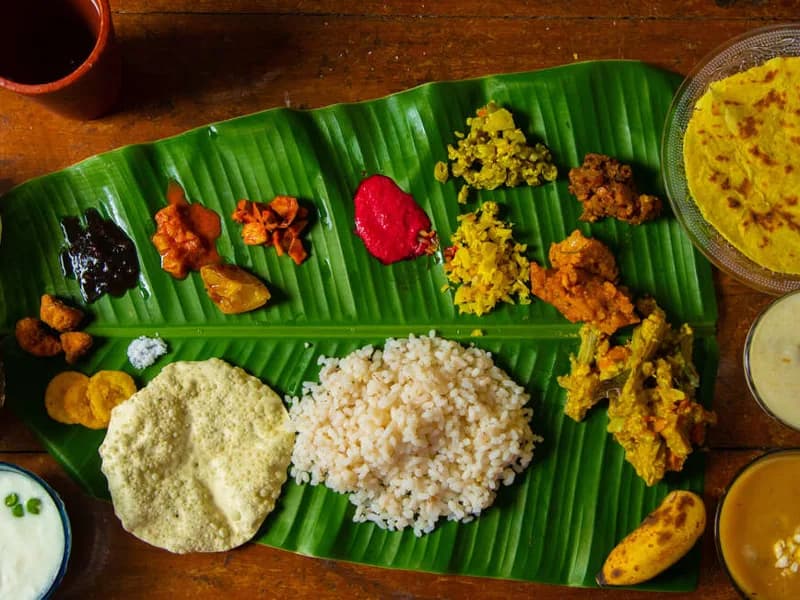
Goan food is one of the great regional cuisines of India, and it shows its mixed history. Vindaloo, now an international curry-house staple, began as a Portuguese dish of pork in wine and garlic, adapted with chillies and vinegar. Xacuti is a rich curry made with roasted coconut and spices, and the coast's fish curries are made with coconut and kokum. Bebinca is a layered coconut pudding. And Goa has its own spirit, feni, distilled from cashew apples or coconut sap, a powerful drink that the state has given protected status.
The tours
G Adventures' Uncover India: High Deserts & Markets, fourteen nights, starts in Delhi and travels through Agra, Jaipur, Pushkar, Tordi Sagar, Udaipur and Ranakpur to Mumbai, finishing in Goa. It runs in October and November.
Explore Worldwide's Upgraded: South India, Kerala to Goa, eleven nights, starts in Kochi and travels up the coast and through the Western Ghats, with Fort Kochi and the Mattancherry Palace, the backwaters at Alleppey and Kumarakom, Calicut, Wayanad and the coffee country of Coorg. It runs through most of the year outside the monsoon.
G Adventures' India: Kochi & Goa's Golden Beaches, thirteen nights, travels through Kerala and Karnataka, with Alleppey, Kollam, Mysore, Hampi, Kochi, Ooty and Varkala.
The best season in Goa is from November to March, when the weather is dry, warm and sunny. Christmas and New Year are the busiest time, when the churches are lit up and the Catholic festivals are celebrated with great enthusiasm. The monsoon, from June to September, brings heavy rain, but also turns the countryside a brilliant green.
By Walter Pellow, the name Atlas & Passage’s editorial team writes under. Prices and dates in the trips below come from the operators and can change.