History
Varanasi, the ghats at first light
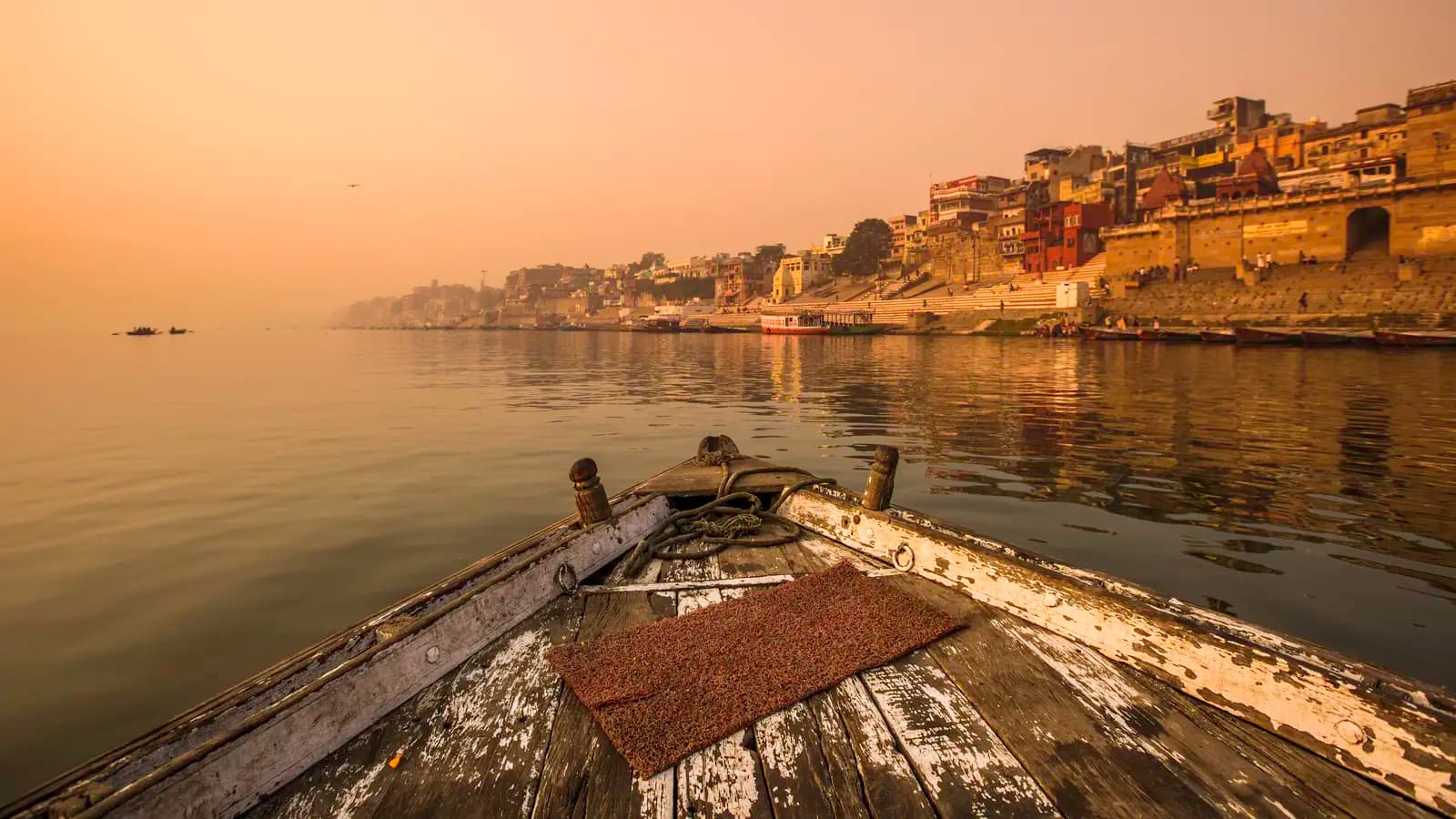
Varanasi is one of the oldest continuously inhabited cities in the world and the holiest city of Hinduism. Its life is lived on the steps, the ghats, that run down to the Ganges, and the best way to see it is from a boat on the river at dawn.
By Walter Pellow2 November 20264 min read
Mark Twain, who visited in 1896, wrote that Varanasi was older than history, older than tradition, older even than legend, and looked twice as old as all of them put together. It is a fair description. The city, also known as Benares or Kashi, has stood on the west bank of the Ganges for at least three thousand years, and it is the holiest city of Hinduism. Hindus believe that to die here, and to have one's ashes scattered on the river, brings liberation from the cycle of rebirth, and pilgrims have come here for millennia, some of them to spend their last days.
The ghats
The city's riverfront is lined for several kilometres with ghats, broad flights of stone steps that lead down to the water, more than eighty of them, each with its own name, history and temples. Above them rise the walls of palaces, temples and pilgrims' rest houses, built by maharajas and merchants from all over India.
The ghats are where Varanasi's life is lived. From before dawn, people come down to the river to bathe in the sacred water, to pray, to wash clothes, to exercise and to talk. Priests sit under parasols, boatmen call for customers, and holy men in saffron sit on the steps. Every day ends and begins here.
Behind the ghats lies the old city, a dense maze of lanes, the galis, too narrow for cars, where cows, pilgrims and motorcycles squeeze past one another, and shrines, sweet shops and lassi stalls fill every corner. At its heart is the Kashi Vishwanath temple, one of the most sacred temples of Shiva, whose spire was covered in gold in the nineteenth century by the Sikh ruler Ranjit Singh. Varanasi is also famous for its silk, woven on handlooms into the Banarasi saris worn at weddings across India.
The river at dawn
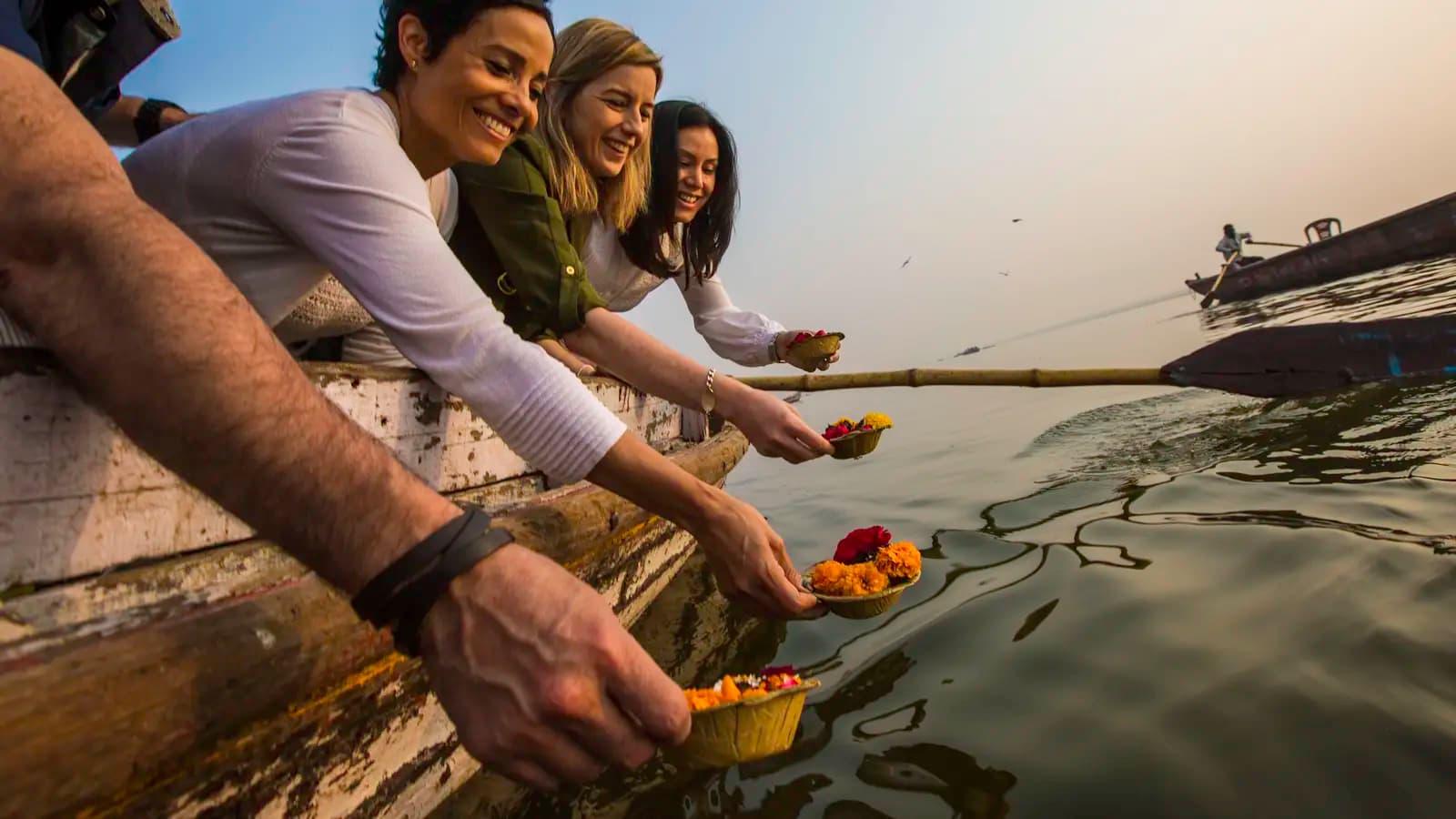
The classic way to see Varanasi is from a rowing boat at first light. As the sun comes up over the far bank of the Ganges, which is left almost empty, the light falls on the whole length of the ghats, and the boat drifts past bathers immersing themselves, marigold garlands floating on the water, and the smoke of the cremation grounds.
There are two main burning ghats, and Manikarnika is the most important. Cremations take place here day and night, the bodies wrapped in cloth and carried down through the lanes to the river's edge on bamboo stretchers, and the fires never go out. It is a place to be quiet and respectful, and to leave the camera down: photography of the cremations is not welcome.
The evening aarti, and Sarnath
In the evening, the ghats come alive again with the Ganga aarti, a ceremony of worship to the river performed each night at Dashashwamedh Ghat. Young priests in matching robes stand on platforms by the water, swinging great brass lamps of flame in unison, to the sound of bells, chanting and conch shells, while crowds watch from the steps and from boats on the river. Many visitors set small leaf boats with candles and flowers floating on the water.
A few kilometres from the city is Sarnath, where, according to Buddhist tradition, the Buddha gave his first sermon after his enlightenment, in a deer park, setting in motion the wheel of the dharma. It is one of the four great Buddhist pilgrimage sites, with the ruins of monasteries, the great Dhamek Stupa and a museum whose collection includes the lion capital of an Ashokan pillar, now the national emblem of India.
The tours
G Adventures' India's Golden Triangle: Taj Mahal to the Ganges, eight nights, travels from Delhi to Jaipur and Orchha, and ends in Varanasi. It runs in October and November.
G Adventures' Signature: India's Jaipur, the Taj Mahal, Varanasi & Delhi, eight nights, combines Jaipur, the Amber Fort, the Abhaneri stepwell and Agra with Varanasi, Sarnath and Delhi, departing in September. G Adventures' Northern India on a Budget: The Golden Triangle to Varanasi, eight nights, visits Delhi, Pushkar, Jaipur, Agra and Varanasi, from November to January.
The best time to visit Varanasi is from October to March. Winter mornings can be cold and misty, which only adds to the atmosphere on the river. In summer the heat is intense, and during the monsoon the river rises, sometimes covering the lower steps of the ghats.
By Walter Pellow, the name Atlas & Passage’s editorial team writes under. Prices and dates in the trips below come from the operators and can change.