Seasons
Iceland after dark, and the lights that may perform
A short winter break in Iceland works whether or not the aurora shows up, because the waterfalls, black beaches and geothermal country it visits by day don't depend on the sky at all.
By Arthur Penhallow26 September 20264 min read
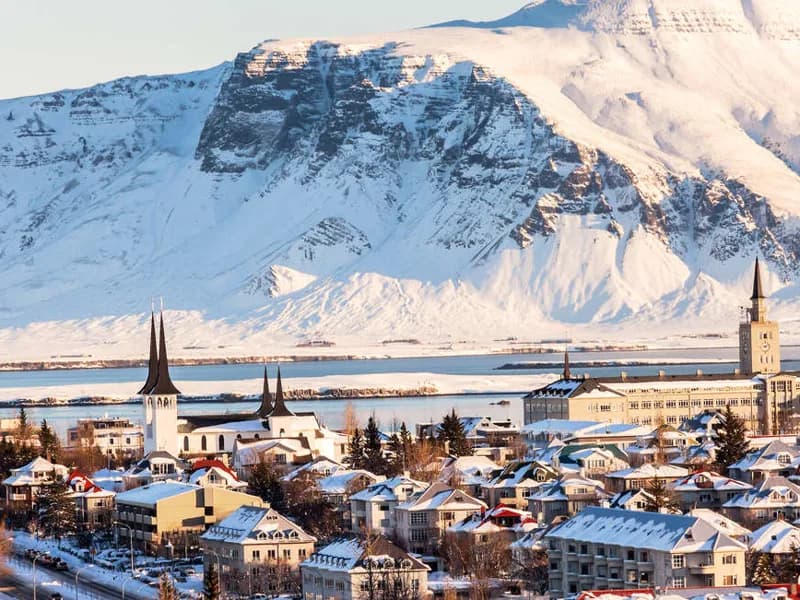
Iceland's winter days are short, sometimes down to four or five hours of proper daylight by December, which sounds like a drawback until you consider what fills the darker hours either side of it. A short break built around the south coast in autumn or early winter spends its daylight on waterfalls, black sand beaches and volcanic country, and its evenings, weather and solar activity allowing, watching the sky.
The short days are, in a fairly direct way, the same tilt of the earth that makes the aurora visible here at all; the darkness that shrinks the daylight to a few hours is precisely what allows a faint light in the upper atmosphere to register against the sky. It is worth thinking of the two as a single trade rather than a drawback and a bonus arriving separately.
What the daylight is for
Reynisfjara, the black sand beach near Vík with its basalt columns and sea stacks, and the waterfalls at Skógafoss and Seljalandsfoss, the second of which can be walked behind on a path cut into the cliff, sit within a short drive of each other on the south coast, making them a natural focus for a trip measured in days rather than weeks. Þingvellir and the wider Golden Circle, with the Gullfoss waterfall and the geysers at Haukadalur, from which the English word "geyser" itself derives, usually feature too, giving a short trip a full and varied set of daytime stops regardless of what happens after dark.
Reynisfjara in particular is worth treating with genuine caution rather than simply admiring; the beach is known for occasional large, unpredictable waves that reach far higher up the sand than the sea looks capable of, and warning signs along the shore are there because people have been caught out badly by them. It is a striking place, and one worth watching rather than turning your back on.
And an honest word about the evenings
The northern lights are visible from Iceland roughly between September and April, when the nights are dark enough, but seeing them depends on solar activity and clear skies lining up on the specific evenings you happen to be there, and nobody, whatever a brochure might imply, can guarantee that alignment. Reykjavík and the larger towns have enough light pollution to dull a faint display, which is why most dedicated evening excursions head out into darker countryside; even then, a run of cloudy nights can mean a trip ends without a sighting, and that is simply the nature of chasing a natural phenomenon rather than a scheduled show.
A short break has one practical advantage worth knowing about: several consecutive evenings, rather than a single night, genuinely improve the odds simply by giving the sky more chances to cooperate. A four or five-night trip that dedicates even one clear, dark evening to the chase stands a considerably better chance than a single overnight stop ever could, whatever the individual night's forecast happens to say.
A longer version, further north
For travellers with more time, a longer winter itinerary reaching north to Akureyri and Lake Mývatn adds genuinely different terrain to the same aurora-season logic: bubbling mud pools, lava formations at Dimmuborgir and Goðafoss, the "waterfall of the gods", all of it worth seeing on its own account, with the same honest, unguaranteed chance of a display once the sun goes down.
The north tends to run marginally colder and drier than the south coast in winter, which can, on the right night, mean clearer skies than Reykjavík gets at the same time, though it is a tendency rather than a rule worth planning an entire trip around. What it reliably offers is a genuinely different landscape from the south coast's waterfalls and beaches, geothermal rather than coastal, which makes the longer route worth choosing for its daytime sights alone.
Packing for the actual season
Whichever length of trip, winter in Iceland means genuine cold, ice underfoot on paths that are gentle scrambles in summer, and daylight hours worth planning the day around rather than assuming. None of that should put anyone off; it simply means dressing for the season you're actually visiting in, and treating any sighting of the lights as the best possible bonus on top of a trip that stands up perfectly well without one.
Good boots with real grip matter more here than almost any other single item, given how much of the itinerary involves walking on paths that ice over readily; a coat rated for genuine cold, rather than a British December, is the other non-negotiable. Arthur would rather see a traveller slightly overdressed and comfortable than underdressed and watching the sky through a hotel window instead.
By Arthur Penhallow, the name Atlas & Passage’s editorial team writes under. Prices and dates in the trips below come from the operators and can change.